Improvising Now
A Practical Guide to Modern Improv
Rob Norman's Improvising Now: A Practical Guide to Modern Improv is a concise, technically focused handbook for performers seeking to refine their stage work. Published in 2014, the book addresses the paradox at the center of improv training: the harder a performer pushes for good scenes, the further those scenes seem to recede. Norman's response to that paradox is not philosophical but mechanical -- the book offers clear, practical instruction grounded in the principles that define modern longform performance, written by a practitioner who has spent years training performers at an institutional level in Canada.
Norman serves as Department Head of the Longform Program at The Second City Toronto and teaches at Bad Dog Theatre. His perspective is shaped by the Canadian improv tradition, which has developed its own robust body of technique in dialogue with -- but distinct from -- the iO and UCB schools that dominate most of the English-language literature on the form. Improvising Now gives voice to that tradition in a direct, workshop-tested idiom: less concerned with manifesto than with result.
The book moves through the mechanics of scene construction in a logical progression. It opens with starting scenes -- how to establish reality, character, and relationship in the first moments without relying on questions, vague gestures toward location, or other habits that delay the scene's engine from turning over. From there it advances into character dynamics, pattern recognition, and the Game of the Scene, tracing the line from a first unusual beat to a fully committed repeating pattern. Norman gives sustained attention to heightening, which he frames not as volume or escalation but as specificity: making the next choice more of the same thing, further in the same direction.
Separate chapters address mental blocks that interrupt the discovery process mid-scene, and the navigation of group scenes, where the challenge shifts from bilateral commitment to ensemble coordination. The treatment of second beats and structure moves the book beyond pure scene technique into the architecture of longer work, giving performers a framework for returning to established material in a way that accumulates meaning rather than simply restating it.
Two final sections mark a deliberate departure from technique. The first offers targeted advice for intermediate and experienced performers who have mastered foundational rules but find themselves plateauing -- the problems at that level are different in kind, not just degree, and Norman addresses them directly. The second takes on the business side of improv: producing independent shows, developing relationships with professional theatres, and sustaining a career in the form. This section is frequently cited as a rare and practical contribution to a genre that typically stops at the stage door.
At 150 pages, Improvising Now is one of the most compact books in the canon, and that compression is deliberate. The writing is spare and instructional rather than anecdotal, and each chapter is designed to deliver technique without padding. The book does not attempt to be a complete survey of the form; it targets the specific gaps that trained performers most commonly encounter, and it addresses them with the directness of someone who has watched hundreds of performers hit the same walls in the same order.
Key Concepts
Norman identifies the first moments of a scene as the highest-leverage point in a performance -- choices made in the opening beats establish reality, character, and relationship simultaneously. The book addresses common habits that delay the scene's engine (questions, vague physicality, preamble) and replaces them with active, committed initiations that give both partners something specific to respond to.
Rather than treating character as a costume applied from outside, Norman grounds it in the relational forces between performers: status, want, and perspective. These dynamics are not fixed attributes but live pressures that shift as a scene develops, and the book gives performers a framework for reading and playing those shifts in real time.
Norman defines the Game as the repeating unusual behavior that gives a scene its specific identity -- the thing that would not happen in any other scene. The book trains performers to recognize when a pattern has emerged, to name it internally, and to heighten it deliberately rather than abandoning it for a new idea.
Heightening is framed not as escalation or added energy but as increased specificity: the next choice must be more of the established thing, pushed further in the same direction. Norman addresses the most common failure mode -- heightening by pivoting to a new idea rather than committing deeper to the existing one -- and gives performers concrete language for diagnosing and correcting it.
Second beats are treated as a structural tool rather than a callback device: the return to established material should deepen meaning, not restate it. Norman provides a framework for thinking about the architecture of longer work, including how performers can track and revisit the threads laid down in first beats to build a show that accumulates rather than simply sequences scenes.
Who Benefits from Reading this Book
Improvisers who have taken foundational classes and performed regularly but find their scene work stalling will find the most direct return on this book. Norman specifically addresses the problems that emerge at the intermediate level -- over-thinking, pattern abandonment, difficulty with heightening -- with the precision of someone who has diagnosed those same issues in students for years.
Performers moving from short-form games or introductory classes into Harold, montage, or other longform structures often hit the same wall: they understand the rules but cannot yet build a show that accumulates. Norman's treatment of second beats, pattern, and structural thinking addresses exactly that gap, giving longform students the tools to move from competent scenes to coherent shows.
Instructors will find Norman's frameworks unusually teachable: the concepts are defined precisely enough to be demonstrated and corrected from the side. The chapters on starting scenes, heightening, and group scenes translate directly into workshop exercises and notes, making the book a practical resource for building curriculum rather than just a text to assign.
The dedicated chapter for intermediate and expert performers makes this book unusual in the genre -- most improv texts are pitched at beginners and do not address what changes once the fundamentals are secure. Advanced performers will find Norman's treatment of plateaus, refinement, and the specific challenges of sustained careers in the form directly relevant to where they are.
Reception & Legacy
Improvising Now is regarded as a focused, no-nonsense manual that fills a gap between introductory improv books and the more philosophical works in the canon. Readers consistently praise Norman for his clarity and his willingness to address intermediate and advanced concerns that many other books sidestep. The chapter on the business of comedy is frequently cited as a rare and useful addition. The book is recommended most strongly to performers who have moved beyond beginner training and are working to close the distance between understanding improv principles and applying them under pressure.
Related Reading
See all books →
The Improv Handbook
The Ultimate Guide to Improvising in Comedy, Theatre, and Beyond
Tom Salinsky; Deborah Frances-White

Impro
Improvisation and the Theatre
Keith Johnstone

The Ultimate Improv Book
A Complete Guide to Comedy Improvisation
Edward J. Nevraumont; Kurt Smeaton; Nicholas P. Hanson
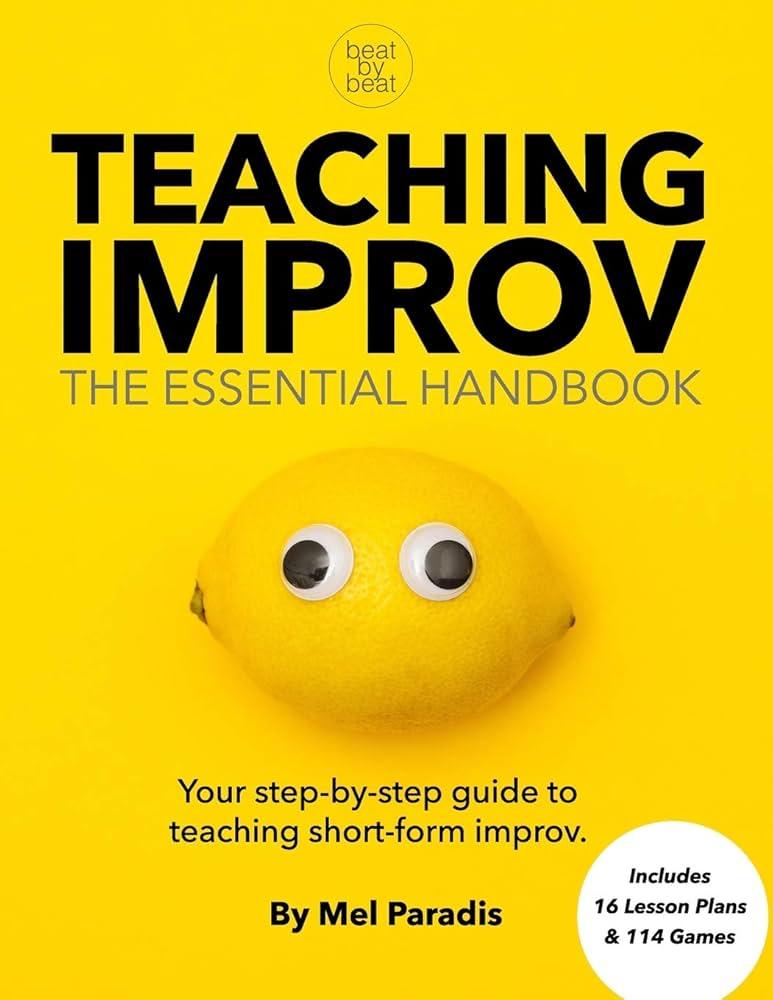
Teaching Improv
The Essential Handbook
Mel Paradis

The 5 Elements of Improv
How to Take Your Improv to the Next Level
Andrew M. Spragge; Karen L. Eichler
The Actor's Book of Improvisation
Sandra Caruso; Paul Clemens
About This Book
Publisher Description
We all want good scenes. But it seems the harder we work, the less likely we are to stumble towards them. This book offers the techniques, tricks, and secrets used by professionals to make the act of improvising easier, more efficient, and more enjoyable onstage.
About the Author
Rob Norman is an award-winning improviser, director, and instructor who teaches across North America. He is Department Head of the Longform Program at The Second City Toronto and teaches at Bad Dog Theatre.
How to Reference This Page
The Improv Archive. (2026). Improvising Now. Retrieved September 28, 2026, from https://improvarchive.org/books/improvising-now-a-practical-guide-to-modern-improv
The Improv Archive. "Improvising Now." The Improv Archive, 2026. https://improvarchive.org/books/improvising-now-a-practical-guide-to-modern-improv.
The Improv Archive. "Improvising Now." The Improv Archive, 2026, https://improvarchive.org/books/improvising-now-a-practical-guide-to-modern-improv. Accessed September 28, 2026.
The Improv Archive is a systemically maintained repository. The archive itself acts as the corporate author.