Teaching Improvisation
How to design workshops, build curriculum, and create the conditions where spontaneity becomes possible. A guide for teachers, facilitators, and anyone leading their first warm-up circle.
The Teacher's Role
Teaching improvisation is fundamentally different from teaching a scripted discipline. There is no text to analyze, no choreography to drill. The teacher's primary job is to create an environment where students feel safe enough to fail, and then to design exercises that make failure productive.
Viola Spolin, who pioneered the modern approach to teaching improv, understood this. Her Theater Games were designed not as performance training but as a way to unlock spontaneity through structured play. The teacher is not a director giving line readings. They are a facilitator creating the conditions for discovery.
Great improv teachers share a paradoxical skill: they maintain authority in the room while giving up control of the outcome. They set up exercises, establish the rules, enforce the framework, and then let whatever happens happen.
Designing a Workshop
Opening
15–20 minutes
Begin with physical warm-ups that get people out of their heads and into their bodies. Name games, movement exercises, and simple call-and-response games reduce self-consciousness and establish the ensemble energy.
The opening sets the tone. If the teacher is relaxed and playful, the room follows.
Core Work
45–60 minutes
Select exercises that build on each other and target a specific skill. A class on “Yes, And” might progress from word-at-a-time stories to two-person scenes where agreement is the only rule.
Each exercise should be slightly harder than the last, but never so hard that students shut down.
Cool Down
10–15 minutes
End with something that brings the group back together. A group scene, a closing game, or a simple circle check-in where students name one thing they noticed.
Avoid ending on a difficult exercise that leaves students feeling exposed.
Pedagogical Approaches
Not everyone learns the same way, and improv classrooms contain visual learners, auditory processors, kinesthetic learners, and reading/writing-oriented thinkers all at once. The best improv teachers design workshops that cycle through multiple modalities so that every student has moments where the material clicks.
Experiential Learning
Improv is inherently learn-by-doing. Kolb's experiential learning cycle (concrete experience, reflective observation, abstract conceptualization, active experimentation) maps naturally onto the improv classroom. Students do an exercise, reflect on what happened, extract a principle, and then try again with that principle in mind.
Scaffolding
Build complexity gradually. Start with high-structure, low-risk exercises (word-at-a-time stories, mirror exercises) before moving to open scenes. Each exercise should introduce one new variable while keeping other variables stable. Students should never feel thrown into the deep end without a framework to hold onto.
Addressing Learning Styles
Visual learners benefit from watching demonstrations and side-coaching live scenes. Auditory learners absorb through verbal notes and group discussion. Kinesthetic learners need physical warm-ups and full-body exercises. Reading/writing learners benefit from journaling prompts and written handouts. Rotate through these modalities within every class session.
Assessment Without Judgment
Improv cannot be graded the way a written test can. Progress is measured through observation: Is the student listening more? Initiating with more specificity? Supporting their partner more generously? Give feedback as descriptions of behavior, not evaluations of quality. “You named the relationship in the first line” is more useful than “that was a good scene.”
The Reflection Period
Every class or workshop should end with a structured period of reflection. Without reflection, exercises remain activities. With reflection, they become learning experiences. This is the single most important pedagogical practice that separates recreational improv from educational improv.
Individual reflection: Ask students to silently identify one moment from class that surprised them, one skill they practiced, and one thing they want to try next time.
Group debrief: Open the floor for observations (not judgments). “What did you notice?” is a better prompt than “How did that go?” Let students name their own discoveries rather than telling them what they should have learned.
Written journaling: For multi-week courses, ask students to keep a brief improv journal. Writing consolidates learning and gives reading/writing-oriented learners an additional processing channel.
Curriculum Progression
Most improv training programs follow a similar arc, whether they run for six weeks or two years. The specific exercises and terminology vary between schools, but the developmental sequence is remarkably consistent.
Agreement & Listening
Yes And, mirroring, active listening, accepting offers. Students learn to build on what their scene partner gives them instead of planning ahead.
Character & Emotion
Point of view, status, emotional commitment, physicality. Students learn to inhabit characters rather than commenting on them from the outside.
Scene Structure
Initiations, finding the game of the scene, heightening, patterns. Students learn to shape a scene with a beginning, middle, and end.
Long Form & Ensemble
Harold, Montage, Armando, and other long-form structures. Students learn to weave multiple scenes into a single coherent piece.
Performance & Style
Stage presence, audience awareness, genre work, musical improv, solo performance. Students develop their own artistic voice.
Creating Psychological Safety
Improvisation asks people to be vulnerable in public. Every scene is a risk. Students must trust that their classmates will support them and that their teacher will not humiliate them. Without this trust, genuine spontaneity is impossible; students will default to performing safety rather than taking creative risks.
Practical techniques: celebrate failure explicitly (some teachers applaud mistakes). Establish that scenes do not have to be funny. Participate in exercises yourself, especially early in a course. Never single out a student negatively in front of the group. Give constructive notes with specific observations rather than judgments.
Recommended Reading
Essential texts for improv teachers and facilitators, from Viola Spolin's foundational work to modern classroom guides.
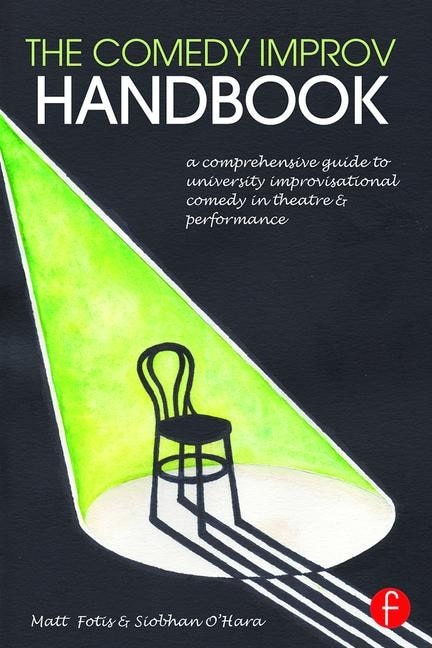
The Comedy Improv Handbook
A Comprehensive Guide to University Improvisational Comedy
Matt Fotis; Siobhan O'Hara (2015)
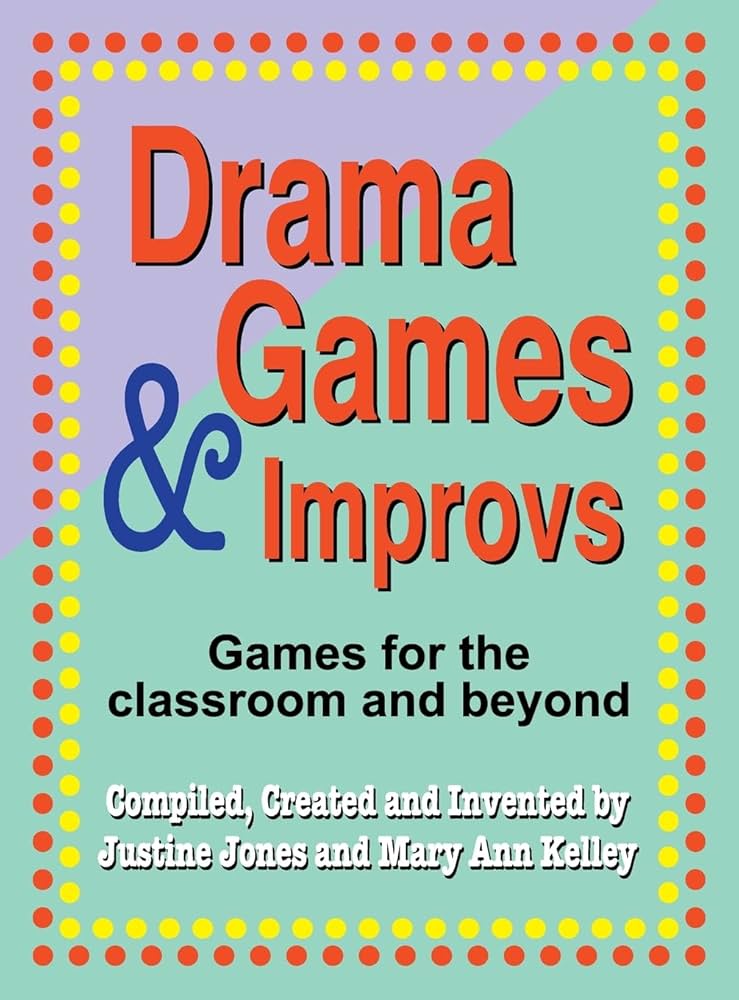
Drama Games and Improvs
Games for the Classroom and Beyond
Justine Jones; Mary Ann Kelley (2007)
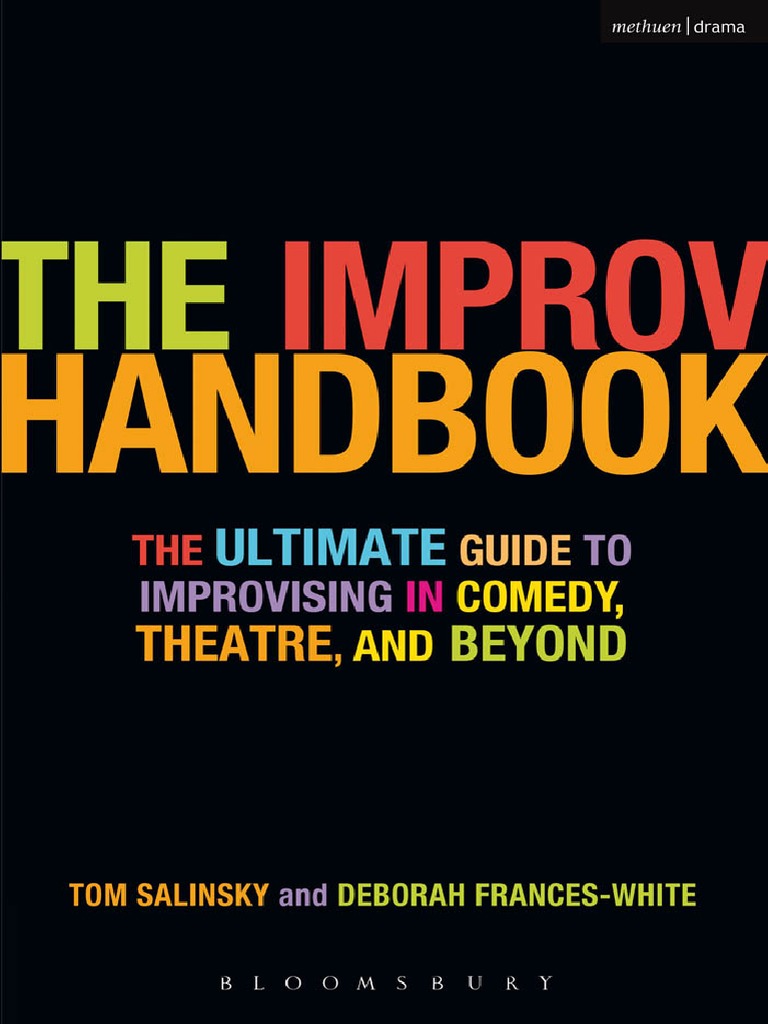
The Improv Handbook
The Ultimate Guide to Improvising in Comedy, Theatre, and Beyond
Tom Salinsky; Deborah Frances-White (2008)
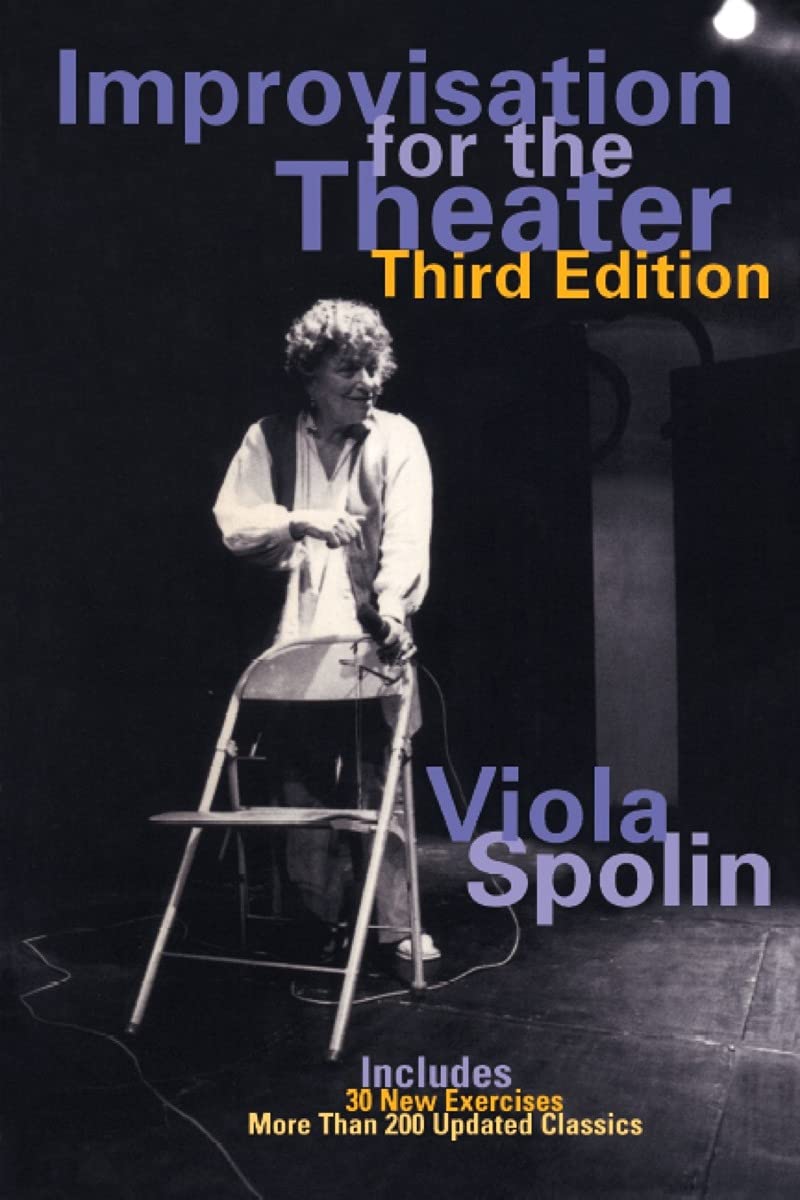
Improvisation for the Theater
A Handbook of Teaching and Directing Techniques
Viola Spolin (1999)
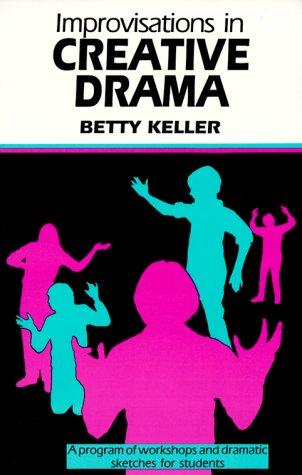
Improvisations in Creative Drama
A Program of Workshops
Betty Keller (1988)
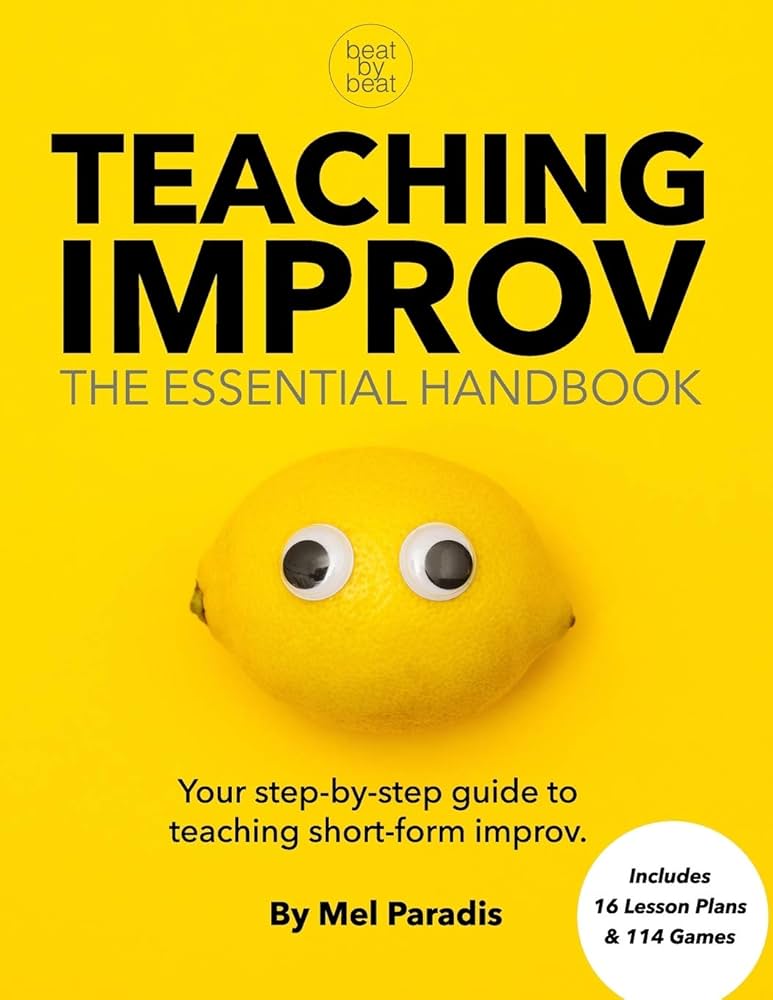
Teaching Improv
The Essential Handbook
Mel Paradis (2019)
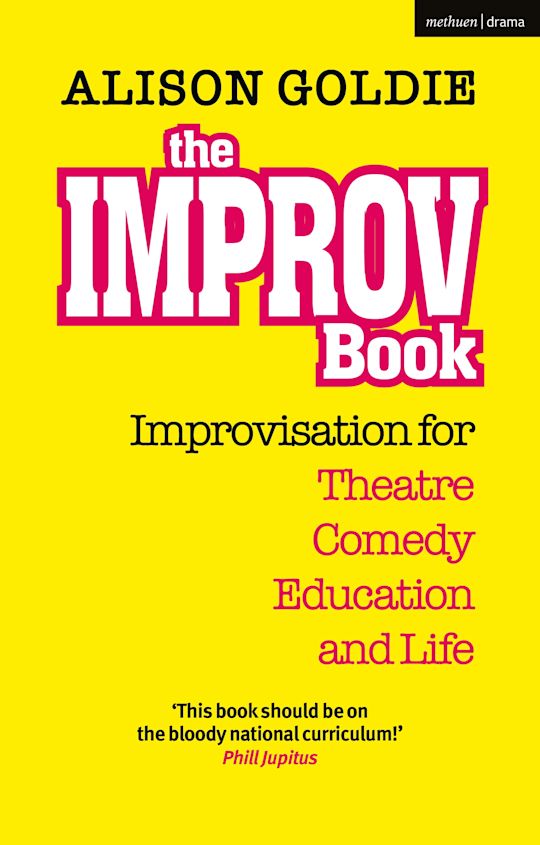
The Improv Book
Improvisation for Theatre, Comedy, Education, and Life
Alison Goldie (2015)
Theater Games for Rehearsal
Viola Spolin (1985)
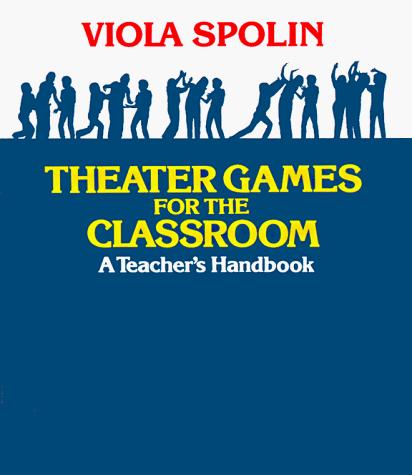
Theater Games for the Classroom
Viola Spolin (1986)
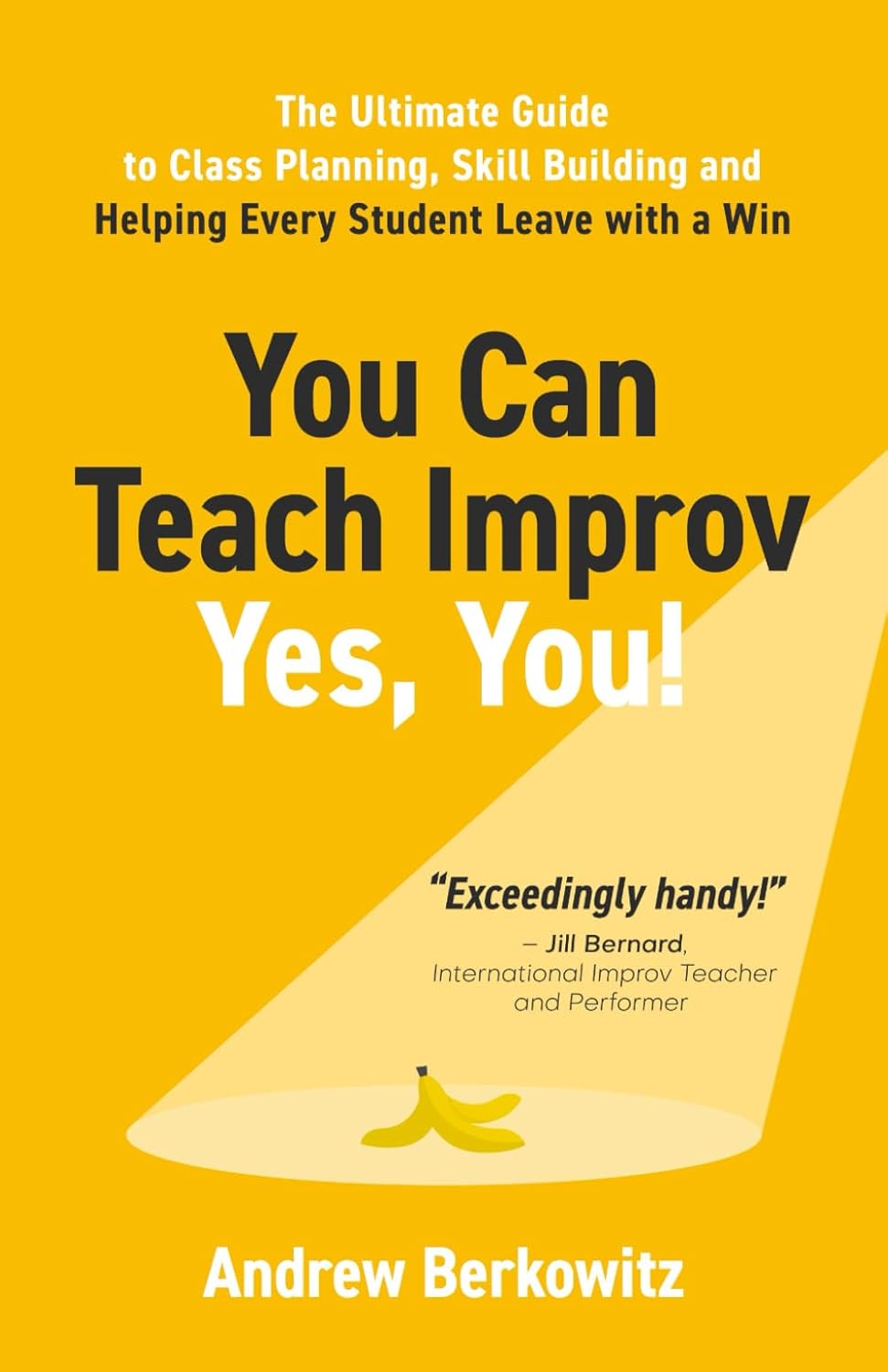
You Can Teach Improv (Yes, You!)
The Ultimate Guide to Class Planning, Skill Building, and Helping Every Student Leave With a Win
Andrew Berkowitz (2017)
Continue Exploring
Teaching is one discipline within improvisation. Explore the others.