The Living Room
The Living Room is a long-form improvisational format built around a domestic space that recurs across multiple scenes and storylines. The living room serves as a home base where relationships develop, secrets emerge, and characters from different narrative threads encounter one another, creating an interconnected world through a shared physical anchor.
Structure
The Anchor Space
The show opens with an establishing scene in the living room that introduces two or more characters and plants the relational and thematic seeds of the show. The space is defined physically and emotionally.
The Expansion
Subsequent scenes move to other locations, following characters out of the living room into work, street, or memory scenes. These scenes develop the threads introduced in the opening.
The Returns
Characters return to the living room throughout the show. Each return carries the weight of what happened elsewhere. The living room registers change through the people who inhabit it.
The Convergence
In the final act, multiple storylines converge in the living room. The format uses the space to bring threads together organically rather than through contrived plotting.
How to Perform It
Format Notes
The living room works best when the opening scene establishes a specific emotional texture rather than a neutral domestic setting. The tone of the opening room will be the emotional register of the entire show.
Editing
Edits out of the living room should follow character desire rather than plot logic. Where does this character need to go next? The answer to that question drives the narrative outward and ensures the returns feel earned.
Worth Reading
See all books →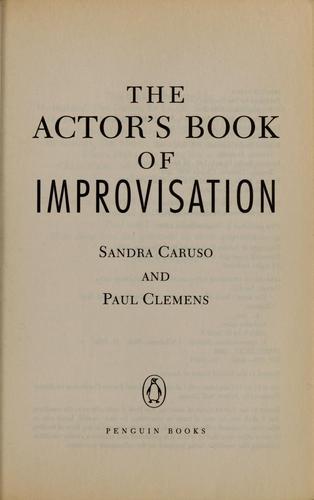
The Actor's Book of Improvisation
Sandra Caruso; Paul Clemens

Comedy and Distinction
The Cultural Currency of a 'Good' Sense of Humour
Sam Friedman

Legislative Theatre
Using Performance to Make Politics
Augusto Boal

The Young Actor's Book of Improvisation
Dramatic Situations
Sandra Caruso; Susan Kosoff

The Art of Chicago Improv
Short Cuts to Long-Form Improvisation
Rob Kozlowski

The Second City Unscripted
Revolution and Revelation at the World-Famous Comedy Theater
Mike Thomas
Related Formats
The Mosaic
The Mosaic is a long-form improvisational format in which multiple unconnected scenes and characters are introduced in rapid succession during an opening sequence, then developed and woven together as the show progresses. Like a visual mosaic, meaning emerges from the relationship of fragments rather than from any single continuous narrative.
Tapestry
Tapestry is a long-form format in which multiple seemingly unrelated scenes are played across a full show, gradually revealing thematic, character, and narrative connections between them. The full picture emerges only as the show progresses, requiring ensemble patience, callback discipline, and trust that the disparate threads will cohere. The format rewards thematic awareness and is named for the way its elements, invisible in isolation, reveal their pattern once complete.
Montage
Montage is a long-form improvised format in which performers present a series of thematically connected scenes inspired by a single audience suggestion. Scenes are linked by shared ideas, recurring motifs, emotional resonances, or occasional character callbacks rather than a continuous plot. The format's strength is its flexibility: any scene can follow any scene as long as the thematic connection holds. Montage is one of the foundational structures in Chicago-tradition long-form improvisation and is among the most widely performed long-form formats worldwide.
Deconstruction
The Deconstruction is a long-form improv format that takes a single opening scene and systematically revisits its elements from different angles, time periods, perspectives, or contexts. Each subsequent scene deconstructs an aspect of the original, exploring a character's backstory, a theme's implications, or a relationship's origin. The format demands structural thinking, the ability to identify multiple entry points within a single premise, and the ensemble skill of building an interconnected web of scenes that deepen the audience's understanding of the original material. The Deconstruction rewards analytical improvisers who can identify the richest elements of a scene and expand them into full explorations.
Diamond
The Diamond is a long-form improv format in which scenes expand outward from a single opening scene like the widening shape of a diamond, then contract back by revisiting those scenes in reverse order. The symmetrical structure creates a satisfying narrative arc in which themes introduced early are resolved, deepened, or recontextualized as the show returns to each scene. The Diamond rewards careful listening, thematic tracking, and the ability to make callbacks that add meaning rather than simply repeating earlier material. The format offers audiences a clear structural logic that makes the connections between scenes easy to follow while still allowing for improvisational surprise.
How to Reference This Page
The Improv Archive. (2026). The Living Room. Retrieved September 29, 2026, from https://improvarchive.org/formats/the-living-room
The Improv Archive. "The Living Room." The Improv Archive, 2026. https://improvarchive.org/formats/the-living-room.
The Improv Archive. "The Living Room." The Improv Archive, 2026, https://improvarchive.org/formats/the-living-room. Accessed September 29, 2026.
The Improv Archive is a systemically maintained repository. The archive itself acts as the corporate author.