Remote Control
Remote Control is a short-form game in which a host or audience member operates an imaginary television remote control, switching between channels that each feature a different improvised scene, genre, or show. Performers snap instantly into their assigned channel's content wherever it left off when the channel was last visited. The game rewards rapid context-switching, scene memory, and the ability to inhabit distinct styles and genres on demand.
Structure
Setup
Three or more performers and a host. The audience provides suggestions for different television programs or genres: a soap opera, a cooking show, a nature documentary, a news broadcast, a sitcom. Each group of performers is assigned a channel and a specific show or genre. A current affairs topic may also be collected as thematic material that each show will engage with in its own way.
Gameplay
The host holds an imaginary remote control. Each channel begins briefly to establish its world and style. The host then begins switching: clicking between channels at will. When a channel is selected, its performers resume from exactly where they were when the remote last left them, maintaining the emotional state, physical position, and narrative thread of their scene.
The host controls the rhythm: dwelling on a channel that is building, flicking away quickly from one that is landing, returning to a scene at the moment of highest tension. The comedy of the game emerges from the accumulated contrast between genres and from the moments when a shared thematic thread (the current affairs topic) appears across different shows.
VCR Variant
Linda Newton documents a related game in which the imaginary remote controls a single scene's playback functions: Play, Rewind, Fast Forward, Slow Motion, Pause. In this version, one scene is running and the remote controls how it plays rather than which scene is selected. Rewind requires performers to re-enact the last beat backward; Fast Forward compresses it; Slow Motion expands each gesture.
How to Teach It
How to Explain It
"Someone has a remote control. The performers play a scene, but the remote controls them: pause, rewind, fast forward, slow motion, volume up, channel change. Performers adjust immediately to whatever the remote does. There is no arguing with the remote."
Objectives
Remote Control develops genre versatility, scene memory, and physical discipline. The snap back into a channel requires the performer to hold the physical and emotional state of their scene across interruptions of unknown length, a skill that transfers directly to long-form scene editing.
Briefing Performers
Before the game, have each channel group discuss their show's specific register: not "soap opera" in the abstract but a specific pace, a specific physical energy, a specific kind of dialogue. The more specific each channel's style, the more distinct the contrast when switching.
Common Coaching Notes
- "When the channel returns, you pick up from where you left. Not from a reset."
- "Your channel has a style. Know what it is before the game starts."
- "Host: switch away when the scene is the most interesting, not the least."
How to Perform It
Channel Discipline
The game fails when performers cannot maintain their channel's state across cuts. A soap opera ensemble that starts from a different beat each time the channel returns has broken the fundamental mechanic. The audience's pleasure is partly in the resumption: they remember where the scene was and they want to return to it exactly there.
Each channel should have a distinctly different performance register: not just a different setting but a different pace, volume, physical scale, and emotional quality. A soap opera runs at a different temperature than a nature documentary. If all channels look the same, the channel-switching produces no contrast.
The Host's Role
The host is the game's director and should make deliberate choices, not random ones. Returning to a scene at the worst possible moment for the characters (mid-crisis, mid-revelation) generates the best comedy. Staying on a channel too long flatlines it; leaving too quickly prevents any scene from developing.
History
Remote Control belongs to the family of television-parody games that emerged as television became a dominant shared cultural experience in the late twentieth century. The channel-surfing mechanic uses the remote control as a structural device that mirrors the actual behavior of channel-flipping, transforming the audience's passive media habit into an active participation role.
Rich Goteri documents the game in Something from Nothing, specifying the three-cast-plus-host format and the use of a current affairs topic alongside genre suggestions to provide thematic material that appears across channels.
Amy Seham reflects on the cultural resonance of the remote control mechanic in Whose Improv Is It Anyway?, noting that audiences raised on channel-surfing are accustomed to "multiple realities" and the constant switching of context, making the game a literalization of a widely shared experience.
The VCR variant, documented by Linda Newton in Improvisation 2nd Edition, uses the same prop but applies playback commands rather than channel selection.
Worth Reading
See all books →
The Improv Handbook
The Ultimate Guide to Improvising in Comedy, Theatre, and Beyond
Tom Salinsky; Deborah Frances-White

Something from Nothing
The Technique of Improvisation
Richard Goteri

Improv Ideas
A Book of Games and Lists
Mary Ann Kelley; Justine Jones

Great Group Skits
50 Character-Building Scenarios for Teens
Lynn Grasberg; Gina Oldenburg
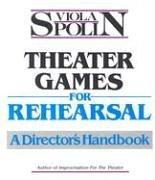
Theater Games for Rehearsal
Viola Spolin
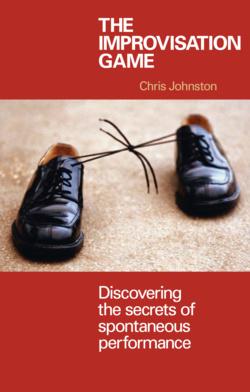
The Improvisation Game
Discovering the Secrets of Spontaneous Performance
Chris Johnston
Related Games
Netflix & Chill
Netflix and Chill is a short-form game in which two performers play a scene set in the domestic context of watching a film or television program together, while the underlying tension of the scene is the gap between what the characters say they are doing and what they actually want. The game mines the rich comedic territory of subtext, awkward social negotiation, and the small rituals of informal intimacy.
Rewind
Rewind is a short-form game in which a host calls out during a scene, causing performers to physically and verbally reverse their actions back to an earlier moment, then replay forward with different choices. The game rewards strong physical memory, comedic timing at the point of replay, and the ability to generate distinct alternatives quickly when the scene resumes.
Rewind/fast-Forward
Rewind/Fast-Forward is a short-form game in which a host controls the speed and direction of a scene using imaginary playback buttons. "Fast-forward" accelerates the action into the future, "rewind" reverses it, and "play" resumes normal speed. The game demands strong physical commitment and the ability to maintain scene logic across temporal jumps.
Black Box
Black Box is a short-form game in which one player holds a mimed remote control or box with three buttons, each triggering a different involuntary behavior in a second player. Neither performer knows in advance what the buttons do. The effects are discovered through experimentation during a scene, as the button-presser tests each button and the affected player commits to whatever physical, vocal, or emotional response emerges. The game rewards physical commitment, spontaneous justification, and the ability to incorporate unexpected impulses into ongoing scene work. Black Box demonstrates the improv principle that accepting and justifying any offer, no matter how disruptive, produces stronger comedy than resisting or ignoring it.
Bidirectional Satellite TV
Bidirectional Satellite TV is a dubbing game in which two pairs of performers are placed in separate areas, each watching the other on an imaginary screen. One pair provides the physical action while the other provides the voices, and they switch roles back and forth. The disconnection between bodies and voices generates comedy through mismatched timing and interpretation.
Jeopardy
Jeopardy is a short-form game modeled on the television quiz show format, in which performers provide improvised questions to audience-supplied answers. The reversed format (answer first, then question) demands quick thinking and the ability to construct comedic setups from arbitrary punchlines. A host manages the game board and selects categories, while performer-contestants buzz in with their responses. The game rewards wit, timing, and the ability to find unexpected connections within the quiz show framework.
How to Reference This Page
The Improv Archive. (2026). Remote Control. Retrieved September 29, 2026, from https://improvarchive.org/games/remote-control
The Improv Archive. "Remote Control." The Improv Archive, 2026. https://improvarchive.org/games/remote-control.
The Improv Archive. "Remote Control." The Improv Archive, 2026, https://improvarchive.org/games/remote-control. Accessed September 29, 2026.
The Improv Archive is a systemically maintained repository. The archive itself acts as the corporate author.