Narrative Arc
The dramatic structure of a story as it develops through a beginning, middle, and end in an improvised performance. Narrative formats require improvisers to track plot threads, develop characters over time, and build toward resolution, skills distinct from those used in non-narrative montage work.
The dramatic structure of a story as it develops through a beginning, middle, and end forms one of the foundational frameworks improvisers use when performing narrative long form. Unlike short form games or montage formats, narrative work requires performers to track plot threads, develop characters over time, and build toward resolution. These are skills distinct from the associative, pattern-based thinking used in non-narrative montage work, and they demand a different kind of attention from everyone on stage.
In traditional storytelling, the narrative arc follows a familiar trajectory: establishment, complication, and resolution. Improvisers working in narrative formats must internalize this shape so thoroughly that they can construct it in real time without pre-planning. As Rob Kozlowski notes in The Art of Chicago Improv, the arc of traditional storytelling requires a beginning, middle, and end, with the rule of threes reinforcing the idea that three parts compose a satisfying whole. This structural instinct allows performers to sense when a story needs to escalate, when a character needs to face consequences, and when a scene is ready to resolve.
The concept extends well beyond performance into applied improvisation settings. As described in The Applied Improvisation Mindset, facilitators use narrative arc to shape the flow of workshops and training sessions, mirroring the stages of a story to create engagement that builds and resolves rather than remaining flat. In business contexts, as documented in Getting to Yes And, teams working on creative pitches are asked to consider narrative arc alongside character development and audience impact, treating story structure as a transferable skill rather than a purely theatrical one.
Teaching narrative arc in improv typically involves formats that force performers to hold entire story structures in mind. The Backwards Interview, for instance, trains structural thinking by requiring players to construct a complete narrative arc in reverse, building memory and justification skills simultaneously. Formats like Before or After ask performers to construct scenes that connect logically to an existing timeline, concluding when the arc has reached a satisfying scope. These exercises develop the muscle of tracking where a story has been and sensing where it needs to go.
One of the central challenges in narrative improv is balancing structure with responsiveness. The Bedtime Story format illustrates this tension clearly: a narrator must maintain a coherent narrative arc while remaining open to the actors' choices, and a narrator who plans the entire story in advance will steamroll the ensemble. This pitfall, overcommitting to a predetermined plot, is one of the most common mistakes in narrative work. The opposite failure is equally dangerous: scenes that develop no arc at all, where nothing escalates, develops, or resolves, as coaching notes for CCTV warn against.
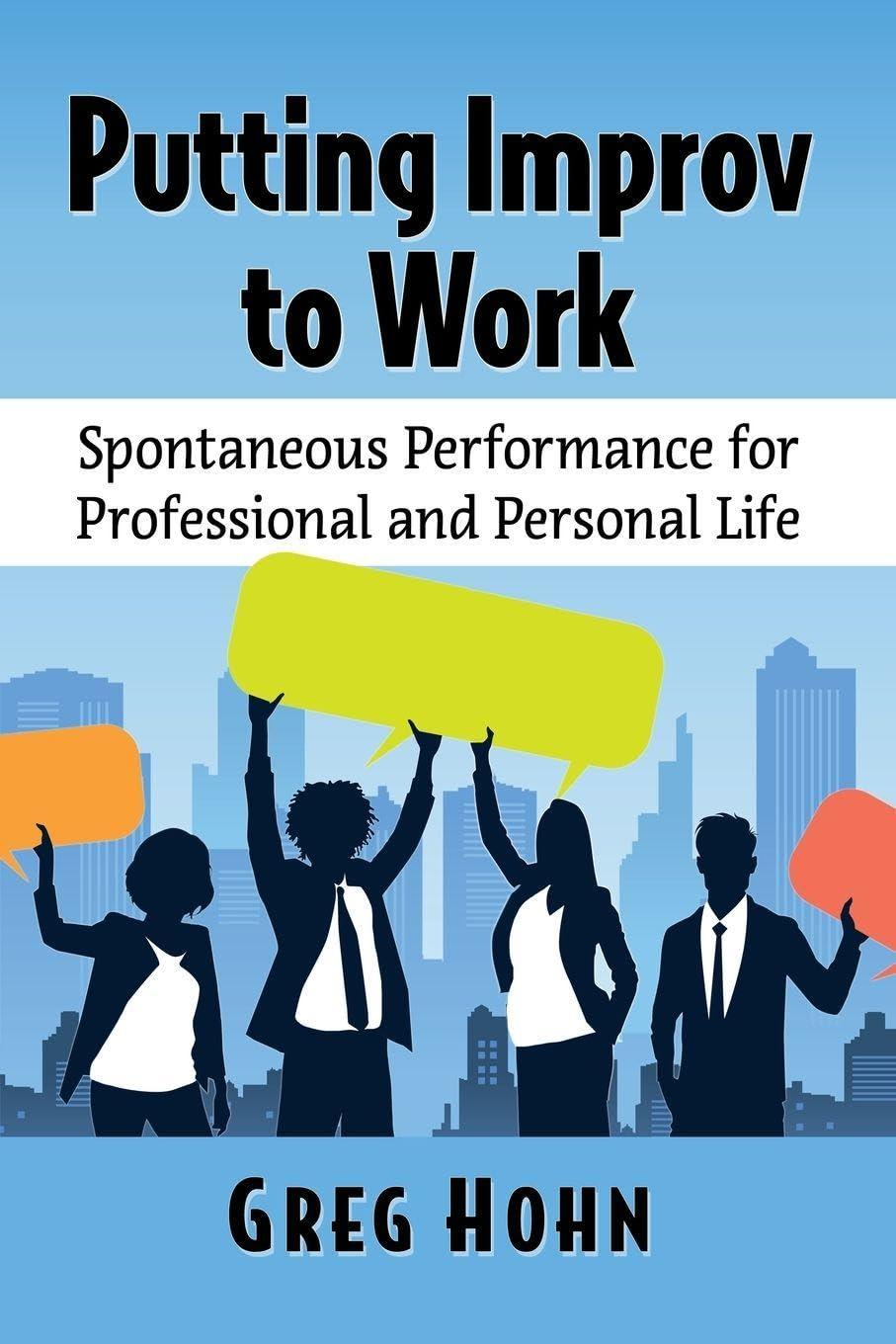
Narrative arc is closely related to several other improv concepts. It depends on heightening and the rule of threes for its internal rhythm, on character development for emotional stakes, and on group mind for the ensemble's ability to collectively sense story shape without explicit coordination. In long form work especially, as Putting Improv to Work observes, a narrative arc is almost impossible to avoid; if performers can imagine it, they can probably build it together in real time. The skill lies not in avoiding narrative but in serving it with the same spontaneity and generosity that defines all strong improvisation.
Further Reading
See all books →
The Art of Chicago Improv
Short Cuts to Long-Form Improvisation
Rob Kozlowski

Embodied Playwriting
Improv and Acting Exercises for Writing
Hillary Haft Bucs; Charissa Menefee

The Applied Improvisation Mindset
Tools for Transforming Individuals, Organizations, and Communities
Theresa Robbins Dudeck; Caitlin McClure
Putting Improv to Work
Spontaneous Performance for Leadership, Learning, and Life
Greg Hohn

Getting to Yes And
The Art of Business Improv
Bob Kulhan; Chuck Crisafulli

How to Improvise a Full-Length Play
The Art of Spontaneous Theater
Kenn Adams
How to Reference This Page
The Improv Archive. (2026). Narrative Arc. Retrieved September 28, 2026, from https://improvarchive.org/learn-improv/concepts/narrative-arc
The Improv Archive. "Narrative Arc." The Improv Archive, 2026. https://improvarchive.org/learn-improv/concepts/narrative-arc.
The Improv Archive. "Narrative Arc." The Improv Archive, 2026, https://improvarchive.org/learn-improv/concepts/narrative-arc. Accessed September 28, 2026.
The Improv Archive is a systemically maintained repository. The archive itself acts as the corporate author.