Shared Reality
The agreement among performers that they inhabit the same fictional world with consistent physical laws, geography, and history. Shared reality means that if one performer establishes a door on stage left, all performers treat that location as a door. Breaking shared reality undermines the audience's trust in the scene.
At the foundation of every improvised scene lies an unspoken contract: all performers agree to inhabit the same fictional world, one with consistent physical laws, geography, and history. This principle, known as shared reality, means that if one performer establishes a door on stage left, every other performer treats that location as a door. If someone mimes picking up a heavy box, the weight of that box persists when another performer takes it. Breaking this contract undermines the audience's trust in the scene and fractures the collaborative fiction that makes improvisation possible.
Shared reality emerges through physical and verbal offers. As described in Playing Along, players can create reality simply by using the physical signals of throwing and catching an imaginary ball. The reality of the ball exists not because any single performer declares it, but because every performer treats it as real. This physicality often serves as the entry point for teaching the concept. In The Applied Improvisation Mindset, Julie Dudeck notes a common pedagogical approach: starting an improvised scene with a shared physical activity, such as washing dishes after a dinner party, to establish a grounding reality and to get players to connect nonverbally before layered dialogue begins.
The concept is closely tied to "yes, and," the foundational principle of acceptance and building. As Great Group Skits illustrates, the basic principle of improvisation is to accept offers from other players and build on them to create a shared reality. If someone says they cannot believe how cold it is, the appropriate response is to rub your hands together and pull your imaginary coat tighter, not to announce that it is actually summer. The exercise "I Know" takes this further: performers respond to every offer with an affirmation followed by an addition that expands the shared reality, functioning as an amplified form of yes-and that implies pre-existing shared knowledge between characters.
One common pitfall involves asking questions. As Putting Improv to Work explains, in everyday life, questions help people understand their surroundings; in improv, however, performers are creating a shared reality together, and partners do not know any more about it than anyone else. Asking questions in a scene risks passing the creative responsibility to someone equally uninformed, stalling the construction of the world rather than advancing it.
Shared reality also operates at the level of subtext and character relationships. Embodied Playwriting describes how improvisers use dialogue to create a shared reality as it unfolds, often through endowment, the process of ascribing qualities to one another. When one performer treats another as an authority figure, that status relationship becomes part of the shared world both must honor.
In group scenes, the concept becomes especially demanding. The exercise "Group Scene Point of View" requires all participants to inhabit roles within the same shared reality while maintaining individual perspectives, developing the ability to serve the collective scene rather than pursuing separate agendas. "Agreement Scenes" strips away conflict entirely, revealing how scenes can build through mutual enthusiasm and escalating shared reality, reinforcing acceptance at its most fundamental level.
The concept extends beyond performance into applied improvisation, where shared reality functions as a metaphor for collaborative meaning-making in organizational and educational contexts. Whether on stage or in a workshop, the principle remains the same: reality in improvisation is never declared by one person alone but constructed collectively, sustained through consistent attention to the world that every participant has agreed to build together.
Further Reading
See all books →
Embodied Playwriting
Improv and Acting Exercises for Writing
Hillary Haft Bucs; Charissa Menefee

The Applied Improvisation Mindset
Tools for Transforming Individuals, Organizations, and Communities
Theresa Robbins Dudeck; Caitlin McClure
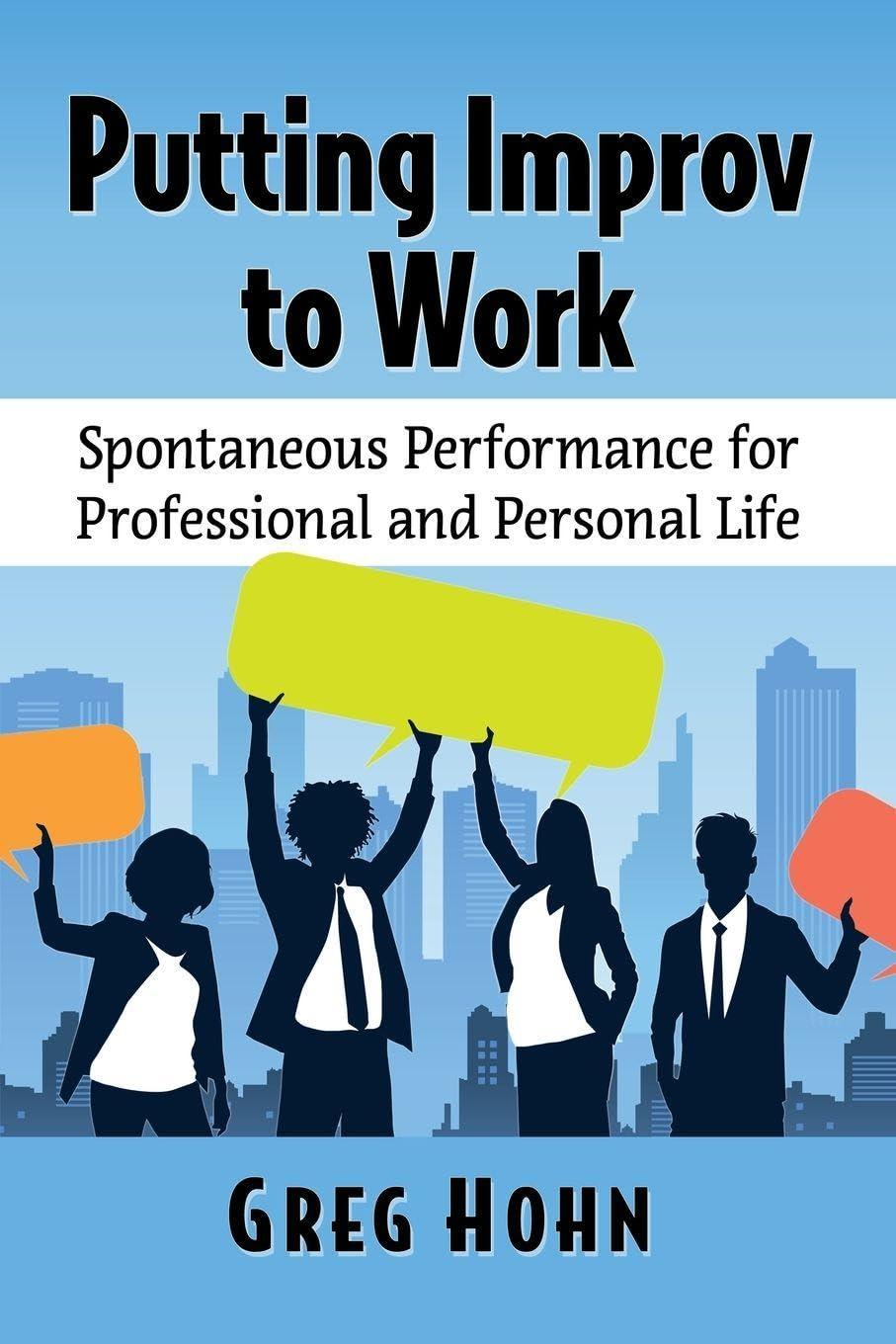
Putting Improv to Work
Spontaneous Performance for Leadership, Learning, and Life
Greg Hohn

Playing Along
37 Group Learning Activities Borrowed from Improvisational Theater
Izzy Gesell

Great Group Skits
50 Character-Building Scenarios for Teens
Lynn Grasberg; Gina Oldenburg

Whose Improv Is It Anyway?
Beyond Second City
Amy E. Seham
How to Reference This Page
The Improv Archive. (2026). Shared Reality. Retrieved September 28, 2026, from https://improvarchive.org/learn-improv/concepts/shared-reality
The Improv Archive. "Shared Reality." The Improv Archive, 2026. https://improvarchive.org/learn-improv/concepts/shared-reality.
The Improv Archive. "Shared Reality." The Improv Archive, 2026, https://improvarchive.org/learn-improv/concepts/shared-reality. Accessed September 28, 2026.
The Improv Archive is a systemically maintained repository. The archive itself acts as the corporate author.