Alan Myerson
Alan Myerson (born 1936) is a theatre and television director who co-founded The Committee, the politically satirical improvisational troupe that operated in San Francisco's North Beach from 1963 to 1972. A Second City alumnus who directed the company's second ensemble in Chicago, Myerson brought the improv-revue model to San Francisco and shaped it toward explicitly political and activist content, creating one of the most historically distinct improvisational companies in American comedy history. He subsequently directed more than two hundred television episodes for major network series and made his feature film debut with Steelyard Blues, starring Donald Sutherland and Jane Fonda.
Career
After directing in New York, Myerson moved to Chicago, where he directed The Second City's second company, the ensemble that performed in parallel with the main Mainstage cast. His Chicago period gave him direct experience of the Second City's revue-building process and its culture of politically engaged satirical comedy.
In 1963 Myerson co-founded The Committee in San Francisco with Irene Riordan, who later became Jessica Myerson; both were Second City alumni. The company opened on April 10, 1963, at 622 Broadway in North Beach, a neighborhood at the center of the San Francisco counterculture scene. The Committee distinguished itself from the Second City model that had shaped both founders by pursuing a more explicitly political and activist satirical stance. Where Second City emphasized observational social satire with political dimensions, The Committee incorporated current events, anti-war themes, and activist content as central to its performance identity. That orientation gave the company a particular character in the context of the San Francisco 1960s.
The Committee ran from 1963 to 1972 and became one of the most significant improvisational companies outside Chicago in the decade, developing an ensemble of performers that included future notable figures in American comedy and building a loyal North Beach audience for politically engaged live performance. Myerson's direction shaped the company's relationship between scripted satire and improvised material, maintaining the Second City hybrid model while pushing its political content further than the Chicago institution typically did.
Myerson's work with The Committee led to his involvement with the FTA Tour, an anti-war revue featuring Jane Fonda and Donald Sutherland. That project led directly to his feature film debut, Steelyard Blues (1973), which starred the same actors. He subsequently directed Private Lessons (1981) and Police Academy 5: Assignment: Miami Beach (1988).
His television directing career was extensive, spanning more than two hundred episodes across multiple decades and series. He directed eight episodes of The Larry Sanders Show, seven of Judging Amy, and episodes of Friends, Boy Meets World, Miami Vice, Ally McBeal, Boston Public, Picket Fences, The Bob Newhart Show, Rhoda, and Laverne and Shirley, among many others. He received Emmy and Directors Guild of America Award nominations for his Larry Sanders Show episode in 1997. He taught acting at UC Berkeley and San Francisco State University, and directing at Maine Media Workshops.
Historical Context
Myerson's historical significance is The Committee, which he built into the most important alternative to the Chicago model in 1960s American improvisational comedy. The Committee's political character, its North Beach location in San Francisco's counterculture scene, and its active period from 1963 to 1972 gave it a specific historical role as the West Coast equivalent of the Chicago institutions during the decade when both political comedy and improvisational theatre were most culturally prominent.
His trajectory from Second City director to Committee co-founder also documents how the Chicago improv model diffused geographically in the 1960s. The movement of trained Second City alumni to new cities, where they founded companies that adapted the model to local cultural conditions, is one of the most important patterns in the history of improvisational theatre, and Myerson's San Francisco move is one of its earliest examples.
The Committee's influence on the San Francisco comedy scene and on performers who passed through or saw the company extended into subsequent decades, shaping the West Coast improv culture that developed in the following generations.
Teaching Philosophy
Myerson's teaching at UC Berkeley, San Francisco State, and Maine Media Workshops placed him in formal academic and professional development contexts over an extended career. His approach, rooted in the Second City tradition and shaped by The Committee's politically engaged practice, treated improvisation and direction as related disciplines grounded in live responsiveness to performers and material rather than in pre-planned outcomes. That orientation is consistent with the Second City training model in which his career began.
Legacy
Myerson's legacy is The Committee, which shaped the development of politically engaged improvisational comedy in San Francisco and established a West Coast alternative to the Chicago institutions during the formative decade of the 1960s. The company's nine-year run from 1963 to 1972 produced a body of work that influenced subsequent generations of Bay Area performers and demonstrated that the improv-revue format could sustain an explicitly political identity without sacrificing ensemble craft. The performers who passed through The Committee, and the audiences who encountered improvised political satire in North Beach, carried that influence into the cultural contexts that followed.
His later television career, which produced more than two hundred directed episodes across a wide range of major network series from the 1970s through the 2000s, documents how directorial skills developed in improvisational theatre transfer into episodic television production. The Emmy and Directors Guild nominations he received for The Larry Sanders Show recognized that transfer at the highest level of television directing recognition.
For the archive, Myerson represents the Second City diaspora of the 1960s, the movement of trained Chicago alumni to other cities where they founded or shaped companies that carried the improvisational tradition into new geographical and cultural contexts. His San Francisco work is one of the earliest and most historically consequential examples of that pattern.
Early Life and Training
Myerson was born on August 8, 1936, in Cleveland, Ohio. He attended Pepperdine College from 1956 to 1957. He originally intended to become a writer and relocated to New York, where he moved into directing through an unexpected audition for an off-Broadway production. That experience oriented him toward theatrical direction and eventually toward the improvisational comedy world in Chicago.
Personal Life
Myerson was born on August 8, 1936, in Cleveland, Ohio. He co-founded The Committee with Irene Riordan, who became Jessica Myerson; the two were partners in both the professional and personal sense. He has been based in California through much of his career.
Companies and Organizations
Associated venues and institutional relationships currently documented in the archive.
Recommended Reading
Books are ordered from the strongest direct connection outward to broader relevance.

Something Wonderful Right Away
An Oral History of The Second City and The Compass Players
Jeffrey Sweet

The Art of Chicago Improv
Short Cuts to Long-Form Improvisation
Rob Kozlowski

The Second City Unscripted
Revolution and Revelation at the World-Famous Comedy Theater
Mike Thomas

Theatrical Improvisation, Consciousness, and Cognition
Clayton D. Drinko

Long Form Improvisation and American Comedy
The Harold
Matt Fotis
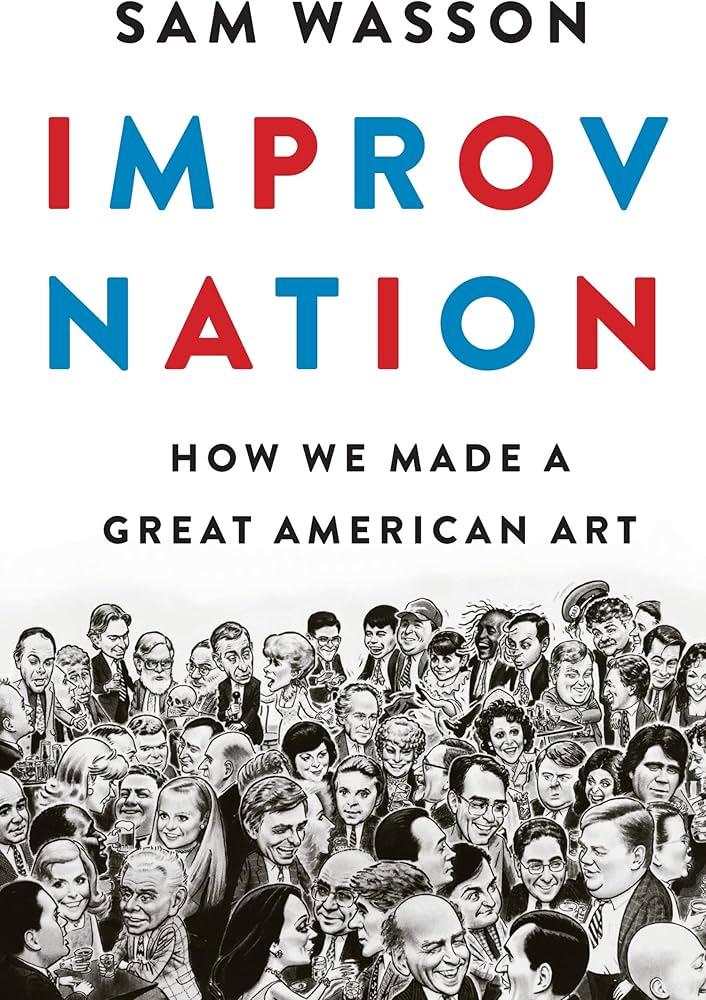
Improv Nation
How We Made a Great American Art
Sam Wasson
References
In the Archive
How to Reference This Page
The Improv Archive. (2026). Alan Myerson. Retrieved September 28, 2026, from https://improvarchive.org/people/alan-myerson
The Improv Archive. "Alan Myerson." The Improv Archive, 2026. https://improvarchive.org/people/alan-myerson.
The Improv Archive. "Alan Myerson." The Improv Archive, 2026, https://improvarchive.org/people/alan-myerson. Accessed September 28, 2026.
The Improv Archive is a systemically maintained repository. The archive itself acts as the corporate author.