Andrew Alexander
Andrew Alexander is a producer and institutional builder who took control of The Second City Toronto in 1974 and became co-owner of The Second City Chicago in 1985, leading both institutions for nearly five decades. During his tenure he produced hundreds of revues, executive produced more than 150 hours of SCTV television, and oversaw the expansion of Second City's training and performance operations into multiple cities. His contribution to improv history is primarily infrastructural: he built and sustained the institutions that trained and launched generations of performers, and he extended the Second City brand through a television format, SCTV, that gave the ensemble its widest North American reach.
Career
Alexander's path into the Second City world began when he was hired by the Ivanhoe Theater in Chicago, where he met Bernie Sahlins, Second City's co-founder and long-time owner. In 1974 Sahlins licensed the Canadian rights to The Second City to Alexander; at the time the Toronto location was financially struggling, and Alexander assumed its debts in exchange for the rights to operate Second City in Canada. He borrowed $7,000 from a friend to begin the operation and took control of Second City Toronto that year.
The Toronto company Alexander built became one of the most productive in the Second City network's history. During the mid-1970s and early 1980s the ensemble he led and produced included Gilda Radner, John Candy, Dan Aykroyd, Andrea Martin, Catherine O'Hara, Eugene Levy, and Joe Flaherty, a cohort that became among the most celebrated in the institution's history. Alexander produced or executive produced hundreds of Second City revues in Canada through this period.
The television dimension of the Toronto company's work under Alexander became one of his most significant contributions to the field. He co-developed and executive produced Second City Television, the syndicated sketch series known as SCTV, across more than 185 half-hour episodes and over 150 hours of television comedy. SCTV ran from 1976 to 1984, won two Emmy Awards, received thirteen additional Emmy nominations, and won an ACTRA Award. The series extended the Second City Toronto ensemble's reach far beyond the live audience that could attend the Old Firehall Theatre and established the company as a major force in North American television comedy.
In 1985 Alexander became co-owner of The Second City Chicago, extending his involvement from the Canadian operation to the institution's original home. Over the following decades he produced or oversaw production at Second City locations that at various times included Toronto, Chicago, Detroit, Las Vegas, Los Angeles, Edmonton, London Ontario, and Cleveland. The expansion and contraction of these locations across his tenure reflected his ongoing work to extend the Second City brand into new markets while sustaining the training and performance operations at the core locations.
In 2020 Alexander resigned as CEO following accusations of institutionalized racism from former performers and alumni, a departure that came after nearly fifty years of continuous involvement with the organization. In 2021 he sold his ownership interest to ZMC, concluding one of the longest individual tenures of any single institutional leader in American improv history.
Historical Context
Alexander's historical significance is institutional rather than performative. He did not found Second City and was not a performer in the tradition, but the institutions he built and sustained were the primary vehicles through which the Second City method reached the largest audiences and produced the most celebrated performers of the late twentieth century.
His acquisition of Second City Toronto in 1974 and the subsequent television work that produced SCTV represent the two most consequential decisions of his tenure. The Toronto ensemble he assembled in the mid-1970s became one of the most generative comedy cohorts in North American history, and SCTV gave their work a broadcast audience that the live revue format alone could never have reached. Without the television extension Alexander built and produced, the Second City Toronto lineage would have remained primarily a live performance tradition known to Canadian audiences.
His acquisition of Second City Chicago in 1985 unified the Canadian and American operations under single leadership and allowed coordinated expansion into multiple markets. That consolidation gave the Second City brand the institutional stability and geographic reach that characterized it through the late twentieth century.
His 2020 departure, following sustained accusations from Black alumni and performers about the institution's racial climate, also belongs to his historical record. The institutional culture he built and maintained over nearly five decades included structural failures that the organization acknowledged in its public response to the accusations, and accounting for those failures is part of any honest institutional history.
Legacy
Alexander's legacy is the Second City as a sustained multi-city institution. He took a failing Toronto franchise in 1974 and built it into the most productive comedy ensemble in Canadian history; he co-produced SCTV, which became the most celebrated Canadian contribution to American television comedy; and he oversaw the expansion of both Second City Chicago and Toronto into training programs that shaped the careers of thousands of performers and writers over five decades.
The alumni who passed through Second City under his tenure include some of the most recognized names in North American comedy: John Candy, Gilda Radner, Dan Aykroyd, Andrea Martin, Catherine O'Hara, Eugene Levy, Joe Flaherty, and many subsequent generations. That roster is partly a function of the institution's history before his arrival, but its sustained productivity across his tenure reflects the organizational stability he provided.
For the archive, Alexander represents the producer and institutional builder as a distinct role in the improv tradition. Improv history focuses heavily on teachers, performers, and theorists, but the people who build and sustain the physical and organizational infrastructure within which the tradition operates are equally necessary to its survival. Alexander's near-fifty-year tenure at Second City is one of the longest and most consequential examples of that role in the field's history.
Early Life and Training
Alexander was born in London, England, and came to North America for his education, attending Tri-State College in Indiana and Ryerson University in Toronto. Before his comedy career he worked across a range of occupations, including cab driver, truck driver, waiter, tree salesman, marketing manager, advertising salesman, and magazine editor, as well as in the alternative Toronto theatre scene as a producer. That varied background preceded his entry into the institutional comedy world and gave him a practical, producer-oriented orientation toward the comedy business rather than a performer's one.
Personal Life
Alexander was born in London, England, and relocated to North America for his education and early career. He was based in Toronto through most of his decades-long tenure at Second City, and the 2021 sale of his ownership interest concluded his institutional involvement after nearly fifty years.
Companies and Organizations
Associated venues and institutional relationships currently documented in the archive.
Recommended Reading
Books are ordered from the strongest direct connection outward to broader relevance.

Something Wonderful Right Away
An Oral History of The Second City and The Compass Players
Jeffrey Sweet

The Art of Chicago Improv
Short Cuts to Long-Form Improvisation
Rob Kozlowski

Theatrical Improvisation
Short Form, Long Form, and Sketch-Based Improv
Jeanne Leep

The Second City Unscripted
Revolution and Revelation at the World-Famous Comedy Theater
Mike Thomas

Long Form Improvisation and American Comedy
The Harold
Matt Fotis
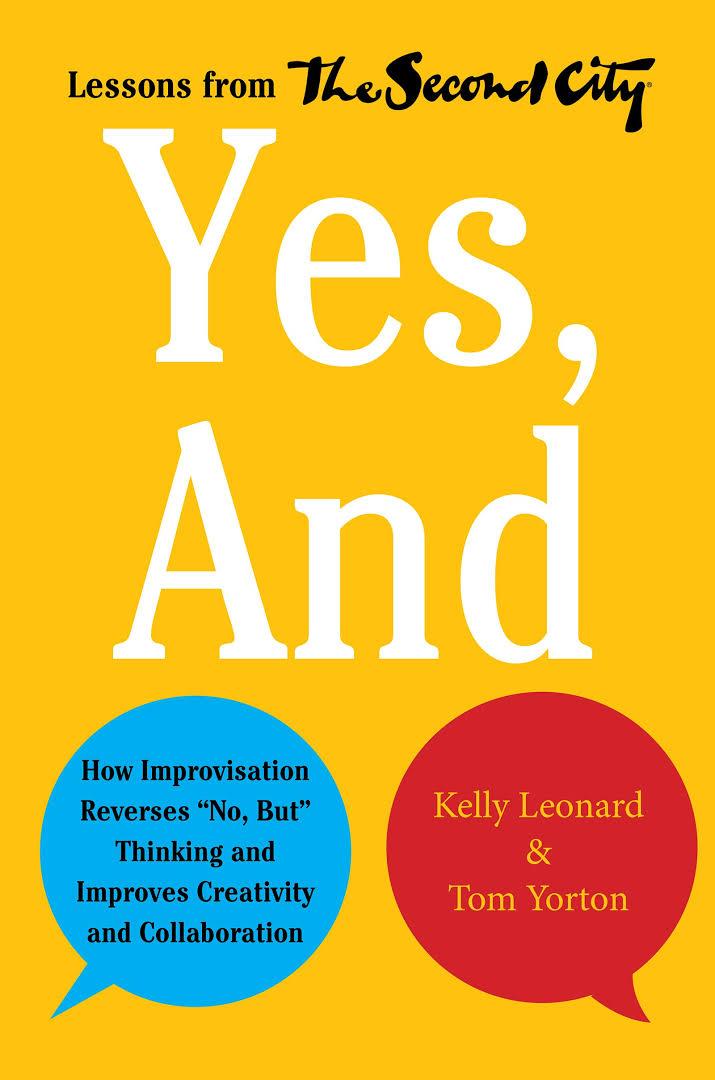
Yes, And
How Improvisation Reverses No, But Thinking and Improves Creativity and Collaboration
Kelly Leonard; Tom Yorton
References
In the Archive
How to Reference This Page
The Improv Archive. (2026). Andrew Alexander. Retrieved September 29, 2026, from https://improvarchive.org/people/andrew-alexander
The Improv Archive. "Andrew Alexander." The Improv Archive, 2026. https://improvarchive.org/people/andrew-alexander.
The Improv Archive. "Andrew Alexander." The Improv Archive, 2026, https://improvarchive.org/people/andrew-alexander. Accessed September 29, 2026.
The Improv Archive is a systemically maintained repository. The archive itself acts as the corporate author.