Andrew Duncan
Andrew Duncan (1927-2022) was a Chicago-born actor and comedian who performed at three of American improv's foundational institutions: the Playwrights Theatre Club, the Compass Players from their opening night in July 1955, and The Second City as a charter member in December 1959. Sheldon Patinkin, the most authoritative historian of the Chicago improv tradition, identified Duncan as 'the quintessential straight man and interviewer at both The Compass and Second City.' He subsequently appeared on Broadway in 'From the Second City' (1961), in films by Francis Ford Coppola and Robert Zemeckis, and is most widely known to general audiences as Jim Carr, the extravagant broadcaster in George Roy Hill's 'Slap Shot' (1977).
Career
Duncan's improv career began in the orbit of the University of Chicago's experimental theatre scene in the early 1950s. His involvement in the Playwrights Theatre Club production of 'Lysistrata' placed him alongside the ensemble of figures who would found the American improvisational comedy tradition.
On July 5, 1955, Duncan performed on the opening night of the Compass Players at 1152 E. 55th Street in Chicago, appearing in 'The Living News' alongside Barbara Harris and Compass co-founder David Shepherd. The Compass Players, which operated in a converted tavern space adjacent to the University of Chicago campus, developed the format of scenario-based improvisation that would become the basis for The Second City: a curtain raiser, a Living Newspaper segment drawn from the day's news, a 45-minute scenario built around an outline rather than a script, and an improvised set from audience suggestions. Duncan participated in the Compass's St. Louis residency at the Crystal Palace nightclub in 1957-1958, where a rotating group of Compass performers continued the format under that city's different cultural conditions.
When The Second City opened in Chicago in December 1959, founded by Paul Sills with producers Bernie Sahlins and Howard Alk, Duncan was among its charter members. He appeared in the inaugural revue, 'Excelsior and Other Outcries,' alongside Howard Alk and Roger Bowen. His performing persona at both the Compass and Second City was built around straight-man and interviewer roles: authority figures, professionals, and academic types placed in comic juxtaposition with the more extravagant characters around them. His most celebrated Second City scene was 'Football Comes to the University of Chicago,' in which he played a collegial coach attempting to recruit intellectual academics for a football team.
Duncan participated in three recorded documents of the early Second City: the album 'Comedy from the Second City' (1961), 'The Sound of My Own Voice' (1961), and the Broadway cast recording 'From the Second City' (Mercury OCM 2203, 1962). In 1961 he was part of the full Second City ensemble that transferred to Broadway for 'From the Second City,' which opened at the Royale Theatre on September 26, 1961 and ran for eighty-seven performances. The production, directed by Paul Sills, featured Howard Alk, Alan Arkin, Severn Darden, Duncan, Barbara Harris, Mina Kolb, Paul Sand, and Eugene Troobnick, with Gordon Davidson as Production Stage Manager. Two Tony Award nominations arose from the production: Severn Darden for Best Featured Actor in a Musical and Barbara Harris for Best Featured Actress in a Musical.
His film career included appearances in Francis Ford Coppola's 'The Rain People' (1969), 'Loving' (1970), 'Love Story' (1970), 'The Hospital' (1971), and Robert Zemeckis's 'Used Cars' (1980). His most widely recognized screen role was Jim Carr in George Roy Hill's 'Slap Shot' (1977), the flamboyant hockey broadcaster for the Charlestown Chiefs. He modeled the character on WJAC-TV sports anchor Bill Wilson of Johnstown, Pennsylvania, and selected the character's signature toupee from a downtown Johnstown shop during production. Duncan settled in Johnstown following the production and lived there for the remainder of his life. He appeared on Saturday Night Live in four episodes between 1975 and 1977. He conceived and improvised the short film 'That's Me' (1963).
Historical Context
Duncan's career spans the three institutional nodes of American improv's foundational generation: Playwrights Theatre Club, Compass Players, and The Second City. The Playwrights Theatre Club, which operated in Chicago in the early 1950s, was the immediate predecessor to the Compass Players and brought together the ensemble that Paul Sills would subsequently lead into improvisational comedy. Duncan's participation in all three institutions from 1952 through the early 1960s makes him one of the very few performers whose careers documented the full arc of that institutional development from the inside.
Sheldon Patinkin's identification of Duncan as the 'quintessential straight man and interviewer' is historically precise: the interviewer and authority-figure roles Duncan occupied at the Compass and Second City were a structural necessity of the scenario-based format. Long-form improv scenarios required performers who could inhabit stable social positions and allow the more improvisationally volatile performers around them to develop their material against a reliable foil. Duncan's straight-man function was not a limitation but a dramaturgical specialty that the format required.
The Broadway transfer of 'From the Second City' in 1961 marked the first major attempt to bring the Chicago improvisational revue format to a New York theatrical audience. Its eighty-seven-performance run and two Tony nominations documented the extent to which the form had developed sufficient polish and ensemble discipline to sustain a legitimate Broadway run, a significant institutional milestone in the history of American improv.
Legacy
Duncan's presence at Compass Players opening night on July 5, 1955, and as a charter member of The Second City in December 1959 places him among the smallest circle of performers who were present at both the founding moments of American improvisational comedy as an organized theatrical practice. His name appears in Sheldon Patinkin's authoritative history, in the early album recordings, in the Broadway production records, and in the documentation of the Compass Players' opening-night ensemble, making him one of the most thoroughly evidenced performers of that founding generation.
His subsequent career in film and television, particularly the Jim Carr role in 'Slap Shot,' connected the Chicago improv tradition to mainstream American comedy in the decade when Second City alumni were becoming the primary source of American comedy performance talent. His death in Johnstown on October 31, 2022, at approximately ninety-five years of age, marked the loss of one of the last living witnesses to the Compass Players' original moment.
Early Life and Training
Duncan was born in Chicago, Illinois, with sources variably giving his birth year as 1927 or 1930. He attended the University of Chicago, where his entry into theatre came through the university's experimental performance orbit. His first documented performance was in a Playwrights Theatre Club production of Aristophanes' 'Lysistrata' at the Studebaker Theatre, directed by Paul Sills and Bernie Sahlins, alongside Mike Nichols, Elaine May, Severn Darden, and Barbara Harris.
Personal Life
Duncan was born in Chicago and remained active in comedy performance through multiple decades. He relocated to Johnstown, Pennsylvania following the production of 'Slap Shot' there in 1976 and remained a resident of Johnstown for the rest of his life. He died there on October 31, 2022. The Second City announced his passing.
Recommended Reading
Books are ordered from the strongest direct connection outward to broader relevance.

Group Improvisation
The Manual of Ensemble Improv Games
Peter Campbell Gwinn; Charna Halpern
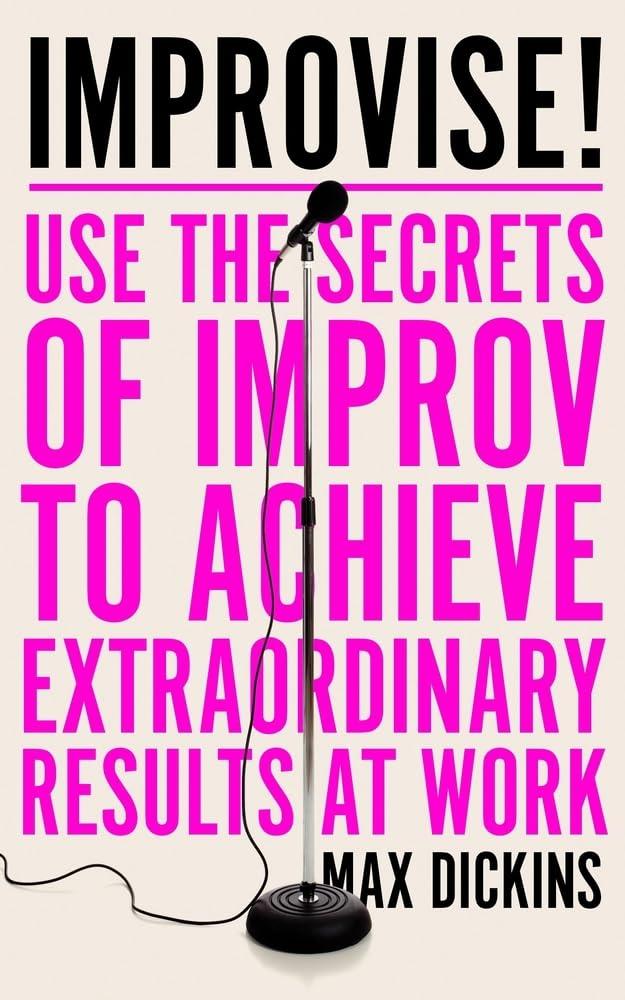
Improvise!
Use the Secrets of Improv to Achieve Extraordinary Results at Work
Max Dickins
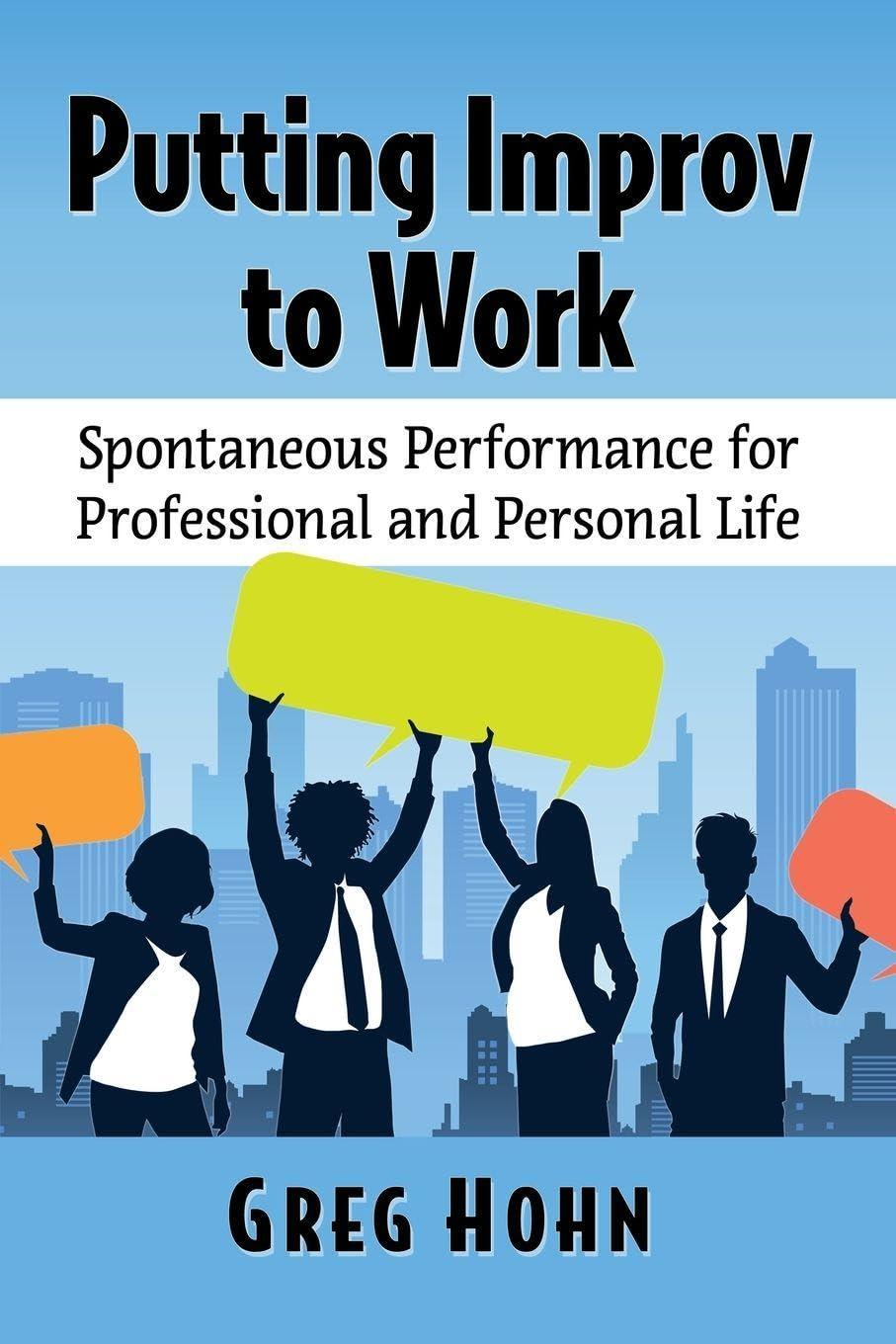
Putting Improv to Work
Spontaneous Performance for Leadership, Learning, and Life
Greg Hohn

The Art of Making Sh!t Up
Using the Principles of Improv to Become an Unstoppable Powerhouse
Norm LaViolette; Bob Melley

Comedy and Distinction
The Cultural Currency of a 'Good' Sense of Humour
Sam Friedman
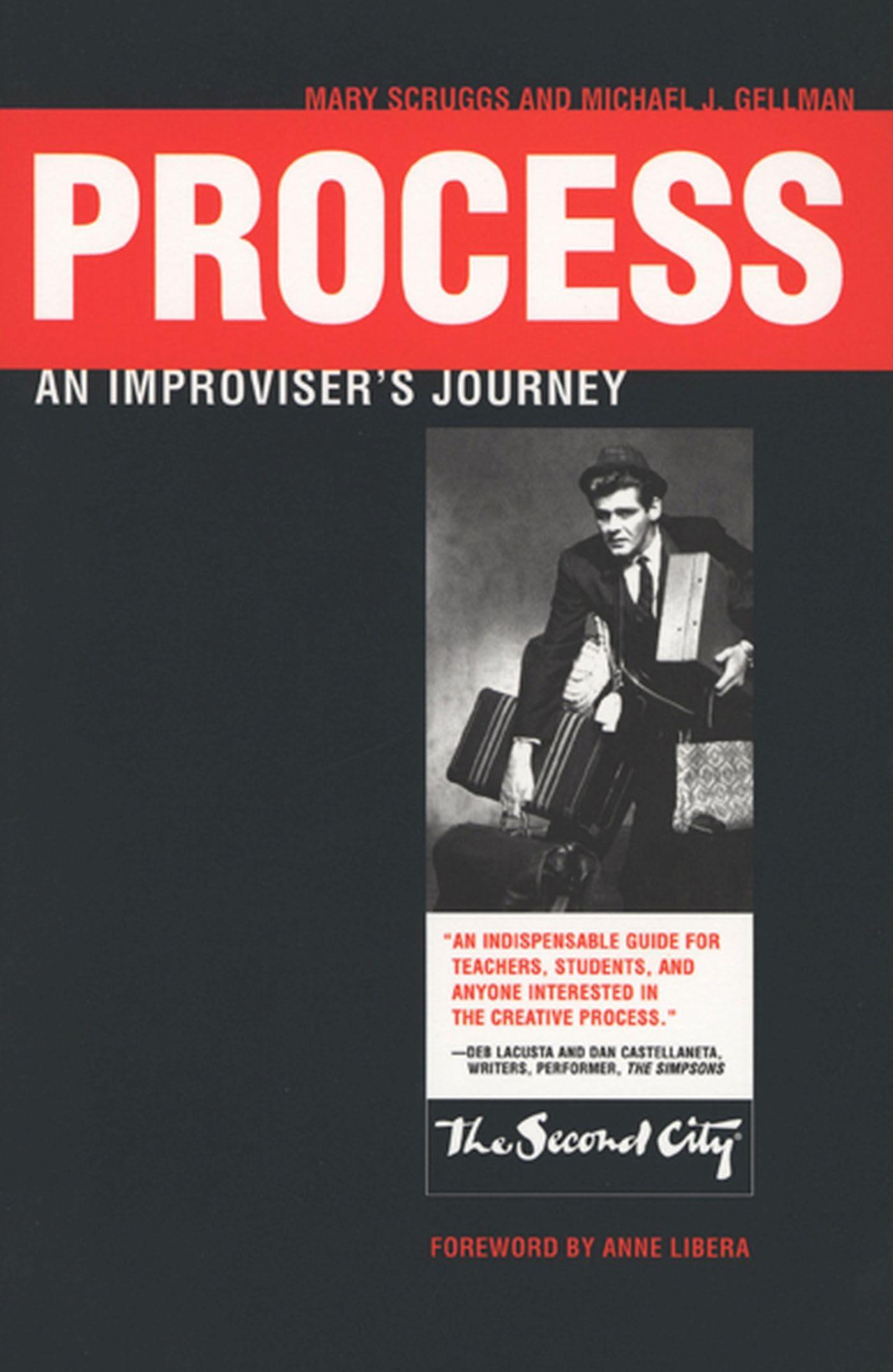
Process: An Improviser's Journey
Mary Scruggs; Michael J. Gellman
References
How to Reference This Page
The Improv Archive. (2026). Andrew Duncan. Retrieved March 17, 2026, from https://improvarchive.org/people/andrew-duncan
The Improv Archive. "Andrew Duncan." The Improv Archive, 2026. https://improvarchive.org/people/andrew-duncan.
The Improv Archive. "Andrew Duncan." The Improv Archive, 2026, https://improvarchive.org/people/andrew-duncan. Accessed March 17, 2026.
The Improv Archive is a systemically maintained repository. The archive itself acts as the corporate author.