Anthony Leblanc
Anthony LeBlanc is a Chicago-based improv performer, writer, director, and educator who trained at iO Theater (ImprovOlympic) before joining The Second City, where he wrote and performed in two Jeff Award-recommended Mainstage revues in 2009 and subsequently directed productions for Second City's main and e.t.c. stages, including a Kennedy Center touring production and a Woolly Mammoth Theatre collaboration nominated for the Helen Hayes Award for Best New Work. He served as Associate Artistic Director and Artistic Director of The Second City Training Center and was appointed Interim Executive Producer of The Second City in June 2020 following the resignation of co-owner Andrew Alexander amid allegations of institutionalized racism. He has also taught at Columbia College Chicago's Comedy Writing and Performance program and has been a public advocate for racial equity and neurodiversity in comedy institutions.
Career
LeBlanc trained at iO Theater in Chicago, where he has noted publicly that he was one of only two Black performers on the performance schedule during an extended period of his time there. He subsequently joined The Second City, beginning his affiliation with the institution around 2003.
As a performer and writer, he participated in two Second City Mainstage revues that ran during the 2009 season. America: All Better! (the 96th Mainstage Revue), directed by Matt Hovde, received a Jeff Award recommendation from the Joseph Jefferson Awards Committee. Taming of the Flu (the 97th Mainstage Revue, which opened December 6, 2009) was directed by Mick Napier and featured a cast that included Lauren Ash, Shelly Gossman, Brad Morris, Andy St. Clair, and Emily Wilson.
LeBlanc subsequently moved into directing at The Second City. His directing credits include Soul Brother, Where Art Thou? at the e.t.c. stage, The Winner of Our Discontent on the Second City Mainstage, and The Second City's Black History Month Show (2018), which featured iconic scenes by notable Black alumni including Keegan-Michael Key, Sam Richardson, and Amber Ruffin. In 2018 he co-created Generation Gap with Asia Martin, directing it at the John F. Kennedy Center for the Performing Arts in Washington, D.C., with a cast including Frank Caeti, Maureen Boughey, Holly Walker, Evan Mills, and Cody Dove. The show explored intergenerational satire through a blend of sketch and improvisation and toured through at least the summer of 2018. His production Nothing to Lose (But Our Chains) was produced in partnership with Woolly Mammoth Theatre Company in Washington, D.C., and received a Helen Hayes Award nomination for Best New Work.
LeBlanc held faculty positions at The Second City Training Center, where he taught and served as resident director, and at Columbia College Chicago, where he taught part-time in the Comedy Writing and Performance program. He was named Associate Artistic Director and subsequently Artistic Director of The Second City.
On June 6, 2020, The Second City announced LeBlanc's appointment as Interim Executive Producer following the resignation of co-owner Andrew Alexander, whose departure came amid public allegations of institutionalized racism at the company. LeBlanc was the most senior Black executive in The Second City's history to hold that role. He worked alongside an interim leadership team including COO Parisa Jalili, interim chief HR officer Maya Bordeaux, and interim chief diversity officer Christal Morris to address institutional accountability and programming direction during the transition period.
Following the pandemic shutdown of live theater, LeBlanc worked as an acting coach and dialogue coach for Nickelodeon and Paramount productions, including Knight Squad (Nickelodeon, 2018-2019), the All That reboot (Season 11), and The Really Loud House (Seasons 1 and 2).
Historical Context
The Second City's 2020 crisis, which produced Andrew Alexander's resignation and LeBlanc's appointment as Interim Executive Producer, was among the most publicly visible reckoning with institutional racism in American improv's history. The crisis emerged from a letter signed by hundreds of alumni and current performers documenting specific incidents of racism, including dismissal of complaints and inadequate responses to documented incidents. LeBlanc's appointment represented an institutional acknowledgment that leadership by a Black director with deep Second City roots was a necessary signal of intent rather than a cosmetic adjustment.
LeBlanc's observation that he was one of only two Black performers on the iO schedule during his training period documented a pattern that multiple Black improvisers from the same period described: the institutional infrastructure of Chicago's major improv schools in the early 2000s concentrated Black performers in marginal scheduling positions. His subsequent rise to Second City's executive leadership over seventeen years traced a career inside the same institutional structure he had identified as exclusionary, positioning him as a practitioner with firsthand knowledge of both the exclusion and the institution's capacity to change.
The Helen Hayes-nominated Nothing to Lose (But Our Chains) at Woolly Mammoth and the Kennedy Center production of Generation Gap represented Second City reaching into Washington, D.C.'s institutional theater circuit with productions under Black directorial leadership, a departure from the institution's typical touring profile.
Teaching Philosophy
LeBlanc has articulated a philosophy of institutional responsibility in comedy education, framing The Second City's role not only as a training organization but as a model for the broader field. His public statements during the 2020 transition emphasized that Second City's position as the flagship of comedy theatrical institutions created an obligation to demonstrate what equitable institutional practice looked like for other schools and theaters to observe and replicate.
His statements on access in the pandemic period identified how digital performance formats opened improv training to participants who could not access in-person programs, framing the disruption as a forced discovery of how comedy education could reach broader communities. He has spoken publicly about neurodiversity in comedy, self-identifying as autistic and advocating for accessibility in comedy programming and institutional culture.
Legacy
LeBlanc's appointment as Interim Executive Producer of The Second City in June 2020 made him the most senior Black executive in the institution's history to hold that role. His seventeen-year career inside the institution, from iO training to Mainstage performer to Training Center director to executive producer, documented a career arc that had not previously been traced by a Black performer within Second City's leadership structure.
His directing credits, particularly Nothing to Lose (But Our Chains) at Woolly Mammoth (Helen Hayes-nominated) and Generation Gap at the Kennedy Center, represent the most prominent Washington, D.C.-facing work in Second City's modern directing history and were produced under his directorial and curatorial leadership at a time when the institution was actively reconsidering its relationship to Black performance and audiences.
His public advocacy on racial equity in improv institutions, including his documented account of being one of two Black performers on iO's schedule during his training period, contributed to the public record of how Chicago's major training institutions structured access during the early 2000s.
Early Life and Training
LeBlanc was born and raised in Beaumont, Texas. He earned a BS in Computer Science and Physics from Loyola University New Orleans. During his time at Loyola, while working as a Resident Assistant, he organized a short comedic sketch show inspired by the television program Whose Line Is It Anyway? for fellow RAs in a dormitory common room. After the performance, the acting students on his floor invited him to join their sketch comedy group, Boxaganga, described at the time as the only sketch comedy ensemble in New Orleans. The group's position as the city's sole dedicated sketch company gave it an unusually high volume of performance opportunities. After graduating, LeBlanc pursued improv training at iO Theater (ImprovOlympic) in Chicago.
Personal Life
LeBlanc was born and raised in Beaumont, Texas, and is based in Chicago. He identifies publicly as autistic and as a Blerd (a self-description combining Black and nerd), and has advocated for neurodiversity and accessibility in comedy training and institutional programming.
Recommended Reading
Books are ordered from the strongest direct connection outward to broader relevance.
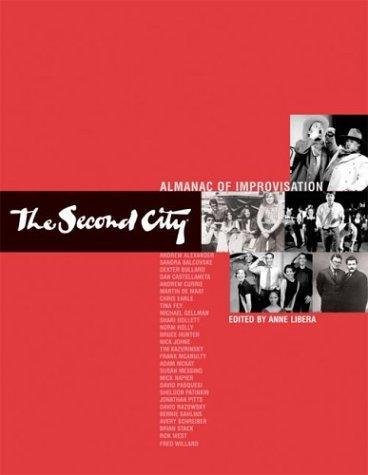
The Second City Almanac of Improvisation
Anne Libera

The Second City Unscripted
Revolution and Revelation at the World-Famous Comedy Theater
Mike Thomas
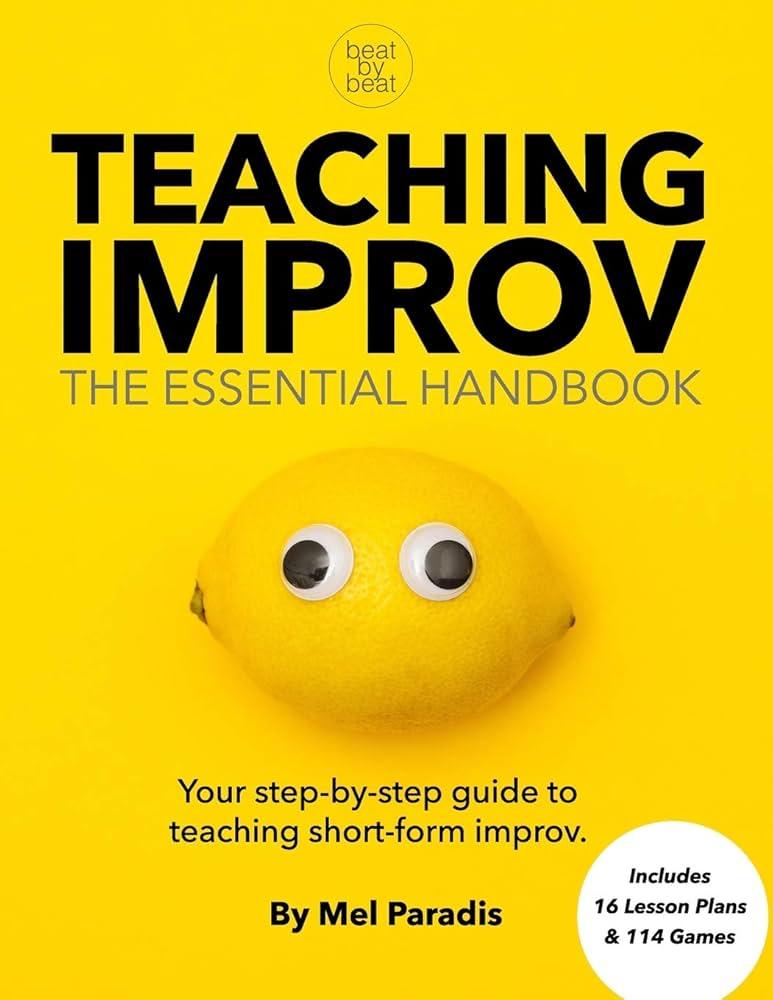
Teaching Improv
The Essential Handbook
Mel Paradis
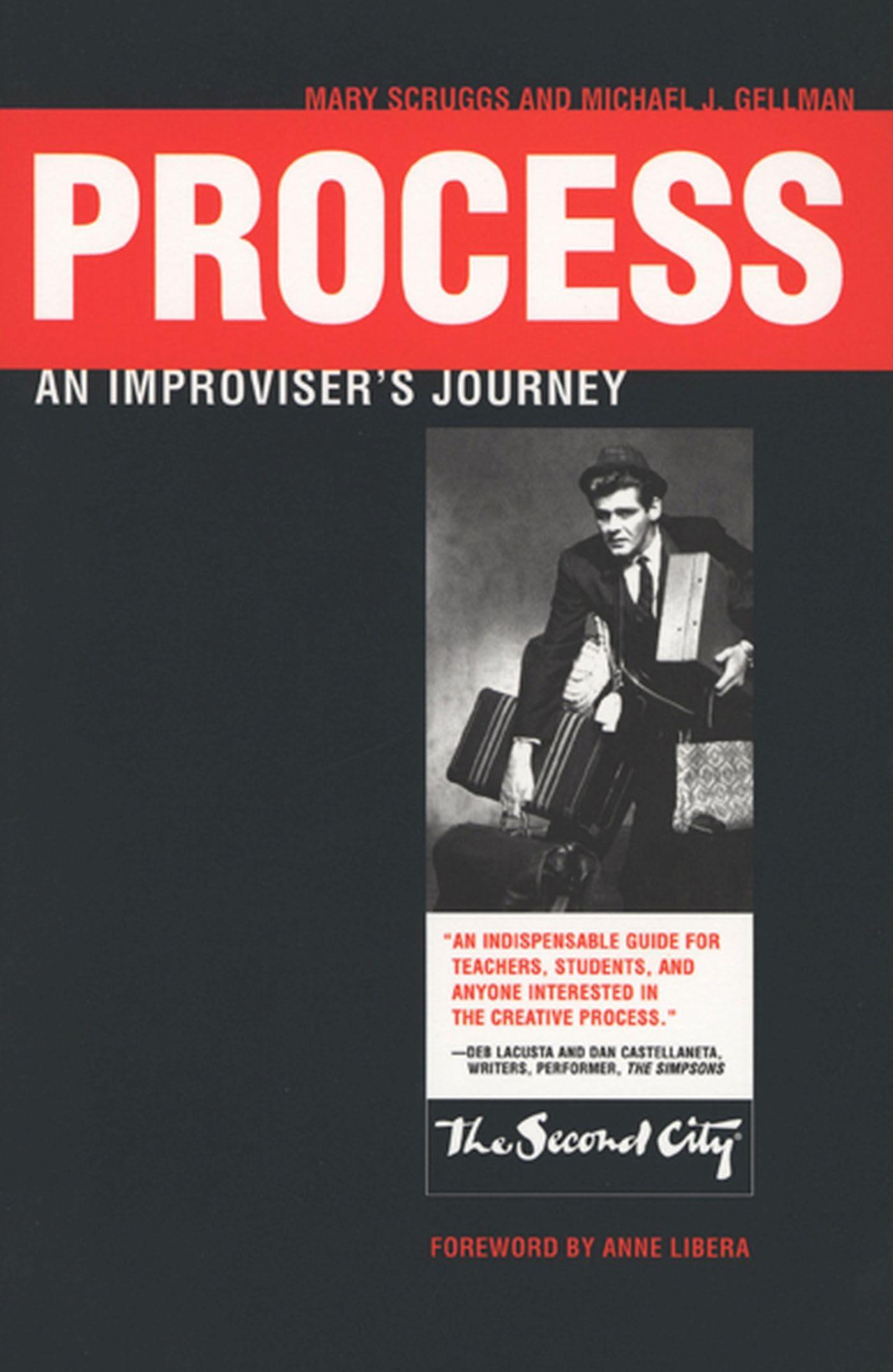
Process: An Improviser's Journey
Mary Scruggs; Michael J. Gellman

The Art of Chicago Improv
Short Cuts to Long-Form Improvisation
Rob Kozlowski

Whose Improv Is It Anyway?
Beyond Second City
Amy E. Seham
References
- Broadway World: Anthony LeBlanc Named Interim Executive Producer of The Second City (June 2020)
- WTTW: Second City Vows to Begin Again After Allegations of Racism (June 2020)
- American Theatre: Can Improv Theatre Work with These New Suggestions? (September 2020)
- DC Theater Arts: Generation Gap review (July 2018)
- Alliance Theatre: Anthony LeBlanc profile
How to Reference This Page
The Improv Archive. (2026). Anthony Leblanc. Retrieved September 28, 2026, from https://improvarchive.org/people/anthony-leblanc
The Improv Archive. "Anthony Leblanc." The Improv Archive, 2026. https://improvarchive.org/people/anthony-leblanc.
The Improv Archive. "Anthony Leblanc." The Improv Archive, 2026, https://improvarchive.org/people/anthony-leblanc. Accessed September 28, 2026.
The Improv Archive is a systemically maintained repository. The archive itself acts as the corporate author.