Barbara Harris
Barbara Harris (born July 25, 1935, Evanston, Illinois; died August 21, 2018, Scottsdale, Arizona) was an actress, improviser, and founding cast member of The Second City, where she was the first performer to appear on stage on opening night, December 16, 1959, singing Everybody's in the Know. She participated in Viola Spolin's theater game workshops at the Playwrights Theatre Club under Paul Sills in 1952 and was a member of the Compass Players from 1955 to 1958, the first professional improvisational theatre company in the United States. Her subsequent Broadway career produced three Tony Award nominations (1962, 1966, and 1967), with a win for Best Actress in a Musical for The Apple Tree (1966-1967), directed by Mike Nichols and co-starring Alan Alda. Her film career generated four Golden Globe nominations and an Academy Award nomination for Best Supporting Actress for Who Is Harry Kellerman and Why Is He Saying Those Terrible Things About Me? (1971).
Career
Harris was a member of The Compass Players from their founding in 1955 through approximately 1958. The Compass Players, operating out of the Compass Tavern at 1152 East 55th Street in Hyde Park, Chicago, was the first professional improvisational theatre company in the United States, organized by David Shepherd and Paul Sills. The company's core ensemble at various points included Mike Nichols, Elaine May, Roger Bowen, Andrew Duncan, and Shelley Berman, with Viola Spolin running workshops with the company during this period.
Despite divorcing Sills, Harris was cast in the founding company of The Second City, which opened on December 16, 1959. She was the first performer to appear on the stage that night, singing Everybody's in the Know in a spotlight. Tickets cost $1.50. Andrew Alexander, who later became Second City's CEO, described her as establishing at Second City the role of the ferociously smart woman who refused to be a mere adjunct to the male performers, bringing an emotional complexity rarely matched before or since.
In 1961, Sills brought Harris and the company to Broadway for From the Second City at the Royale Theatre (September 26 to December 9, 1961), which also featured Alan Arkin and Paul Sand. The production received a Tony Award nomination in 1962 for Best Featured Actress in a Musical. She also received a Theatre World Award for her 1962 work in Oh Dad, Poor Dad, Mamma's Hung You in the Closet and I'm Feelin' So Sad. In 1963 she co-starred with Anne Bancroft in Mother Courage at the Martin Beck Theater, directed by Jerome Robbins.
Harris starred in On a Clear Day You Can See Forever at the Mark Hellinger Theater from October 14, 1965, running through 1966 for 280 performances, receiving a Tony Award nomination for Best Actress in a Musical. She won the Tony Award for Best Actress in a Musical for The Apple Tree at the Shubert Theater (October 5, 1966 to November 25, 1967), directed by Mike Nichols and co-starring Alan Alda and Larry Blyden. In the show she played three distinct roles in a single evening. Mary Martin, presenting the award, remarked on her ability to give the impression she was making up her lines as she went along.
Her film debut came in A Thousand Clowns (1965, directed by Fred Coe, with Jason Robards), for which she received a Golden Globe nomination. Her performance in Who Is Harry Kellerman and Why Is He Saying Those Terrible Things About Me? (1971, directed by Ulu Grosbard, written by Herb Gardner, starring Dustin Hoffman) received an Academy Award nomination for Best Supporting Actress. Additional films include Plaza Suite (1971, with Walter Matthau), Nashville (1975, directed by Robert Altman, for which she received a Golden Globe nomination), Family Plot (1976, directed by Alfred Hitchcock in his final film, for which she received a Golden Globe nomination), Freaky Friday (1976, Disney, with Jodie Foster), The Seduction of Joe Tynan (1979, with Alan Alda and Meryl Streep), and Peggy Sue Got Married (1986, directed by Francis Ford Coppola). Her final film appearance was in Grosse Pointe Blank (1997). Lily Tomlin, reflecting on Harris's work in Nashville, said she was so stunning and original that Tomlin considered herself her greatest fan. Harris received four Golden Globe nominations across her film career.
Harris retired from performance after 1997 and lived quietly in Scottsdale, Arizona until her death from lung cancer on August 21, 2018, at age 83.
Historical Context
Harris's position at the intersection of the Playwrights Theatre Club, the Compass Players, and the Second City founding company places her at the origin point of the institutional lineage that became American long-form improvisation. Her presence in the Viola Spolin game workshops of 1952, at the Compass from 1955 through 1958, and as the literal first performer on the Second City stage in 1959 makes her biography a document of the sequential formation of that lineage rather than simply a participant in one of its phases.
The Compass Players were the first professional improvisational ensemble in the United States and the direct institutional predecessor to The Second City. Harris was among the core performers during both the Hyde Park Compass period and the founding Second City period, a continuity shared with only a small number of performers.
Her Tony win for The Apple Tree (1966), directed by Mike Nichols, connected the Second City founding generation directly to mainstream American commercial theater at its highest recognition level. Nichols, her Compass and Second City colleague, directing her to a Tony win for a role in which she played three characters in a single evening, documented how the character-shifting range developed in improv ensemble work transferred to award-winning performances in scripted Broadway musical theater.
Her Oscar nomination for Who Is Harry Kellerman (1971) and her work in Nashville and Family Plot extended the Second City founding generation's film presence into major American directors' work of the 1970s, a decade in which former Second City performers were establishing themselves as central figures in American comedy and drama.
Legacy
Harris is recognized alongside Elaine May as one of the two pioneering women of American improvisational theater. Her distinction from May lies in her institutional position: she was the first performer on the Second City stage, a symbolic foundation that Andrew Alexander explicitly framed as establishing the standard of ferociously smart women who refused to be mere adjuncts to male ensemble members.
Her career from the Compass Players through three Tony nominations and an Oscar nomination documented how the ensemble and character development practices of Chicago improvisation carried into the highest recognition contexts of American live theater and film simultaneously. She was the only performer to move from Spolin's 1952 workshops to Compass Players founding membership to Second City founding membership to Tony Award winner, a trajectory that no other figure from the original Chicago improv community traced in its entirety.
Her work in Nashville (1975, dir. Altman) and Family Plot (1976, dir. Hitchcock, his final film) placed a Second City founder in two of the most studied American films of the 1970s, extending the institutional lineage's public presence beyond comedy and theater into prestige American cinema.
Early Life and Training
Harris was born Barbara Densmoor Harris on July 25, 1935, in Evanston, Illinois. Her mother, Natalie, was an accomplished pianist whose maiden name, Densmoor, she incorporated into her own. Her father, Oscar Graham Harris, was an arborist who later became a businessman. She attended Senn High School in Chicago and Wilbur Wright College before studying briefly at the Goodman School of Drama at the Art Institute of Chicago. She began her stage career as a teenager at the Playwrights Theatre Club, founded in 1953 on the University of Chicago campus by Paul Sills, David Shepherd, and Eugene Troobnick. Fellow players at that company included Edward Asner, Elaine May, Mike Nichols, Joyce Piven, and Sheldon Patinkin. In the winter of 1952, Paul Sills began running workshops in Viola Spolin's theater games with the ensemble, and Harris was among the participants. She married Paul Sills in 1955; the marriage ended in divorce in 1958 or 1959 and produced no children.
Personal Life
Harris was born and raised in Evanston and Chicago, Illinois. She married Paul Sills in 1955; the marriage ended in divorce in 1958 or 1959 and produced no children. Following her retirement from performance, she lived quietly in Scottsdale, Arizona, giving very few interviews. She died of lung cancer in Scottsdale on August 21, 2018, at age 83.
Recommended Reading
Books are ordered from the strongest direct connection outward to broader relevance.

Something Wonderful Right Away
An Oral History of The Second City and The Compass Players
Jeffrey Sweet

Theatrical Improvisation
Short Form, Long Form, and Sketch-Based Improv
Jeanne Leep

The Second City Unscripted
Revolution and Revelation at the World-Famous Comedy Theater
Mike Thomas

Long Form Improvisation and American Comedy
The Harold
Matt Fotis
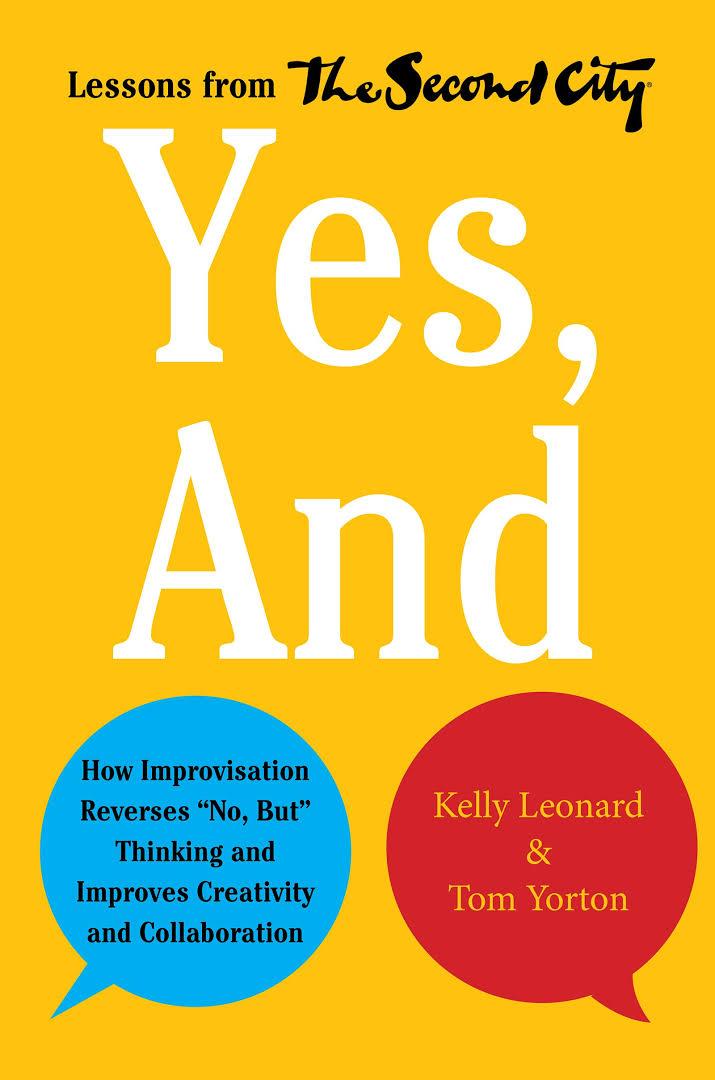
Yes, And
How Improvisation Reverses No, But Thinking and Improves Creativity and Collaboration
Kelly Leonard; Tom Yorton
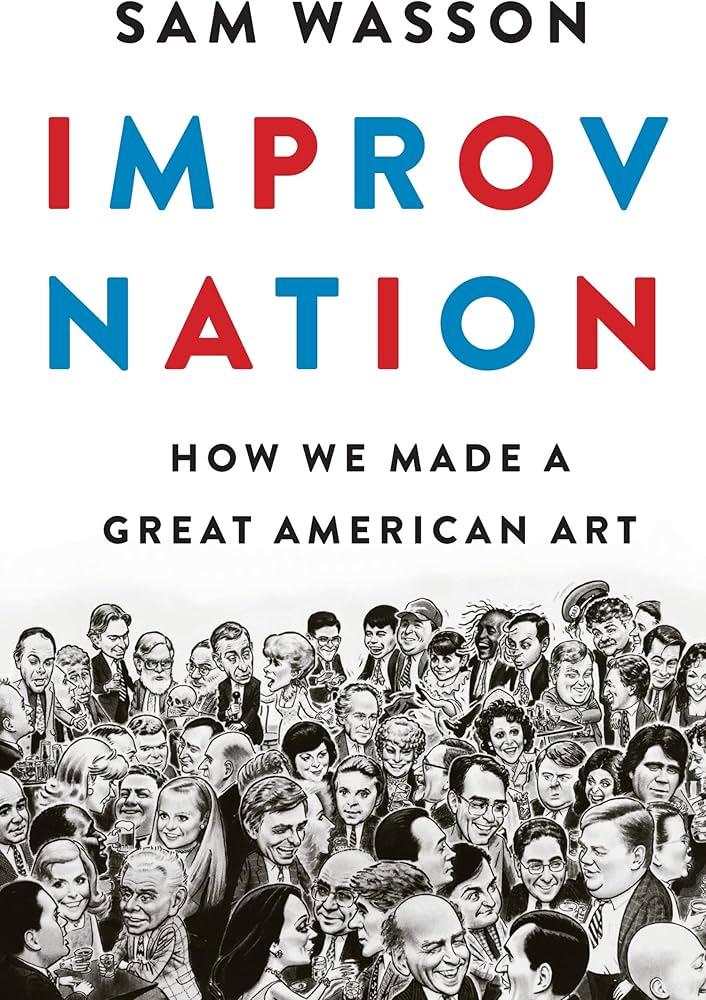
Improv Nation
How We Made a Great American Art
Sam Wasson
References
In the Archive
External Sources
- Chicago Tribune: Barbara Harris, member of first Second City cast who became a movie star, dies (August 2018)
- Playbill: Tony Winner Barbara Harris Passes Away at 83 (August 2018)
- The Second City: Remembering Barbara Harris
- Washington Post: Barbara Harris obituary (August 2018)
- Hollywood Reporter: Barbara Harris Dead (August 2018)
How to Reference This Page
The Improv Archive. (2026). Barbara Harris. Retrieved September 28, 2026, from https://improvarchive.org/people/barbara-harris
The Improv Archive. "Barbara Harris." The Improv Archive, 2026. https://improvarchive.org/people/barbara-harris.
The Improv Archive. "Barbara Harris." The Improv Archive, 2026, https://improvarchive.org/people/barbara-harris. Accessed September 28, 2026.
The Improv Archive is a systemically maintained repository. The archive itself acts as the corporate author.