Bernie Sahlins (1922-2013) was the producer, director, and co-founder of The Second City who transformed Chicago improvisation from an experimental breakthrough into one of the most durable comedy institutions in North America. A University of Chicago graduate who had already produced at the Studebaker Theatre and co-founded Playwrights Theatre Club, Sahlins invested the initial capital to open The Second City on North Wells Street in December 1959 alongside Paul Sills and Howard Alk, then stewarded the company through its most consequential decades of growth. Under his watch, Second City launched the careers of John Belushi, Dan Aykroyd, Gilda Radner, Bill Murray, John Candy, Martin Short, and Tina Fey, developed the Toronto company that produced SCTV, and established the producing model that Andrew Alexander extended after purchasing the company in 1985.
Career
Sahlins co-founded The Second City in December 1959 with Paul Sills and Howard Alk, investing the initial six thousand dollars that opened the cabaret theater on North Wells Street in Chicago's Old Town neighborhood. While Sills directed the foundational revues and Howard Alk departed early, Sahlins became the institutional constant: the producer who hired directors, assembled casts, managed the business, and maintained the artistic standard he summarized as always playing at the top of your intelligence.
Under his producing watch through the 1960s and 1970s, Second City became the most important comedy training ground in North America. The company's revue pipeline launched the careers of performers who reshaped American television comedy. John Belushi, Dan Aykroyd, Gilda Radner, and Bill Murray all passed through the Chicago company's casts during the years Sahlins was overseeing its artistic direction. John Candy, Eugene Levy, Martin Short, and Dave Thomas developed at the Toronto company that Second City opened in 1973.
The Toronto expansion was institutionally significant in its own right. In 1976 it produced the first season of SCTV, the sketch comedy television series that Sahlins helped develop and produce. SCTV ran through 1984 and became one of the most critically praised comedy series in North American television history, generating Emmy Awards and a devoted international audience. It gave Second City alumni a second platform beyond the stage and demonstrated that the company's ensemble sensibility could translate into television production.
Sahlins directed as well as produced, contributing to the creative work of the company across its first three decades. He sold The Second City to Andrew Alexander in 1985, ending his formal role in the institution he had co-founded but not his engagement with Chicago theater. In 1986 he co-founded the International Theatre Festival of Chicago, bringing international theater companies to the city in a major festival format. He also co-founded the Lithuanian International Theater Festival, extending his civic producing activities internationally.
He published a memoir, Days and Nights at The Second City, which documented the company's early decades from his perspective as its founding producer. He received the Joseph Jefferson Award and was named a Legend by the Illinois Arts Alliance. He died on June 16, 2013, at his home in Chicago, at the age of ninety.
Historical Context
Sahlins' historical role was to prove that the ensemble improv breakthrough of the 1950s could be institutionalized without losing its artistic standards. The Compass Players had demonstrated that improvisation could generate compelling public performance; Sahlins demonstrated that a company built on improvisational methods could sustain continuous operation across decades, train successive generations of performers, and generate significant commercial and cultural value.
The specific institutional innovation was the revue pipeline: a system in which improvised workshops generated material that was assembled into revues, performed in rotation, refined through audience response, and then replaced when the next cast's material was ready. This cycle kept Second City artistically renewable without requiring a repertory system or a single permanent ensemble, and it allowed the company to keep producing new performers rather than locking its alumni into permanent roles.
Sahlins' insistence that performers play at the top of their intelligence also had institutional consequences. It set a standard that distinguished Second City from variety entertainment and from pure comedy delivery, maintaining a connection to political satire, literary reference, and ensemble truth-telling that attracted both serious theater practitioners and audiences who wanted comedy with intellectual ambition.
The Toronto expansion in 1973 and SCTV beginning in 1976 were decisions that extended Second City's institutional reach from a single Chicago stage into Canadian media production, ensuring that the ensemble model had a television footprint as well as a live performance tradition. The performers and sensibility SCTV introduced to North American television audiences in the late 1970s and early 1980s shaped the expectations audiences brought to live comedy for a generation.
Key Events
Bernie Sahlins, Co-Founder and Producer of The Second City, Dies in Chicago
Bernie Sahlins died on June 16, 2013 in Chicago at the age of 90. Sahlins invested the initial $6,000 to open The Second City in 1959 and served as its producer for three decades, guiding the institution through its formative years and establishing it as the most influential comedy theatre in North America.
Legacy
Sahlins' legacy is most visible in the performers whose careers began under his stewardship. John Belushi, Dan Aykroyd, Gilda Radner, and Bill Murray formed the core of Saturday Night Live's inaugural cast in 1975, and their style of performance reflected years of training in the Second City system Sahlins built. John Candy, Eugene Levy, Martin Short, Dave Thomas, and Catherine O'Hara developed through the Toronto company he helped establish. Tina Fey, Chris Farley, and Mike Myers trained at Second City in the years when Sahlins' institutional culture still dominated the company's artistic values.
The SCTV television series, which he helped develop and produce, is consistently ranked among the greatest sketch comedy programs in North American television history. It introduced ensemble improv-trained performance to a national television audience and demonstrated that the Second City approach could produce distinctive television comedy rather than simply serving as a talent pipeline for other shows.
His memoir, Days and Nights at The Second City, is one of a small number of firsthand accounts of the company's founding decade and provides primary documentation for a period that would otherwise be reconstructed almost entirely from performers' memoirs and journalistic history.
The International Theatre Festival of Chicago, which Sahlins co-founded in 1986, became a significant event in Chicago's cultural calendar and reflected his conviction that serious theater required not only local institutional building but international context and exchange.
He received the Joseph Jefferson Award and was named a Legend by the Illinois Arts Alliance. The Second City's own institutional history treats his role as foundational: without Sahlins, the company as a sustained producing enterprise with the resources and continuity to train successive generations does not exist in the form it took.
Early Life and Training
Bernie Sahlins was born in Chicago in 1922 and graduated from the University of Chicago with an A.B. in 1943. His formation at the University of Chicago placed him in an intellectually rigorous environment that would inform his career-long demand for comic work that engaged audiences at the level of intelligence rather than mere entertainment. He entered Chicago's small-theater world in the early 1950s as a producer, co-founding Playwrights Theatre Club with Paul Sills and Eugene Troobnick, and bringing a producer's organizational perspective to an enterprise that was otherwise driven by directorial and performance ambition. In 1956 he took over the empty Studebaker Theatre in downtown Chicago and programmed a season of plays that included the Chicago premiere of Samuel Beckett's Waiting for Godot, demonstrating the range and seriousness of his theatrical interests before the improv era properly began.
Personal Life
Sahlins was married to Jane Sahlins. He was survived by a brother, Marshall. He died on June 16, 2013, at his home in Chicago, at the age of ninety. Funeral services were private.
Companies and Organizations
Associated venues and institutional relationships currently documented in the archive.
Recommended Reading
Books are ordered from the strongest direct connection outward to broader relevance.

Something Wonderful Right Away
An Oral History of The Second City and The Compass Players
Jeffrey Sweet

Improv Yourself
Business Spontaneity at the Speed of Thought
Joseph A. Keefe

The Art of Chicago Improv
Short Cuts to Long-Form Improvisation
Rob Kozlowski

Theatrical Improvisation
Short Form, Long Form, and Sketch-Based Improv
Jeanne Leep

The Second City Unscripted
Revolution and Revelation at the World-Famous Comedy Theater
Mike Thomas
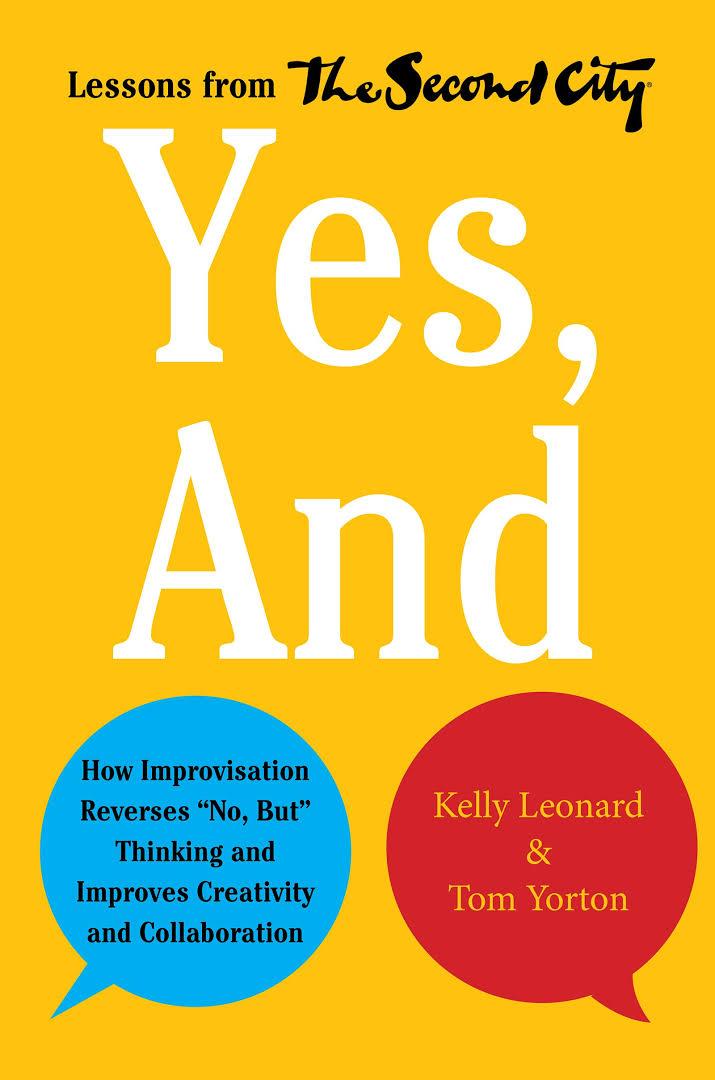
Yes, And
How Improvisation Reverses No, But Thinking and Improves Creativity and Collaboration
Kelly Leonard; Tom Yorton
References
In the Archive
How to Reference This Page
The Improv Archive. (2026). Bernie Sahlins. Retrieved September 29, 2026, from https://improvarchive.org/people/bernie-sahlins
The Improv Archive. "Bernie Sahlins." The Improv Archive, 2026. https://improvarchive.org/people/bernie-sahlins.
The Improv Archive. "Bernie Sahlins." The Improv Archive, 2026, https://improvarchive.org/people/bernie-sahlins. Accessed September 29, 2026.
The Improv Archive is a systemically maintained repository. The archive itself acts as the corporate author.