Christopher Oyen
Christopher Oyen was one of the founding members of Chicago City Limits in 1977, an improv ensemble co-founded by performers who had trained under Del Close in Second City Chicago's workshop program. Chicago City Limits relocated from Chicago to New York City in 1979 and became one of the earliest and longest-running improv companies in New York, producing over 10,000 performances at multiple venues across its history. Oyen had served as Second City's stage manager before co-founding Chicago City Limits and subsequently worked as an actor in film and television.
Career
Christopher Oyen was involved with Second City Chicago's workshop program in the years before 1977, studying under Del Close and serving as The Second City's stage manager. The stage manager role placed him in a position of institutional centrality within Second City's production operation: the stage manager coordinated the technical and logistical dimensions of the revue productions while maintaining visibility into the ensemble's performing and rehearsal work. His dual identity as a production professional and workshop participant gave him knowledge of both the technical and performance dimensions of the Second City institution during a period when Del Close was articulating the improvisational philosophy and pedagogy that would later define his work at the ImprovOlympic in Chicago.
In 1977, Oyen co-founded Chicago City Limits in Chicago alongside George Todisco, who served as the ensemble's primary artistic organizer, and fellow Second City workshop participants Linda Gelman, Bill McLaughlin, Carol Schindler, Paul Zuckerman, and Rick Crom. All of the founding members had trained in Second City's workshops under Close. The ensemble's collective formation out of a single training cohort gave Chicago City Limits a unified pedagogical foundation from the outset, grounded in Close's emphasis on ensemble commitment and honest scene work.
In 1978, Chicago City Limits participated in the Del Close Farewell Salute to Chicago, a gathering that marked Close's departure from his Chicago period. The event documented the ensemble's active relationship with Close at the time of the founding and placed Chicago City Limits within the institutional lineage of performers whose training Close had shaped directly.
In 1979, Chicago City Limits relocated from Chicago to New York City, where it performed at comedy clubs and venues including Catch a Rising Star, the Improv, the Duplex, and Folk City, developing a New York audience for ensemble improv before the group had a permanent venue of its own. In summer 1980, the ensemble established its own theater on West 42nd Street in Manhattan. Oyen is documented in the role of Stage Manager and Actor at Chicago City Limits' Jan Hus Playhouse location in 1980, combining his production and performance roles as the organization consolidated its New York presence.
Oyen subsequently departed Chicago City Limits, though the date of his departure is not documented in public sources. He developed an acting career in film and television, with credits including Tales of the Unexpected (1979), Superboy (1988), and Problem Child 2 (1991). No public record documents his activities or affiliations after 1991. The exact circumstances of his departure from Chicago City Limits and the trajectory of his career after his documented film credits are not available in publicly accessible sources.
Historical Context
Oyen's co-founding of Chicago City Limits placed him within the earliest wave of performers who transplanted Del Close's Second City workshop training to New York City, predating the Upright Citizens Brigade Theatre's New York establishment by nearly two decades and preceding the ImprovOlympic's own peak period of alumni production by nearly a decade. The Chicago City Limits founding ensemble was among the first groups to demonstrate that Chicago-style improv could sustain a permanent institutional presence in New York, a model that subsequent organizations including iO West and UCB Theatre New York followed as the American improv community expanded in the 1990s and 2000s.
Oyen's prior role as Second City's stage manager gave the Chicago City Limits founding cohort access to production infrastructure knowledge as well as performance training. The ensemble's ability to establish its own theater on West 42nd Street in 1980 and subsequently maintain a presence at multiple New York venues for more than two decades reflected the organizational competencies of its founding members, of which Oyen's backstage experience was one documented component. The transition from performing at open-access comedy clubs like Catch a Rising Star and the Improv to operating a dedicated ensemble theater space in 1980 represented a significant institutional development for the early New York improv scene.
The founding generation of Chicago City Limits, which Oyen was part of, established the core identity of the institution during its most formative years. George Todisco's death in 1981, four years after the founding, meant that the company passed through its first major leadership transition very early, requiring the remaining founding members to sustain the institution's identity and direction without its primary organizing figure.
Legacy
Chicago City Limits, which Oyen helped found, established the template for a permanent Chicago-trained improv institution in New York City and influenced the subsequent development of New York's improv ecosystem. The ensemble's multi-decade presence at venues including Jan Hus Playhouse, 1105 First Avenue, and The Broadway Comedy Club gave it a sustained role in training and presenting New York-based improvisers from the late 1970s through the 2010s, a record of more than 10,000 performances that places it among the most durable improv institutions in American comedy history.
Oyen's specific contribution to the institution's founding, through both his performing work and his production management skills carried from Second City, was part of the collective founding effort that produced one of American improv's most historically significant New York institutions. The undocumented nature of his departure from the company and the limited public record of his subsequent career limit the ability to trace his individual impact beyond the founding period, but his presence in the founding cohort gives him a documented place in the institutional genealogy of New York ensemble improv.
Early Life and Training
No birth date, birthplace, or educational background for Christopher Oyen has been confirmed in any publicly available source.
Recommended Reading
Books are ordered from the strongest direct connection outward to broader relevance.
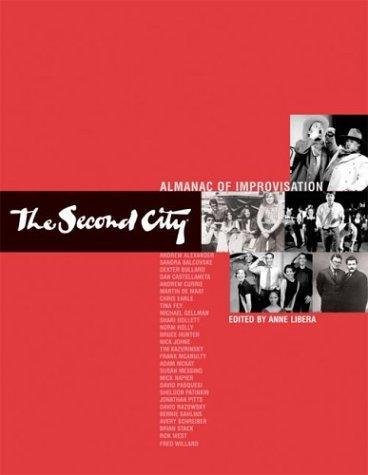
The Second City Almanac of Improvisation
Anne Libera

The Art of Chicago Improv
Short Cuts to Long-Form Improvisation
Rob Kozlowski
Process: An Improviser's Journey
Mary Scruggs; Michael J. Gellman

Chicago Comedy
A Fairly Serious History
Margaret Hicks; Mick Napier
Teaching Improv
The Essential Handbook
Mel Paradis

Something from Nothing
The Technique of Improvisation
Richard Goteri
References
How to Reference This Page
The Improv Archive. (2026). Christopher Oyen. Retrieved September 28, 2026, from https://improvarchive.org/people/christopher-oyen
The Improv Archive. "Christopher Oyen." The Improv Archive, 2026. https://improvarchive.org/people/christopher-oyen.
The Improv Archive. "Christopher Oyen." The Improv Archive, 2026, https://improvarchive.org/people/christopher-oyen. Accessed September 28, 2026.
The Improv Archive is a systemically maintained repository. The archive itself acts as the corporate author.