Dawn Toddy
Dawn Toddy is listed in the archive as an improv performer, but no biographical record for an individual of this name has been established in available public sources. Research in improv and comedy contexts has yielded no verifiable individual matching this identity in the public record.
No career record for an improv performer named Dawn Toddy has been found across searches of major improv institutional archives, national comedy databases, theater company rosters, Wikipedia, the Improv Resource Center wiki, or general web sources. The name 'Dawn Toddy' appears in a January 1994 Chicago Tribune profile of the Chicago improv ensemble ED as the title of a production directed by Jim Dennen, described in that article as meaning 'nothing in particular.' It is unclear whether the archive entry for this person derives from that show title or from documentation of an individual not represented in the public record.
Searches included improv venue rosters for Second City, iO Theater, Annoyance Theatre, ComedySportz, and related Chicago institutions; New York improv community records at the Upright Citizens Brigade Theatre, Magnet Theater, and Peoples Improv Theater; and broader regional and international improv documentation. Pittsburgh-area venues including Arcade Comedy Theater and Steel City Improv were also searched. No verifiable individual named Dawn Toddy was identified in any of these sources. Social media searches across Instagram, Facebook, and Twitter/X similarly returned no accounts associated with an improv performer of this name. The absence of any record in both the formal institutional archives of American improv and the broader internet presence typical of active performers suggests either that this entry was created from a non-person source such as a show title, or that the individual, if real, has left no documentable trace in accessible public records across more than thirty years of searchable internet history. The "Dawn Toddy" production's specific formal innovations, as documented in the Chicago Tribune's January 1994 profile, were significant within Chicago's experimental improv landscape of the period. The show incorporated live musical accompaniment by violin and guitar players, using the musicians in a directorial way: the music could play against the mood established by the performers, lead the action, or follow it, giving the production a dynamic relationship between improvised performance and live sound that distinguished it from the standard Chicago improv format. Jim Dennen's direction treated the musical element as an integral part of the ensemble's collaborative toolkit rather than as supplemental atmosphere. The ensemble's rehearsal discipline, described in the Tribune profile as six days weekly and four hours daily, reflected a commitment to ensemble coherence rare in the Chicago improv community of the period, which more typically relied on weekly rehearsals for house teams.
Historical Context
The ED ensemble, which produced the 1994 show called 'Dawn Toddy,' was a Chicago-based long-form improv group that worked in the tradition of extended, theme-based improvisation rather than short-form sketch. The ensemble included founding members Carlos Jacott and Melanie Hoopes and was directed by Jim Dennen. Their work at Facets Multimedia Performance Studio in 1994 represented one documented instance of Chicago's experimental long-form improv practice during the mid-1990s, a period of significant institutional development in the city's improv scene. Whether the name 'Dawn Toddy' in the archive refers to this show, to an individual who performed in it, or to an entirely separate person remains unresolvable given the available evidence. The ED ensemble's work in the mid-1990s Chicago scene paralleled other experimental long-form ensembles active in the city during the same period. Carlos Jacott, who described his ED work as involving full investment rather than performed character at a distance, also participated in Jazz Freddy, another Chicago long-form experimental ensemble of the era, which included performers who would go on to significant subsequent careers including Dave Koechner, Brian Stack, Rachel Dratch, Jimmy Carrane, and Kevin Dorff. The overlap in personnel between Jazz Freddy and ED reflected the tight networks of Chicago's experimental long-form community, in which performers moved between ensembles and cross-pollinated approaches across the city's various experimental companies. Facets Multimedia Performance Studio, where "Dawn Toddy" ran, was a Chicago arts organization primarily known for its film programming and distribution work but which hosted live performance as part of its arts presenting mission, situating the ED ensemble's work within Chicago's broader experimental arts infrastructure rather than purely within the improv comedy institution network.
Legacy
If 'Dawn Toddy' is a show title rather than a person, the ED ensemble's long-form work in the mid-1990s Chicago scene reflects the period's broader exploration of improvisation as theatrical rather than comedic form. The absence of any verifiable individual record under this name in four decades of documented American improv suggests either an extremely limited public footprint or an archival misattribution from a non-person source. Carlos Jacott's subsequent career following his ED ensemble work in Chicago demonstrates the talent that passed through the city's experimental long-form community during the mid-1990s. His film breakthrough came with "Grosse Pointe Blank" (1997), followed by a role in "Being John Malkovich" (1999) and his television debut in a 1995 "Seinfeld" episode. He went on to appear in a recurring role in HBO's "Big Love" (2006-2011) and developed a parallel writing career with six writing credits on "Psych" (2011-2014). Melanie Hoopes, the other founding member of ED named in the Tribune profile, and Jim Dennen represent the fuller personnel of an ensemble whose institutional record has been largely subsumed by the broader history of the period's Chicago improv. The ED ensemble's distinctive contribution, a long-form practice that treated improv as theatrical rather than comedic, that integrated live musicians, and that committed to ensemble development through daily rehearsal, represents one instance of the serious theatrical approach to improvisation that coexisted with Chicago's more prominent comedy-oriented institutions throughout the 1990s.
Recommended Reading
Books are ordered from the strongest direct connection outward to broader relevance.

Long Form Improvisation and American Comedy
The Harold
Matt Fotis

Truth in Comedy
The Manual of Improvisation
Charna Halpern; Del Close; Kim Howard Johnson
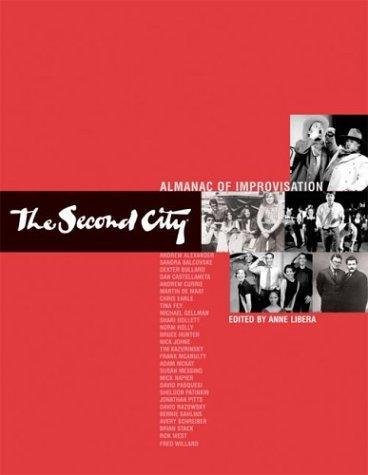
The Second City Almanac of Improvisation
Anne Libera
Improvise
Scene from the Inside Out
Mick Napier

Chicago Comedy
A Fairly Serious History
Margaret Hicks; Mick Napier

The Upright Citizens Brigade Comedy Improvisation Manual
Matt Besser; Ian Roberts; Matt Walsh
References
In the Archive
How to Reference This Page
The Improv Archive. (2026). Dawn Toddy. Retrieved September 28, 2026, from https://improvarchive.org/people/dawn-toddy
The Improv Archive. "Dawn Toddy." The Improv Archive, 2026. https://improvarchive.org/people/dawn-toddy.
The Improv Archive. "Dawn Toddy." The Improv Archive, 2026, https://improvarchive.org/people/dawn-toddy. Accessed September 28, 2026.
The Improv Archive is a systemically maintained repository. The archive itself acts as the corporate author.