Elaine May
Elaine May is one of the five or six most consequential figures in the history of American improvisational comedy. Born Elaine Iva Berlin on April 21, 1932, in Philadelphia, Pennsylvania, she was a founding member of the Compass Players in 1955, the first improvisational theater in the United States; a co-developer of foundational improv principles at the St. Louis Compass; and one half of Nichols and May, the duo whose Broadway run, Grammy-winning albums, and television appearances introduced improvisation-derived comedy to mass American audiences. As a filmmaker she directed A New Leaf (1971), The Heartbreak Kid (1972), Mikey and Nicky (1976), and Ishtar (1987). As a screenwriter she received Oscar nominations for Heaven Can Wait (1978) and Primary Colors (1998) and won the BAFTA Award for Best Adapted Screenplay for Primary Colors. She received the Tony Award for Best Actress in a Play in 2019 for The Waverly Gallery and the Honorary Academy Award in 2022.
Career
Elaine May was born Elaine Iva Berlin on April 21, 1932, in Philadelphia, Pennsylvania. Her father Jack Berlin was a Yiddish theater actor, director, and writer who ran a traveling theater company; May performed with his company from age three, playing children and other small parts. When Jack Berlin died of a heart attack in March 1942, May and her mother relocated to Los Angeles.
May never formally enrolled in or graduated from high school. In the early 1950s she moved to Chicago, where she audited classes at the University of Chicago without formal enrollment, a common practice among the Hyde Park intellectual community that was incubating what would become the Compass Players. She studied Method acting, supported herself with various jobs, and became embedded in the social world from which American improv's founding generation emerged.
In 1955 May became a founding member of the Compass Players, the first improvisational theater in the United States, co-founded by Paul Sills and David Shepherd and launched on July 8, 1955, at 1152 E. 55th Street in Chicago near the University of Chicago campus. The founding ensemble included Shelley Berman, Barbara Harris, and subsequently Mike Nichols, Severn Darden, and Del Close, among others. May quickly became one of the company's most distinctive performers, known for psychologically dense character work and razor-sharp dialogue that drew on her self-educated familiarity with psychoanalytic language and social satire.
In 1956 and 1957, when the Compass expanded to a St. Louis venue, May and director Ted Flicker collaborated on an ongoing analysis of improvisational performance that produced what became known as the Westminster Place Kitchen Rules, a set of codified principles including: never deny your partner's reality; take the active choice; justify whatever happens onstage; avoid argument for its own sake; and several additional precepts now recognizable as early articulations of the yes-and ethic. These rules, documented in the history of the Compass and attributed in part to May's analytical mind, are among the earliest written codifications of improvisational principles and directly preceded the teaching frameworks that Close and Sills would later elaborate.
In 1957 May and Nichols left the Compass to form their own two-person act. They debuted at the Village Vanguard in Manhattan, opening for Mort Sahl, and subsequently became regulars at the Blue Angel nightclub on East 55th Street. Their act combined improvised character scenarios, satirical sketches, and variations on written premises that they improvised differently each performance, maintaining the Compass methodology in a cabaret context. They also performed alongside Joan Rivers and Woody Allen in Greenwich Village venues.
Their debut album Improvisations to Music won the Grammy Award for Best Comedy Performance in 1959. On October 8, 1960, An Evening with Mike Nichols and Elaine May opened at the John Golden Theatre on Broadway, running for 306 performances until July 1, 1961. A second Grammy nomination followed for the Broadway cast recording. The partnership dissolved in 1961: Nichols wanted to refine and polish successful material, while May preferred to sustain the improvisational openness that had characterized the Compass.
Throughout the 1960s May worked as a playwright and actress. Her plays include A Matter of Position (1962, Berkshire Theatre Festival, closed in tryout), Not Enough Rope (1962, off-Broadway), The Third Ear (1964), and Adaptation (1969, Cherry Lane Theatre), which won the Drama Desk Award for Most Promising Playwright and used a game-show structure to satirize human social behavior. She also acted in Luv (1967) on Broadway alongside Jack Lemmon and Peter Falk, and in Enter Laughing (1967).
A New Leaf (1971), which May wrote, directed, and starred in alongside Walter Matthau, marked her transition into filmmaking. It made her the first female director with a Hollywood studio deal since Ida Lupino in the late 1940s. May's 180-minute cut was edited by Paramount to 102 minutes over her objection; her subsequent lawsuit was unsuccessful. The Heartbreak Kid (1972), which she directed from a Neil Simon screenplay, starred Charles Grodin, Cybill Shepherd, and Eddie Albert, and featured her daughter Jeannie Berlin in the role that earned Berlin a Golden Globe nomination.
Mikey and Nicky (1976), which May wrote and directed, was a spare crime drama starring Peter Falk and John Cassavetes. The production became notorious for its budget overruns, its vast footage shot, and May's alleged removal of reels to a Connecticut location to prevent Paramount from seizing them. The Criterion Collection has since released it as a recognized classic. Ishtar (1987), starring Dustin Hoffman and Warren Beatty, was savaged by critics and media coverage at release and was widely reported as a box-office catastrophe; subsequent decades have produced substantial critical reassessment.
As a screenwriter May co-wrote Heaven Can Wait (1978) with Warren Beatty, receiving an Oscar nomination for Best Adapted Screenplay and a Writers Guild Award; contributed uncredited work to Reds (1981) and Tootsie (1982); received a screen story credit for Labyrinth (1986); and wrote the screenplays for The Birdcage (1996, directed by Mike Nichols) and Primary Colors (1998, also directed by Nichols), for which she received an Oscar nomination and won the BAFTA Award for Best Adapted Screenplay. In Small Time Crooks (2000) she received the National Society of Film Critics Award for Best Supporting Actress.
In 2018 and 2019, May returned to Broadway in Kenneth Lonergan's The Waverly Gallery, directed by Lila Neugebauer, playing Gladys Green, a Greenwich Village art dealer declining into dementia. The production ran 126 performances at the John Golden Theatre. At the 2019 Tony Awards she received Best Actress in a Play, becoming, at age 86 or 87, among the oldest competitive Tony Award recipients for acting. She also received the Drama Desk Award and Outer Critics Circle Award for the role.
In 2022 May received the Honorary Academy Award, presented at the 94th Academy Awards ceremony, honoring her bold, uncompromising contributions to cinema as a writer, director, and actress. A biography, Miss May Does Not Exist, by Carrie Courogen, was published in 2024.
Historical Context
Elaine May's presence at the Compass Players from its 1955 founding places her at the single most consequential origin point in the history of American improvisational comedy. The Compass was the first institution to develop sustained ensemble improvisation as a public theatrical form in the United States, and its members, including May, Close, Sills, Nichols, Berman, and Harris, constituted the founding generation from which every major American improv institution would ultimately trace its lineage.
May's co-development of the Westminster Place Kitchen Rules at the St. Louis Compass in 1956 and 1957 gave her a role in articulating what improvisation was supposed to do that went beyond performance into theory and pedagogy. The rules she and Flicker codified during those months, particularly the prohibitions against denial and argument for its own sake and the prescriptions for active choices and justification, anticipate the teaching frameworks that Close would later formalize as the Harold's guiding principles. This makes May not only a founding performer but a founding theorist of American improv.
The Nichols and May partnership's commercial success, particularly the Broadway run of An Evening with Mike Nichols and Elaine May and the Grammy-winning recordings, performed a cultural function that no Chicago-based improv venue could replicate: it brought improvisation-derived character comedy to a national audience of millions who would not travel to Chicago to see the Compass or Second City. The couple's television appearances, nightclub sets, and recordings made the sensibility of Hyde Park-rooted improvisational comedy audible and visible across American culture in the late 1950s and early 1960s.
May's film directing career, compressed into four features over sixteen years, was constrained at every turn by the studio system's resistance to her working methods and, critics have argued, by systematic gender discrimination. Her battles with Paramount over A New Leaf and Mikey and Nicky, her reputation as 'difficult,' and the media pile-on over Ishtar's costs and reception all reflect dynamics that were applied differently to male directors making expensive films with difficult personalities. The subsequent critical rehabilitation of Mikey and Nicky and, to a lesser extent, Ishtar has confirmed what her defenders argued contemporaneously: that her films were better than their receptions suggested.
Key Events
Mike Nichols and Elaine May Join the Compass Players
Mike Nichols and Elaine May begin performing together with the Compass Players, developing the improvisational partnership that makes them one of the most celebrated comedy duos of the twentieth century. Their scenes demonstrate a new level of psychological sophistication in improvised performance, drawing on character, subtext, and the unspoken tensions between people. Their work with the Compass sets the standard for character-based improv comedy.
Compass Players Dissolves, Its Ensemble Dispersing to Found The Second City and Nichols and May
The Compass Players ceased operations by 1958, ending approximately three years of improvisational performance in Chicago and St. Louis. Mike Nichols and Elaine May formed their duo and moved to New York City, performing material developed during their Compass years. Paul Sills, Bernie Sahlins, and Howard Alk founded The Second City in Chicago in December 1959, carrying the Compass's improvisational methods into a durable institutional form.
Mike Nichols and Elaine May Open on Broadway
"An Evening with Mike Nichols and Elaine May" opens on Broadway at the John Golden Theatre, running for 306 performances. The show demonstrates that improvisational comedy can reach mainstream audiences without sacrificing sophistication or intelligence. The Broadway success brings unprecedented national attention to the Chicago improv tradition and introduces character-driven, psychologically grounded improvised comedy to the American theatrical mainstream.
Teaching Philosophy
Elaine May's approach to improvisation, as documented through the Westminster Place Kitchen Rules she co-developed with Ted Flicker at the St. Louis Compass in 1956 and 1957, reflected a commitment to performance that was specific, active, and grounded in authentic relational response rather than in predetermined joke moves or crowd-pleasing shortcuts. The rules prohibited denial of established reality, argument for its own sake, and passive or reactive scenic choices; they mandated active choice-taking and the justification of whatever emerged onstage, principles that are now foundational in virtually every major improv training tradition.
May's aesthetic in both performance and direction was described by collaborators as demanding and uncompromising: she expected performers to be genuinely present, genuinely thinking, and genuinely responsive to their partners rather than performing a version of presence for the audience's benefit. This expectation of authenticity over technique was, in the Compass context, a departure from the comedy performance norms of the 1950s, which prized setup-punchline structure and audience-facing presentational delivery. May's insistence on character depth and real-time responsiveness established a performance ethic that Close would subsequently systematize and teach through the Harold.
Legacy
Elaine May's legacy operates across three domains that overlap without fully coinciding: improvisational comedy, American film, and popular comedy performance.
In improv, her status as a Compass founding member and Kitchen Rules co-developer makes her one of the form's four or five most historically significant figures alongside Viola Spolin, Paul Sills, Del Close, and Keith Johnstone. Her influence on the yes-and ethic is documented rather than inferred: the principles she codified at the St. Louis Compass in 1956 and 1957 are direct predecessors of the language that later practitioners used to teach the form.
In American film, her four features are now recognized as a body of work that demonstrates substantial formal intelligence and artistic ambition. The Criterion Collection's release of Mikey and Nicky placed it in the permanent canon of American independent cinema. The Heartbreak Kid has been cited as a key film in the development of the dark romantic comedy, and A New Leaf remains a distinctive artifact of early-1970s Hollywood filmmaking by a woman working against institutional resistance.
Her screenwriting contribution to The Birdcage and Primary Colors, both directed by Nichols, reconnected the creative partnership from forty years earlier in commercial and critically successful films, demonstrating the sustained vitality of a collaboration that had first formed at the Compass. The Tony Award for The Waverly Gallery in 2019 confirmed her active theatrical importance well into her eighties.
A biography, Miss May Does Not Exist (2024) by Carrie Courogen, contributes to the growing body of scholarship that positions her as a figure whose canonical importance was underrecognized relative to her actual contribution, partly as a result of her own reclusiveness and partly as a result of the cultural patterns that have systematically undervalued women's creative work.
Early Life and Training
Elaine May was born Elaine Iva Berlin on April 21, 1932, in Philadelphia, Pennsylvania. Her father Jack Berlin was a Yiddish theater actor, director, and playwright who ran a traveling theater company; May performed with his troupe from age three. Jack Berlin died of a heart attack in March 1942, when May was approximately nine or ten years old. She and her mother subsequently relocated to Los Angeles. May never formally enrolled in high school or college. In the early 1950s she settled in Chicago, where she became part of the University of Chicago community that produced the Compass Players and audited classes without formal enrollment.
Personal Life
Elaine May married Marvin May, a toy inventor and high school classmate, in 1948 at age sixteen. Their daughter, actress Jeannie Berlin, was born November 1, 1949. The marriage ended by approximately 1950 and was finalized in divorce in 1960. She subsequently married lyricist Sheldon Harnick on March 25, 1962; the marriage lasted only months. She later married psychoanalyst David L. Rubinfine, who died in 1982. May maintained a long-term relationship with film director Stanley Donen from 1999 until his death in 2019.
Recommended Reading
Books are ordered from the strongest direct connection outward to broader relevance.
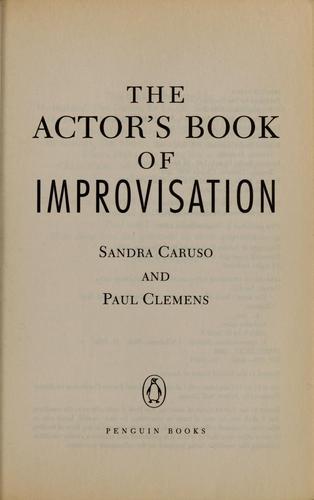
The Actor's Book of Improvisation
Sandra Caruso; Paul Clemens

The Art of Chicago Improv
Short Cuts to Long-Form Improvisation
Rob Kozlowski

The Improv Handbook
The Ultimate Guide to Improvising in Comedy, Theatre, and Beyond
Tom Salinsky; Deborah Frances-White

Theatrical Improvisation
Short Form, Long Form, and Sketch-Based Improv
Jeanne Leep

The Second City Unscripted
Revolution and Revelation at the World-Famous Comedy Theater
Mike Thomas
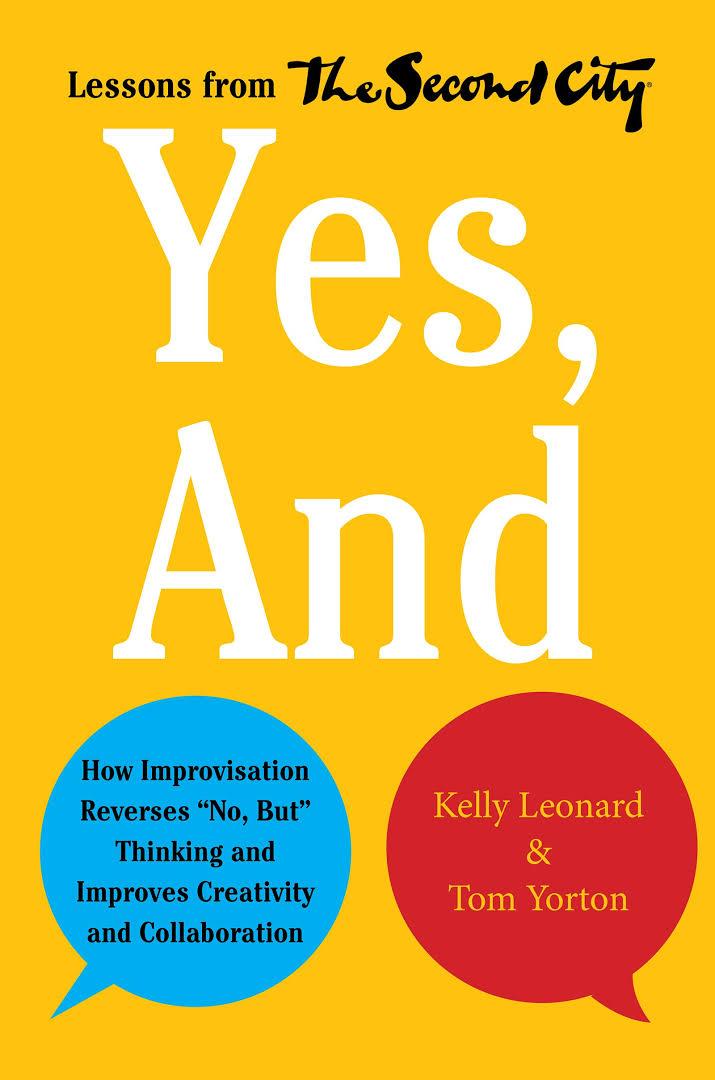
Yes, And
How Improvisation Reverses No, But Thinking and Improves Creativity and Collaboration
Kelly Leonard; Tom Yorton
References
In the Archive
How to Reference This Page
The Improv Archive. (2026). Elaine May. Retrieved September 28, 2026, from https://improvarchive.org/people/elaine-may
The Improv Archive. "Elaine May." The Improv Archive, 2026. https://improvarchive.org/people/elaine-may.
The Improv Archive. "Elaine May." The Improv Archive, 2026, https://improvarchive.org/people/elaine-may. Accessed September 28, 2026.
The Improv Archive is a systemically maintained repository. The archive itself acts as the corporate author.