Jamie Wyllie
Jamie Wyllie, known universally as Willie, co-founded the Canadian Improv Games in Ottawa in 1977 at age nineteen alongside Howard Jerome, drawing on David Shepherd's Improv Olympics concept to create competitive improvisational theatre for Canadian high school students. Over thirty-seven years of sustained volunteer leadership as board chair, primary funder, and public ambassador, Wyllie built the organization from eight Ottawa-area teams to a national program with fourteen regional chapters that engaged more than one hundred thousand teenagers. Alumni of the program include Sandra Oh, Seth Rogen, Nathan Fielder, Alanis Morissette, Tatiana Maslany, and Andrew Phung. He died on October 2, 2014, at age fifty-six, after complications from leukemia, reportedly continuing to direct the organization from his hospital bed via iPad.
Career
Jamie Wyllie co-founded the Canadian Improv Games in Ottawa in 1977, when he was nineteen years old and still a student at Carleton University. Working with actor Howard Jerome, who had been influenced by David Shepherd's Improv Olympics concept, Wyllie organized the first competitive improvisational matches among Ottawa-area high school teams under the name Stage Fright, the ensemble he had formed. The format placed student improv teams in competitive head-to-head performance scenarios evaluated by adjudicators, introducing competitive structure to improvisational theatre in a secondary education context.
The Canadian Improv Games remained an Ottawa-based regional program through the early 1980s, with Wyllie sustaining it primarily through personal involvement, direct fundraising, and his own financial contributions. The organization's national expansion accelerated after the National Arts Council partnered with the program in 1988. Through the 1990s, working alongside Johnson Moretti, Wyllie extended the games to a national network, and the competitions achieved sufficient prominence to receive hour-long live coverage on YTV, the Canadian youth television network. By the time of his death, the organization operated fourteen regional programs across Canada.
Wyllie's professional career ran in parallel with his volunteer leadership of the Improv Games. He completed a law degree and a master's degree while chairing the organization's board, then practiced law at an Ottawa firm before becoming a partner at BrazeauSeller. His legal work encompassed corporate law, labor law, and copyright law, with particular involvement in intellectual property matters for technology companies during the Ottawa technology sector's growth in the 1990s. He also taught part-time at Carleton University for fifteen years, where he met his future wife.
He later completed a PhD in theology through correspondence study, an undertaking that colleagues found improbable given the demands of his legal career and organizational leadership. Throughout this period he continued to serve as the Canadian Improv Games' primary public ambassador, board chair, and funding anchor, writing the organization's opening oath, which emphasized loving competition and concluded with an instruction to have fun, and personally maintaining donor relationships that kept the program financially viable.
In 1999, Wyllie was hospitalized with a severe lung infection and placed in a medically induced coma for three months. He recovered but experienced ongoing health complications. He was diagnosed with leukemia approximately six years before his death. Despite sustained illness, he continued active involvement in the Improv Games through his final months, reportedly directing organizational matters from his hospital bed via iPad. He died on October 2, 2014, at age fifty-six.
Historical Context
The Canadian Improv Games that Wyllie co-founded in 1977 occupied a distinctive position in the history of improvisational theatre. The program's structure, which brought competitive improv into the secondary education system as a formal youth theatre activity rather than as professional performance training, addressed a different population and institutional context than the Chicago-lineage improv schools and theatres developing simultaneously in the United States. Where Second City and ImprovOlympic directed their energies toward adult performers building professional careers, the Canadian Improv Games delivered the core improvisational principles of listening, collaboration, spontaneous response, and positive affirmation of scene partners to teenagers encountering theatre for the first time in school settings.
The Improv Olympics concept David Shepherd had developed and that Howard Jerome transmitted to Wyllie predates the Canadian Improv Games' founding by several years, giving the program a direct genealogical link to the improvisational traditions developing in Chicago and New York in the late 1960s and early 1970s. Wyllie's contribution was to institutionalize that concept within Canadian secondary education at a national scale, building a durable organizational structure through three-and-a-half decades of sustained voluntary leadership that most improvisational programs do not achieve.
The National Arts Council's 1988 partnership formalized the program's institutional standing within Canadian cultural infrastructure, placing youth improv within the same funding mechanisms that support theatrical and arts education programs nationwide. The organization's subsequent expansion to fourteen regional chapters, its YTV television coverage, and its emergence as a career entry point for performers who went on to major professional careers gave the Canadian Improv Games a confirmed place in the institutional history of Canadian improvisation.
Legacy
More than one hundred thousand Canadian teenagers participated in the Canadian Improv Games during Wyllie's thirty-seven years of stewardship, making his sustained organizational leadership one of the most far-reaching interventions in youth improv education in North America. The alumni list the program generated includes Sandra Oh, Seth Rogen, Nathan Fielder, Alanis Morissette, Tatiana Maslany, and Andrew Phung, confirming the program's role as an early performance training ground for major figures in Canadian and North American entertainment.
Wyllie's organizational model, sustaining a national youth improv program through volunteer board leadership, personal fundraising, and institutional partnership with the National Arts Council rather than through commercial performance or school-based employment, established a template for how competitive improv programs could operate as nonprofit educational charities within national arts infrastructure. The fourteen regional chapters that continue to run annual competitions represent the organizational durability of the structure he built and maintained through repeated health crises and over decades of institutional change.
The opening oath he wrote for the Canadian Improv Games, emphasizing loving competition and the mandate to have fun, encapsulates the pedagogical philosophy he embedded in the program's culture: competitive performance as a vehicle for the positive values improvisational theatre teaches rather than as an end in itself. His colleagues noted that despite his organizational authority, he consistently worked to ensure that the young people and staff running regional programs felt genuine ownership over their chapters, a disposition that contributed to the organization's geographic reach and institutional resilience beyond his lifetime.
Early Life and Training
Jamie Lorne Wyllie was born on May 22, 1958, in Regina, Saskatchewan. His father, James Wyllie, was a Second World War veteran who had lost an arm in combat and held prominent positions in veterans' affairs and labor organizations including the Public Service Alliance of Canada, prompting the family's relocation to Ottawa in 1964. His parents separated when he was ten, and he was raised by his mother, Marjorie Brearley, and his aunt Florence. He attended Carleton University in Ottawa, enrolling initially in the commerce program, where he encountered Howard Jerome and the improvisational theatre concepts Jerome had brought from his contact with David Shepherd's Improv Olympics project.
Personal Life
Jamie Lorne Wyllie was born on May 22, 1958, in Regina, Saskatchewan, and grew up in Ottawa after his family relocated in 1964. He married Sandra Gorrill in 1993, and they had three children: Bethany, Benjamin, and Joel. He taught part-time at Carleton University for fifteen years alongside his legal practice and organizational leadership. He died on October 2, 2014, from leukemia complications at age fifty-six.
Recommended Reading
Books are ordered from the strongest direct connection outward to broader relevance.
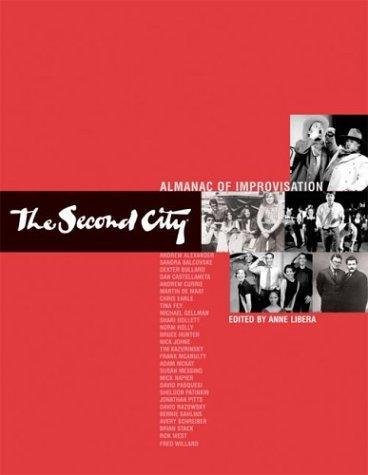
The Second City Almanac of Improvisation
Anne Libera

Truth in Comedy
The Manual of Improvisation
Charna Halpern; Del Close; Kim Howard Johnson

Impro
Improvisation and the Theatre
Keith Johnstone

The Art of Chicago Improv
Short Cuts to Long-Form Improvisation
Rob Kozlowski

Acting Through Improv
Improv Through Theatresports
Lynda Belt; Rebecca Stockley

The 5 Elements of Improv
How to Take Your Improv to the Next Level
Andrew M. Spragge; Karen L. Eichler
References
How to Reference This Page
The Improv Archive. (2026). Jamie Wyllie. Retrieved September 29, 2026, from https://improvarchive.org/people/jamie-wyllie
The Improv Archive. "Jamie Wyllie." The Improv Archive, 2026. https://improvarchive.org/people/jamie-wyllie.
The Improv Archive. "Jamie Wyllie." The Improv Archive, 2026, https://improvarchive.org/people/jamie-wyllie. Accessed September 29, 2026.
The Improv Archive is a systemically maintained repository. The archive itself acts as the corporate author.