Jane Addams
Jane Addams (1860-1935) was the co-founder of Hull House, the Chicago settlement house that became the institutional crucible for the development of improvisational theatre's pedagogical foundations. Her democratic philosophy of cross-cultural learning through shared experience directly informed Neva Boyd's play-based educational theory, and Hull House provided the physical space and institutional support within which Boyd trained Viola Spolin from 1923 to 1926. Spolin subsequently taught at Hull House from 1937 to 1941 and developed the theater games that became the technical foundation of modern American improvisational theatre. Addams received the Nobel Peace Prize in 1931, the first American woman so honored, and died in Chicago on May 21, 1935.
Career
Jane Addams co-founded Hull House with Ellen Gates Starr in 1889, establishing the settlement on Chicago's Near West Side in the densely populated Halsted Street neighborhood where Italian, Irish, German, Greek, Bohemian, and Russian Jewish immigrant communities had concentrated. Hull House offered kindergarten and day care, employment services, an art gallery, libraries, language classes, and cultural programs including theater, music, and art instruction. Addams lived and worked at Hull House until her death in 1935, making it both her home and the operational center of her career.
Hull House functioned as a laboratory for progressive education philosophy. The settlement's approach to immigrant integration centered on communal participation in cultural activities rather than instruction aimed at cultural erasure, treating the expressive traditions immigrants brought with them as assets to be incorporated into a shared civic life rather than deficiencies to be corrected. This philosophy aligned directly with the play-based educational theories that Neva Boyd was developing in the settlement house network.
Boyd ran her Recreational Training School at Hull House, where she trained social workers and playground supervisors in the use of group games and communal play as educational tools. Addams served on the board of an earlier school Boyd directed and visited Boyd's classroom to speak on the subject of using democratizing forces of education to help immigrants integrate into the broader culture. The institutional support Hull House provided for Boyd's program created the conditions under which Viola Spolin studied under Boyd from 1923 to 1926, absorbing the play-based pedagogy that she would later transform into theater games.
Addams also maintained parallel careers in peace advocacy, women's suffrage organizing, labor reform, and civil rights work. She was among the founders of the National Association for the Advancement of Colored People in 1909 and contributed to the founding of the American Civil Liberties Union. Her 1931 Nobel Peace Prize recognized decades of international pacifist work, particularly her leadership of the Women's International League for Peace and Freedom, which she had founded in 1919. She had also served as a president of the National American Woman Suffrage Association's predecessor organization. Her public standing as the United States' most prominent woman activist of the Progressive Era gave Hull House ongoing institutional visibility and donor support that sustained its programming through the first three decades of the twentieth century.
Historical Context
Hull House's position within the broader settlement house movement of the late nineteenth and early twentieth centuries placed it at the intersection of progressive education, immigrant cultural life, and the democratic ideals that would become foundational to the development of improvisational theatre. The settlement house model, which placed educated reformers in direct residential community with the urban poor rather than administering social services from a distance, embodied a democratic philosophy of mutual exchange that Jane Addams consistently articulated as the settlement's governing principle.
Neva Boyd's application of that philosophy to recreational play theory at Hull House created the pedagogical lineage that runs directly to modern improv. Boyd's conviction that non-competitive group games develop social adaptability, ethical reasoning, and imagination through experience rather than instruction drew on the same Progressive Era intellectual foundations that Addams had helped articulate, and Hull House provided the institutional space, the student population of immigrant children and adults, and the organizational legitimacy that enabled Boyd's experiments to develop into a teachable methodology.
Viola Spolin's subsequent use of Hull House as the site where she taught folk dancing and creative dramatics for the Works Progress Administration from 1937 and developed the games that she would later codify in Improvisation for the Theater maintained the direct connection between Hull House and the emerging improvisational theatre practice through the New Deal period. Spolin's 1939 production Halsted Street at Hull House, featuring one hundred fifty performers of Italian, Greek, Mexican, and African American backgrounds in an integrated theatrical event that drew acclaim from Chicago critics, embodied the community-responsive theater philosophy that Addams had embedded in Hull House from its founding fifty years earlier.
Teaching Philosophy
Jane Addams did not teach improvisation directly, but the educational philosophy she embedded in Hull House, particularly her conviction that people of different backgrounds benefit mutually from shared expressive activity rather than one-directional instruction, provided the intellectual framework within which play-based theatrical pedagogy developed. She believed that cultural integration occurred most effectively through participation in shared communal activities rather than through the assimilation model of cultural replacement, a position that aligned with and reinforced Neva Boyd's use of group games as a social development tool. Addams' visits to Boyd's classroom and her service on the board of Boyd's earlier institution indicate active interest in and institutional support for the play-based educational approaches that Boyd would transmit to Viola Spolin.
Legacy
Jane Addams' institutional creation of Hull House as a space where progressive education philosophy, immigrant cultural integration, and experimental pedagogy could develop without commercial or institutional constraint enabled the sequence of transmission that runs from Neva Boyd's play theory through Viola Spolin's theater games through Paul Sills' founding of The Compass Players and Second City through the entire tradition of American improvisational theatre. The genealogical line from Addams' democratic philosophy to contemporary improv is not metaphorical but institutional: the physical space of Hull House, supported by Addams' organizational work and public standing, provided the context within which the pedagogical foundation of modern improv was actually developed.
The specific philosophy Addams embedded in Hull House, treating communal participation in expressive activity as a vehicle for democratic citizenship rather than treating artistic training as professional preparation for a subset of talented individuals, persists as a structural principle in the improvisational theatre tradition's approach to teaching. The commitment to ensemble, the rejection of star-centered performance, and the belief that full creative participation is a human capacity rather than an elite skill can be traced as a set of institutional values from Hull House through Boyd through Spolin through the entire Chicago lineage of improv pedagogy.
Addams' Nobel Peace Prize recognition, her authorship of works including Twenty Years at Hull-House (1910), and her standing as one of the most significant American public intellectuals of the Progressive Era give the improv tradition's foundational context an institutional pedigree that connects it directly to the most important social reform movements of its period.
Early Life and Training
Jane Addams was born on September 6, 1860, in Cedarville, Illinois. Her father, John Huy Addams, served as an Illinois state senator and was a personal friend of Abraham Lincoln. She graduated from Rockford Female Seminary in 1881. Influenced by the settlement house movement in England, particularly Toynbee Hall in London's East End, which she visited in 1888 alongside Ellen Gates Starr, she returned to Chicago with the conviction that educated women could most productively serve society by living among the urban poor.
Personal Life
Jane Addams was born on September 6, 1860, in Cedarville, Illinois, and died on May 21, 1935, in Chicago, Illinois. She never married. She maintained a long domestic partnership with Ellen Gates Starr, co-founder of Hull House, and later with Mary Rozet Smith, a philanthropist and close companion, for nearly four decades. She lived at Hull House from 1889 until her death. She was buried in Cedarville.
Recommended Reading
Books are ordered from the strongest direct connection outward to broader relevance.

Guru
My Days with Del Close
Jeff Griggs

Chicago Comedy
A Fairly Serious History
Margaret Hicks; Mick Napier

Long Form Improvisation and American Comedy
The Harold
Matt Fotis
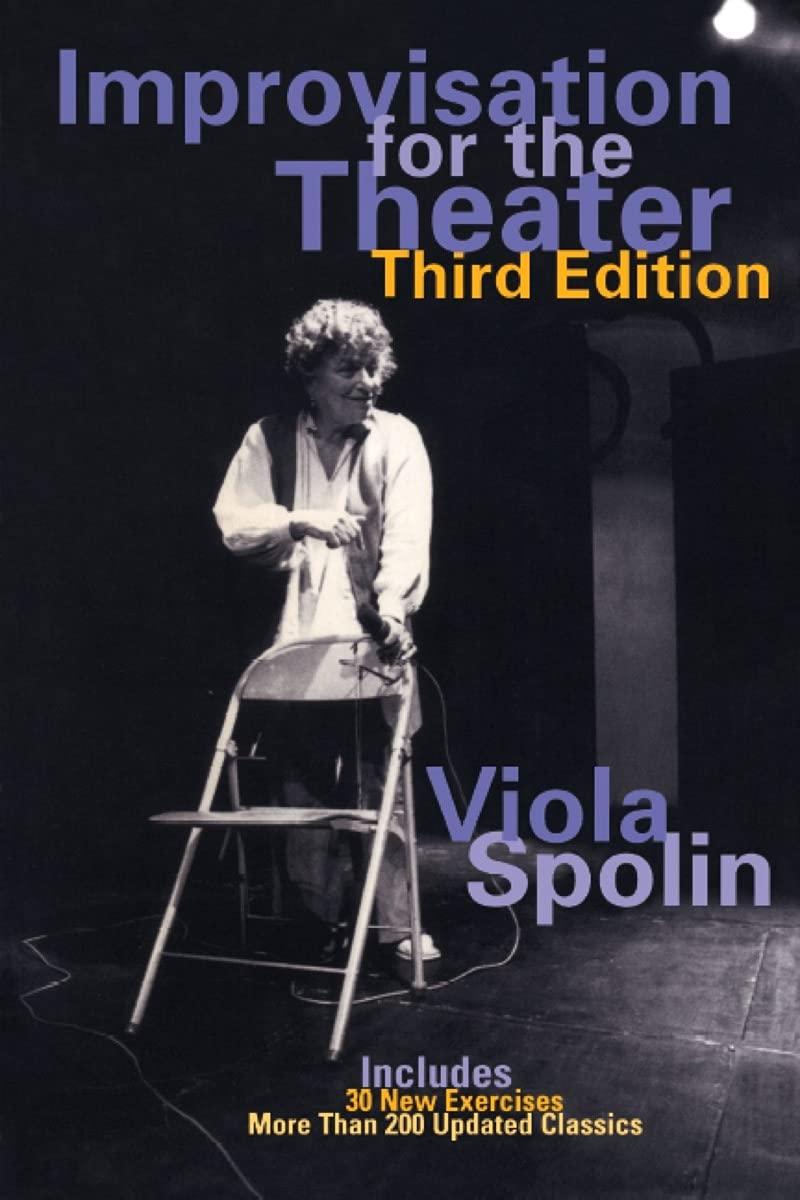
Improvisation for the Theater
A Handbook of Teaching and Directing Techniques
Viola Spolin
Theater Games for the Classroom
Viola Spolin
Creating Improvised Theatre
Tools, Techniques, and Theories
Mark Jane
References
In the Archive
How to Reference This Page
The Improv Archive. (2026). Jane Addams. Retrieved September 28, 2026, from https://improvarchive.org/people/jane-addams
The Improv Archive. "Jane Addams." The Improv Archive, 2026. https://improvarchive.org/people/jane-addams.
The Improv Archive. "Jane Addams." The Improv Archive, 2026, https://improvarchive.org/people/jane-addams. Accessed September 28, 2026.
The Improv Archive is a systemically maintained repository. The archive itself acts as the corporate author.