Julie Barr
Julie Barr is an American stand-up comedian based in the Boston comedy scene since the mid-1980s. She has been described by Steve Morse of The Boston Globe as probably the reigning Boston female stand-up comic and has appeared on Comedy Central's Women Aloud, NBC's Broadcast News, UPN's Bob Marley's Comedy Festival, and the animated series Dr. Katz, Professional Therapist. While her archive entry reflects her presence in the broader American comedy landscape, her primary practice is stand-up rather than improvisational comedy.
Barr relocated from Rochester, New York to Boston in 1984 and established herself within the Boston comedy club circuit over the following decades. Steve Morse of The Boston Globe described her as probably the reigning Boston female stand-up comic, recognizing her as one of the leading performers in a scene that has historically produced nationally recognized talent. She has shared stages with Jon Stewart, Lou Rawls, The Temptations, and David Spade across club and concert venues.
Her television credits include appearances on Comedy Central's Women Aloud, NBC's Broadcast News, UPN's Bob Marley's Comedy Festival, and the animated series Dr. Katz, Professional Therapist in 1995. Dr. Katz employed a production technique called Squigglevision and incorporated semi-improvised dialogue between host and guest performers, placing Barr adjacent to improvisational practice in a television context.
Barr has been alcohol and drug free for more than thirty years and is active in the recovery community. She hosts Before You Kill Yourself, a suicide prevention podcast, and continues to perform at New England comedy clubs. Her career trajectory represents the working stand-up comedian path rather than the institutional improv training and performance pipeline that characterizes most entries in this archive. No specific improv training credentials, ensemble affiliations, or institutional connections to recognized improv theatres or training centers have been identified through standard archival research across all major improv databases and directories. Barr's presence in the Boston comedy circuit over more than three decades has placed her among the longest-active performers in the city's stand-up community, a community that has produced nationally recognized talent across multiple generations. Her television credits on Comedy Central's Women Aloud, NBC's Broadcast News, UPN's Bob Marley's Comedy Festival, and the animated series Dr. Katz, Professional Therapist represent documented national exposure for Boston stand-up performance during a period when Boston was establishing its reputation as a producer of significant comedy talent.
Historical Context
Barr's arrival in Boston in 1984 and her subsequent establishment as a leading performer in the city's stand-up comedy scene placed her in one of the more productive comedy communities in the United States during a period of significant national growth for stand-up comedy as a live entertainment form. Boston's comedy club circuit developed significant institutional infrastructure through the 1980s, with venues including Stitches, Nick's Comedy Stop, and the local affiliates of national chains developing as primary presenting venues. The city's university community, concentrated in one of the country's densest academic environments, provided a consistent audience base for comedy clubs and an ongoing supply of aspiring performers who trained and developed in the city before entering national comedy markets.
The Boston Globe's recognition of Barr as probably the reigning Boston female stand-up comic reflects her standing within a competitive local comedy ecosystem where female performers were working to establish visibility and consistent booking in venues that had historically privileged male performers. Her sustained presence in the Boston club circuit across multiple decades established her as a career model for female comedians developing in the city, demonstrating that long-term professional comedic careers were achievable in a market that was not New York or Los Angeles.
Her television appearances on Comedy Central, NBC, UPN, and Comedy Central's Women Aloud in particular represent national distribution of Boston comedy during a period when the stand-up comedy television market was actively expanding to include regional performers who had built reputations on the club circuit without being based in the primary media markets. These credits connected the Boston comedy scene to the national comedy television landscape during the genre's productive television expansion phase of the 1990s and early 2000s.
Her connection to the archive reflects the Boston comedy community's intersection with the broader performance world that the archive documents, including the New York and national comedy club circuits where Boston performers have traditionally competed for bookings and industry attention.
Legacy
Barr's three-decade presence in the Boston comedy scene represents a career of sustained local engagement that has contributed to the institutional culture of Boston stand-up comedy across multiple generational shifts in the city's performance community. Her identification in the Boston Globe as probably the reigning Boston female stand-up comic represents a recognition that carries particular significance given the Boston comedy community's historical underrepresentation of female performers in its leading positions.
Her national television credits, including appearances on Comedy Central's Women Aloud, NBC, UPN, and the animated series Dr. Katz, Professional Therapist, represent documented national exposure for Boston-based stand-up performance. The Dr. Katz credit in particular places her within the animated comedy world that the early Comedy Central produced, connecting Boston stand-up performance to one of the most innovative comedy programs of the 1990s.
Her presence in the Boston comedy scene as a long-tenured performer with national credits has contributed to the city's reputation as a source of professional comedy talent across the decades during which the Boston club circuit developed from its 1980s infrastructure into the more competitive national comedy talent market of the 1990s and 2000s. Performers who develop in Boston's comedy community have had access to role models who demonstrate that sustained professional comedy careers are achievable without immediate relocation to New York or Los Angeles, and Barr's long Boston tenure is a documented example of that sustainability.
Her contribution to the archive reflects the broader comedy community that the improv archive documents, which includes not only dedicated improvisers but the wider performing landscape of American comedy from which improv practitioners draw inspiration, collaborators, and professional context.
Recommended Reading
Books are ordered from the strongest direct connection outward to broader relevance.
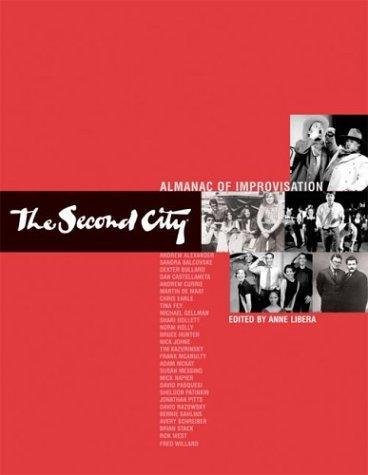
The Second City Almanac of Improvisation
Anne Libera

Truth in Comedy
The Manual of Improvisation
Charna Halpern; Del Close; Kim Howard Johnson

The Upright Citizens Brigade Comedy Improvisation Manual
Matt Besser; Ian Roberts; Matt Walsh

The Comedy Improv Handbook
A Comprehensive Guide to University Improvisational Comedy
Matt Fotis; Siobhan O'Hara

Chicago Comedy
A Fairly Serious History
Margaret Hicks; Mick Napier
Teaching Improv
The Essential Handbook
Mel Paradis
References
How to Reference This Page
The Improv Archive. (2026). Julie Barr. Retrieved September 28, 2026, from https://improvarchive.org/people/julie-barr
The Improv Archive. "Julie Barr." The Improv Archive, 2026. https://improvarchive.org/people/julie-barr.
The Improv Archive. "Julie Barr." The Improv Archive, 2026, https://improvarchive.org/people/julie-barr. Accessed September 28, 2026.
The Improv Archive is a systemically maintained repository. The archive itself acts as the corporate author.