Miles Stroth
Miles Stroth is an American improviser, teacher, and long-form format innovator from Oak Park, Illinois. Beginning his improv training at Second City in 1989 and studying long-form with Del Close and Charna Halpern at ImprovOlympic from 1991, he became a member of The Family, the seminal Del Close-directed ensemble whose members included Adam McKay, Matt Besser, Ian Roberts, Neil Flynn, and Ali Farahnakian. The Family created and introduced the Deconstruction and The Movie into the improv world. Stroth collaborated with Del Close for eight years and contributed to the development of the Armando, the Deconstruction, the Movie, the Lerand, and Two-Person Long-Form.
Stroth was born in Oak Park, Illinois. In the fall of 1989 he auditioned for and was accepted by Second City in Chicago. In 1991 he began studying long-form improvisation with Del Close and Charna Halpern at the ImprovOlympic, and has been associated with iO in teaching, performing, and directing roles ever since.
He became a member of The Family, a Del Close-directed ensemble that included Adam McKay, Matt Besser, Ian Roberts, Neil Flynn, and Ali Farahnakian. The Family created and introduced two major long-form formats: the Deconstruction and The Movie. Stroth collaborated directly with Del Close for eight years; Close gave Stroth the titles Warchief and Goblin Master within the informal community he maintained around iO.
Alongside The Family, Stroth performed with ASSSSCAT, ZUMPF, Three Mad Rituals, and English Speaking Moose, among other ensembles. He contributed to or had a hand in creating several long-form formats that have since spread across the American improv landscape, including The Armando, the Deconstruction, The Movie, the Lerand (also known as La Ronde), and Two-Person Long-Form. He has performed in well over a thousand long-form shows.
Stroth has also acted with The Actors' Gang in Los Angeles and appeared in Comedy Central television programs. In 2007 he opened The Miles Stroth Workshop in Los Angeles, a dedicated teaching program for long-form improvisation expressing his own methods and perspectives on the craft. As the workshop grew in popularity it evolved and rebranded as The Pack Theater, one of Los Angeles's major independent improv institutions. He has taught at iO West and UCB in Los Angeles, and has continued to perform and teach at The Pack Theater.
Historical Context
Stroth's membership in The Family placed him at one of the most consequential moments in the development of Harold-era long-form improvisation. The Deconstruction, which The Family introduced, represented a formal break from the Harold's scene-based structure in favor of a non-linear format that fragmented narrative and reassembled it in unexpected ways. This departure from the Harold was significant because it demonstrated that Del Close's influence could generate formats that were structurally distinct from the Harold itself, rather than merely variations on it.
Stroth's eight-year collaboration with Del Close during the 1990s gave him direct access to Close's formal thinking during a period of intensive experimentation at iO. The formats he contributed to, Deconstruction, Movie, Armando, Lerand, and Two-Person Long-Form, collectively represent a significant expansion of the long-form vocabulary beyond the Harold, and several of them became standard forms taught in improv programs across North America.
Teaching Philosophy
Stroth's teaching at iO, where he has held teaching, performing, and directing roles since his 1991 arrival from Second City, reflects the long-form format investigation tradition that he helped pioneer as a member of The Family, the Del Close-directed ensemble that created the Armando and developed other alternative long-form structures in the 1990s. His direct study with Close during the period when iO was most actively developing and testing new long-form approaches gives his teaching a historical proximity to the foundational long-form experiments that shaped the field.
His format innovation work, which produced the Armando alongside Adam McKay, Matt Besser, Ian Roberts, Neil Flynn, and Ali Farahnakian, reflects a pedagogical conviction that the Harold is one excellent long-form structure among many possible structures, and that the investigation of alternative forms is a legitimate and valuable dimension of long-form performance and training. This conviction distinguishes his teaching from pedagogies that treat the Harold as the definitive expression of long-form improv and treat all other structures as variations or supplements.
His approach to teaching long-form emphasizes the underlying principles that make any long-form structure work, with the format itself serving as a container for those principles rather than as the primary object of study. Where teachers trained exclusively in the Harold tradition may teach structure primarily, Stroth's format innovation background gives his teaching a focus on the ensemble skills and thematic awareness that allow performers to work successfully across multiple long-form containers.
His decades at iO have given him direct access to the foundational texts and practices of the Del Close tradition, and his teaching transmits that tradition from a position of sustained engagement rather than secondhand knowledge. His performing and directing work alongside his teaching has kept his classroom practice grounded in the practical demands of live long-form performance.
Legacy
Stroth's contributions to long-form format development through The Family and his subsequent teaching and workshop work place him among the practitioners most responsible for the diversification of long-form improv beyond the Harold. The Armando in particular has become one of the most widely performed long-form formats in North America, with many improv theaters offering it as a regular show or as a variation. The Deconstruction and The Movie have also maintained active communities of practitioners. The Miles Stroth Workshop has extended his pedagogical influence beyond iO and UCB to students who have sought out his particular approach to long-form teaching. His co-creation of the Armando format, which has become one of the most widely performed long-form structures in the American improv community, is his most broadly documented legacy contribution. The Armando's design, in which a monologist's personal stories provide the thematic material that the ensemble then explores through improvised scenes, has been adopted across dozens of American improv institutions and has shaped long-form pedagogy by demonstrating that compelling, thematically coherent long-form can be structured around found material as readily as around pure ensemble invention.
His sustained presence at iO as a teacher and director across more than three decades has contributed directly to the training of a significant number of iO-trained improvisers whose careers have extended the long-form tradition into subsequent institutional generations.
Recommended Reading
Books are ordered from the strongest direct connection outward to broader relevance.

Whose Improv Is It Anyway?
Beyond Second City
Amy E. Seham

The Art of Chicago Improv
Short Cuts to Long-Form Improvisation
Rob Kozlowski

Guru
My Days with Del Close
Jeff Griggs

The Funniest One in the Room
The Lives and Legends of Del Close
Kim Howard Johnson

Long Form Improvisation and American Comedy
The Harold
Matt Fotis
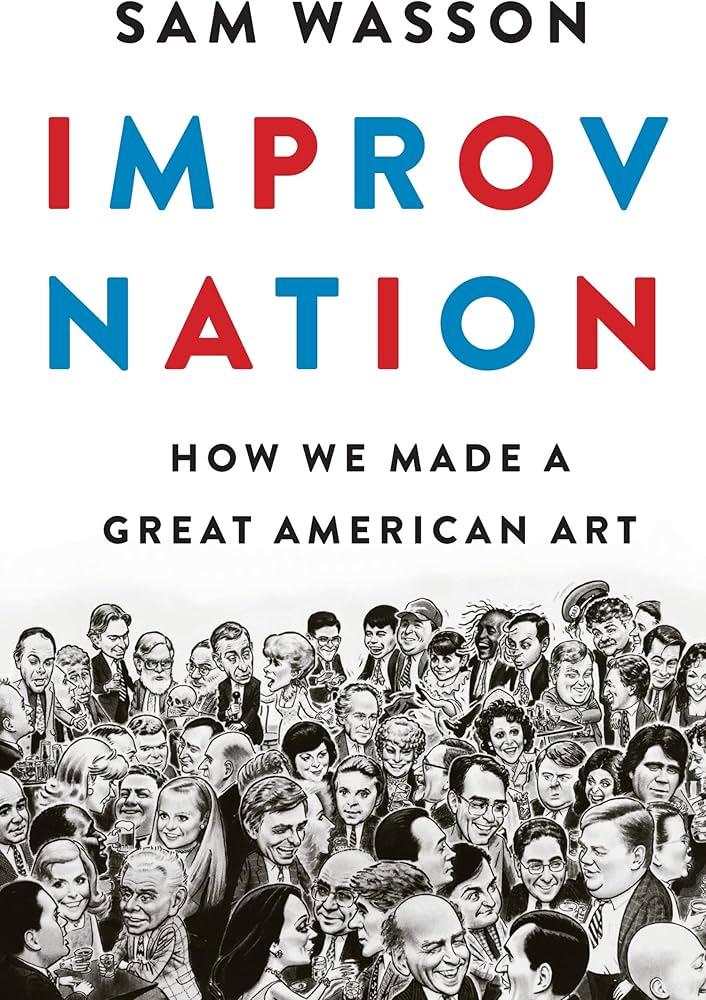
Improv Nation
How We Made a Great American Art
Sam Wasson
References
In the Archive
How to Reference This Page
The Improv Archive. (2026). Miles Stroth. Retrieved September 28, 2026, from https://improvarchive.org/people/miles-stroth
The Improv Archive. "Miles Stroth." The Improv Archive, 2026. https://improvarchive.org/people/miles-stroth.
The Improv Archive. "Miles Stroth." The Improv Archive, 2026, https://improvarchive.org/people/miles-stroth. Accessed September 28, 2026.
The Improv Archive is a systemically maintained repository. The archive itself acts as the corporate author.