Neva Boyd
Neva Leona Boyd (February 25, 1876, Sanborn, Iowa, to November 21, 1963, Chicago, Illinois) was an American sociologist, educator, and play theorist who founded the Recreational Training School at Hull House in Chicago. Her work on the educational and social benefits of group games directly shaped Viola Spolin's development of theatre games, making Boyd a foundational figure in the genealogy of improvisational theatre. She later became a professor of sociology at Northwestern University, where she continued to develop play theory as a tool for social work and education.
Boyd was born in Sanborn, Iowa, in 1876. She moved to Chicago after high school and enrolled at the Chicago Kindergarten Institute (now National Louis University), which led her to Hull House, Jane Addams's landmark settlement house for European immigrants on Chicago's Near West Side.
At Hull House, Boyd observed the transformative effects of structured play on immigrant communities. She founded the Recreational Training School at Hull House, which offered a one-year educational program in group games, gymnastics, dancing, dramatic arts, play theory, and social problems. The curriculum included folk dancing, storytelling, arts and crafts, table games, and traditional children's games that Boyd had gathered from across the United States and Europe. The school trained social workers in group work methodology, equipping them to use play and games as tools for social integration and community building.
Boyd was an early theorist of play's educational and therapeutic value, contributing to the development of recreational therapy and educational drama as professional fields in the United States. Her academic work examined how structured group play could break down social barriers, build trust among participants from different cultural backgrounds, and develop social skills in children and adults who might resist more formal educational approaches.
In 1923, eighteen-year-old Viola Spolin enrolled in Boyd's Recreational Training School at Hull House, studying under Boyd for three years. Spolin later wrote that "the effects of her inspiration never left me for a single day." Boyd's emphasis on games as a medium for learning, her belief in the democratizing power of play, and her practical methodology for leading groups through structured activities became the foundation on which Spolin built her theatre games system.
The Recreational Training School later moved from Hull House to Northwestern University, where Boyd joined the faculty as a professor of sociology. At Northwestern, she continued her research and teaching on play theory, group dynamics, and the social applications of games. In 1939, Boyd hired Spolin as a drama teacher at the Works Progress Administration Recreation Project, creating the institutional context in which Spolin adapted everything she had learned from Boyd into theatrical games designed to help immigrant children who did not share a common language.
Boyd's published works contributed to the academic literature on recreational therapy, group games, and social work methodology. Her collection and documentation of traditional games from diverse cultural sources created a body of material that practitioners drew on for decades.
Historical Context
Boyd's career at Hull House placed her within the Progressive-era settlement house movement that Jane Addams had founded in 1889. The settlement houses served as laboratories for social innovation, and Boyd's Recreational Training School represented one of the earliest systematic attempts to professionalize play and games as tools for social work. Her work emerged from the practical challenges of integrating immigrant communities on Chicago's Near West Side, where language barriers and cultural differences made conventional educational approaches insufficient.
The connection between Boyd and Spolin represents the critical link between Progressive-era social work and the improvisational theatre movement that would transform American comedy in the second half of the twentieth century. When Spolin studied under Boyd at Hull House beginning in 1923, she absorbed a methodology built on the principle that games could unlock spontaneous, authentic behavior in participants who were otherwise constrained by self-consciousness, language barriers, or social hierarchies. Spolin's theatre games, which became the pedagogical foundation of the Compass Players and The Second City, were a direct adaptation of Boyd's recreational training methodology into a theatrical context.
Boyd's move to Northwestern University's sociology department reflected the growing academic recognition of play theory as a serious field of study. Her position bridged practical community work and academic research, establishing intellectual credentials for an approach that had originated in the settlement houses rather than in university theatre departments.
Legacy
Boyd's most significant legacy is indirect but profound: her training of Viola Spolin created the pedagogical foundation for American improvisational theatre. The line of transmission runs from Boyd's Recreational Training School at Hull House through Spolin's theatre games to Paul Sills's Compass Players and The Second City, and from there to iO, UCB, and every major improv training institution in the world. Every performer who has participated in a Spolin-derived theatre game exercise is working within a tradition that began with Boyd's insight that structured play could unlock spontaneous, authentic group behavior.
Boyd's contributions to recreational therapy and educational drama established two professional fields that continue to operate independently of the improv world. Her documentation of traditional games from multiple cultural traditions and her framework for using those games in social work contexts created practical tools that social workers, therapists, and educators used throughout the twentieth century.
The Progressive-era principles that Boyd brought to Hull House, including the belief that play was democratizing, that games could cross cultural and linguistic boundaries, and that spontaneous group activity built community, became embedded in the DNA of improvisational theatre through Spolin. These principles are visible in every improv classroom that teaches ensemble trust, group mind, and the elimination of social hierarchy through shared creative risk.
Recommended Reading
Books are ordered from the strongest direct connection outward to broader relevance.

Something Wonderful Right Away
An Oral History of The Second City and The Compass Players
Jeffrey Sweet
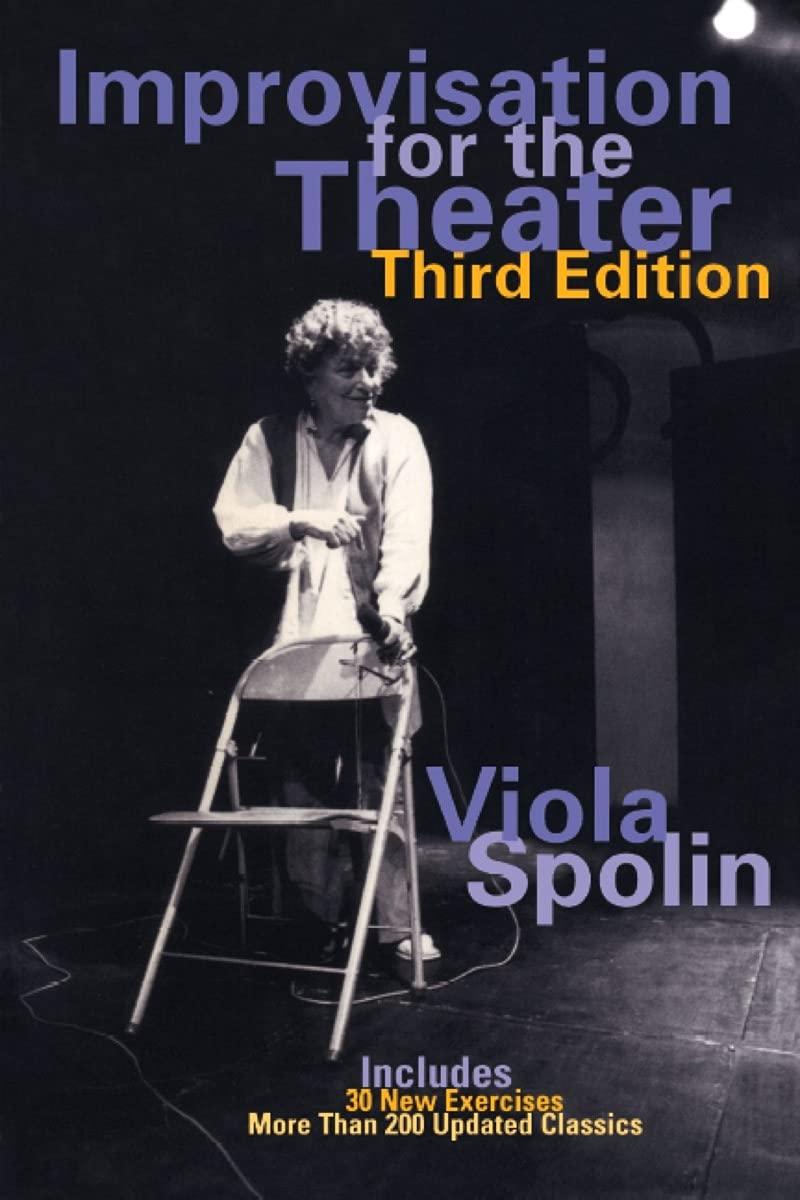
Improvisation for the Theater
A Handbook of Teaching and Directing Techniques
Viola Spolin

The Art of Chicago Improv
Short Cuts to Long-Form Improvisation
Rob Kozlowski

Devising Performance
A Critical History
Deirdre Heddon; Jane Milling

The Second City Unscripted
Revolution and Revelation at the World-Famous Comedy Theater
Mike Thomas

Theatrical Improvisation, Consciousness, and Cognition
Clayton D. Drinko
References
In the Archive
How to Reference This Page
The Improv Archive. (2026). Neva Boyd. Retrieved September 28, 2026, from https://improvarchive.org/people/neva-boyd
The Improv Archive. "Neva Boyd." The Improv Archive, 2026. https://improvarchive.org/people/neva-boyd.
The Improv Archive. "Neva Boyd." The Improv Archive, 2026, https://improvarchive.org/people/neva-boyd. Accessed September 28, 2026.
The Improv Archive is a systemically maintained repository. The archive itself acts as the corporate author.