Noah Gregoropoulos
Noah Gregoropoulos (1959-2022) was an American improviser and teacher who spent four decades at the center of Chicago's long-form improv scene. A New England native and Northwestern University graduate, he joined the ImprovOlympic during its formative years in the mid-1980s and became a defining figure in iO's educational lineage. He was a member of Jazz Freddy, the influential 1990s Chicago ensemble, and of the iO team Carl and the Passions, and was a regular performer in the Armando Diaz Experience shows. At Second City he directed the theater's first long-form improv show, Lois Kaz, in 1994. When Del Close died in 1999, Gregoropoulos took over Close's graduating-level class at iO.
Gregoropoulos was a New England native who graduated from Northwestern University and joined the ImprovOlympic, as it was then called, during its formative years in the mid-1980s. He became a core performer and teacher at the theater, with iO serving as his primary institutional home throughout his career.
As a performer, Gregoropoulos was known for his droll intelligence and commitment to ensemble support over individual recognition. He performed with Jazz Freddy, a groundbreaking 1990s Chicago ensemble, as well as the iO team Carl and the Passions. He was also a regular performer in the Armando Diaz Experience shows at iO, a long-form format built around a monologist whose stories inspire scenes.
At Second City he directed the theater's first long-form improv show, Lois Kaz, in 1994, an early experiment in bringing Harold-based long-form structure to a venue that had been exclusively associated with scripted revue. In 1998 he directed the Second City e.t.c. revue If The White House Is A-Rockin', Don't Come A-Knockin'.
When Del Close died in 1999, Gregoropoulos took over Close's graduating-level class at iO, the Level 5B course through which students had to pass to earn placement on Harold teams. This succession positioned him as one of the primary inheritors of Close's pedagogical tradition at the theater.
He taught improv at DePaul University's Theatre School as adjunct faculty from 2012 to 2020, extending his influence into formal university theatre training. He continued performing and teaching at iO until late in his life. Adam McKay, the writer-director of Anchorman, The Big Short, and Don't Look Up, said that no one was smarter, funnier, or loved improvisation more than Gregoropoulos.
Historical Context
Gregoropoulos joined iO during its formative period in the mid-1980s, when Del Close was developing the Harold and establishing the philosophical framework for long-form improv that would define iO's identity. His arrival at that moment placed him within the founding generation of Chicago long-form practitioners. His subsequent four decades at iO gave him a direct and continuous connection to the tradition Close had built.
His succession to Close's graduating-level class in 1999 was institutionally significant because that class served as the gatekeeper for Harold team placement at iO. Performers who could not pass that course could not advance to house team status, making the instructor of that class one of the most consequential teaching roles in Chicago long-form improv.
Jazz Freddy, the 1990s ensemble in which Gregoropoulos performed, is regarded as one of the most influential productions in Chicago improv history, credited with demonstrating that long-form could produce work of serious theatrical quality.
Teaching Philosophy
Gregoropoulos's teaching at the ImprovOlympic and later iO, where he eventually succeeded to Del Close's most advanced teaching role, represents one of the most direct lines of transmission from Close's foundational long-form pedagogy to the generations of improvisers trained at iO from the 1980s forward. His formation as a performer and teacher during the ImprovOlympic's formative years, when Close was actively developing the theories and exercises that would define the Harold and the broader iO pedagogical tradition, gave Gregoropoulos a proximity to those foundational ideas that later teachers could only access through documentation or secondhand transmission.
His classroom approach, which emphasizes ensemble support, listening, and the droll intelligence that characterized his own performance style, reflects the iO tradition's core conviction that the strongest improv emerges from performers who genuinely prioritize their partners over their own contributions. His personal style as a performer, which colleagues consistently described as favoring ensemble coherence over individual recognition, is directly reflected in the teaching principles he developed over four decades at iO.
His work at DePaul University extended his teaching into the academic theatrical context, requiring him to integrate iO's ensemble-focused long-form pedagogy with the broader theatrical training that DePaul's professional conservatory program provides. This academic engagement reflects the wider recognition of iO's pedagogical tradition within formal theatre education, and Gregoropoulos's position at DePaul acknowledged his standing as a transmitter of that tradition to the next generation of theatrical performers.
His four-decade career at iO gave his teaching a historical depth that few improvisers anywhere in the world possess: he had observed the development of the ImprovOlympic tradition from its earliest years, watched successive generations of performers move through the training program, and maintained his own performing and teaching practice across that entire arc.
Legacy
Gregoropoulos's forty-year career at iO, his succession to Del Close's most advanced teaching role, and his influence on the long-form improv community through DePaul University and iO's training program place him among the central figures in the transmission of Chicago long-form pedagogy from the first to the second and third generations. His commitment to support, patience, and ensemble integrity rather than individual attention was documented by students and colleagues after his death as a defining contribution to iO's teaching culture. Adam McKay's tribute summarized the standing he had earned across multiple decades among Chicago's leading improv practitioners. His succession to Del Close's most advanced teaching role at iO represents an institutional recognition of his pedagogical authority within the tradition that Close established. Performers trained by Gregoropoulos at iO carry his interpretation of the Close pedagogy into their own subsequent teaching, extending his influence beyond his direct students into the broader community of teachers who learned from those students. His work at DePaul University embedded the iO long-form pedagogy within the formal theatrical education curriculum in Chicago, creating a pathway between the independent training culture of iO and the conservatory theater training context that DePaul represents.
Recommended Reading
Books are ordered from the strongest direct connection outward to broader relevance.

Whose Improv Is It Anyway?
Beyond Second City
Amy E. Seham

The Art of Chicago Improv
Short Cuts to Long-Form Improvisation
Rob Kozlowski

The Funniest One in the Room
The Lives and Legends of Del Close
Kim Howard Johnson

Business Improv
Experiential Learning Exercises to Train Employees
Val Gee

Long Form Improvisation and American Comedy
The Harold
Matt Fotis
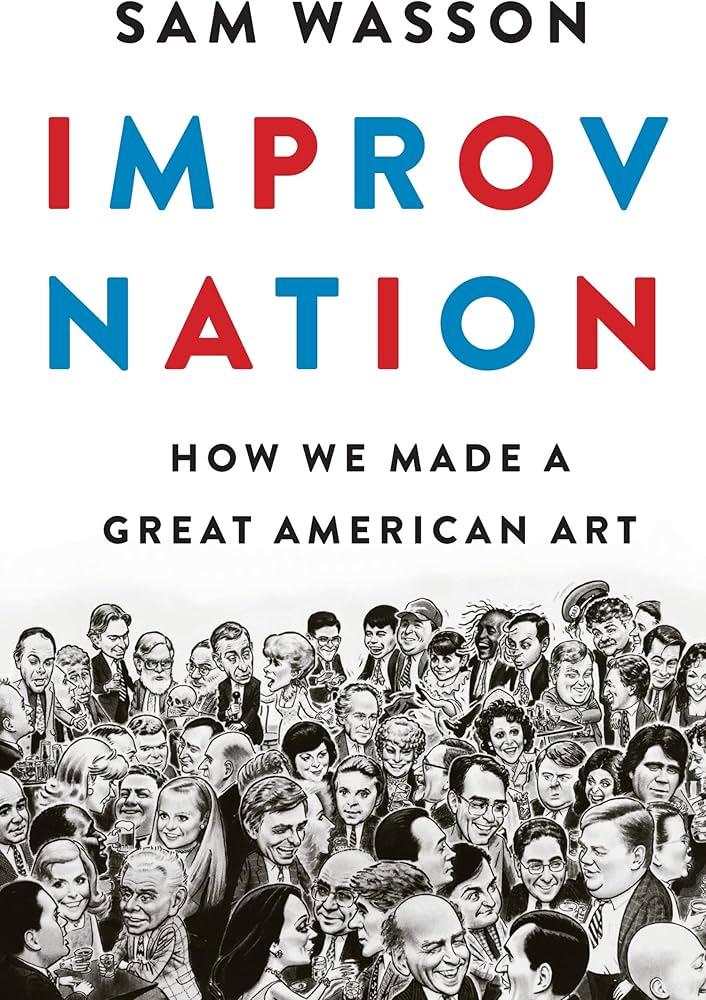
Improv Nation
How We Made a Great American Art
Sam Wasson
References
In the Archive
How to Reference This Page
The Improv Archive. (2026). Noah Gregoropoulos. Retrieved September 28, 2026, from https://improvarchive.org/people/noah-gregoropoulos
The Improv Archive. "Noah Gregoropoulos." The Improv Archive, 2026. https://improvarchive.org/people/noah-gregoropoulos.
The Improv Archive. "Noah Gregoropoulos." The Improv Archive, 2026, https://improvarchive.org/people/noah-gregoropoulos. Accessed September 28, 2026.
The Improv Archive is a systemically maintained repository. The archive itself acts as the corporate author.