Paul Sills (1927-2008) was the director, teacher, and theater builder who turned Viola Spolin's Theater Games into a public performance practice and co-founded both the Compass Players and The Second City. Born Paul Silverberg in Chicago, the son of Spolin and pharmacist Wilmer Silverberg, he served in the military before enrolling at the University of Chicago in 1948, where he entered the postwar student culture that became the seedbed of American improvisational theater. Through Playwrights Theatre Club, Compass Players, The Second City, Story Theater, and a long later career teaching at his Wisconsin Theater Game Center, Sills transformed his mother's pedagogical system into a living theatrical tradition.
Career
In 1953 Sills co-founded Playwrights Theatre Club with David Shepherd and Eugene Troobnick on the University of Chicago campus, staging classical European works including Brecht, Molière, and Shakespeare with minimal staging and ensemble techniques that emphasized collective collaboration. The company ran for approximately two seasons and presented around thirty productions, assembling the ensemble from which the Compass Players would emerge. Cast included future major figures including Sheldon Patinkin and Ed Asner.
In 1955 he co-founded the Compass Players in Chicago's Hyde Park neighborhood, what historians identify as the first professional improvisational theater company in the United States. Sills used his mother Viola Spolin's Theater Games to generate scenes, sharpen ensemble listening, and support a mode of cabaret theater that could respond to audience suggestions, contemporary social observation, and the energies of a room. The Compass company included Mike Nichols, Elaine May, and Shelley Berman among its performers. Compass proved that improvisation could sustain a paying audience and create a new kind of performer, one who could shift between spontaneous discovery and crafted theatrical shape. The company operated until 1958.
In December 1959 Sills co-founded The Second City on North Wells Street in Chicago with Bernie Sahlins and Howard Alk, and served as its first director. He directed the initial six revues over the following eighteen months, integrating Spolin's theater games to emphasize spontaneity and ensemble trust as core improvisational principles and helping define the revue process, the performance tone, and the rehearsal culture of an institution that became one of the dominant comedy production pipelines in North America. He departed The Second City in 1965.
In 1965 he established Game Theatre with Viola Spolin and Carol Sills, and co-founded The Parents School, an educational program that ran until 1981. In 1968 he debuted Story Theater, adapting Brothers Grimm tales and Aesop's Fables for the stage. Performers simultaneously narrated and embodied characters using minimal props, creating a form that fused storytelling, physical theater, and improvisational responsiveness. Story Theater toured nationally before its Broadway production, which ran 245 performances at the Ambassador Theatre from October 1970 through July 1971, earning Sills the Drama Desk Award for directing in 1971.
From 1987 onward Sills led annual summer master classes at the Paul Sills' Wisconsin Theater Game Center in Baileys Harbor, Door County, Wisconsin, teaching Theater Games in a residential setting to performers and educators. In 1988 he co-founded the New Actors Workshop in New York City with Mike Nichols, extending his commitment to ensemble-based actor training in a conservatory format. He continued teaching and creating theater through the 2000s. He died on June 2, 2008, at the age of eighty, in Baileys Harbor, Wisconsin, and was posthumously inducted into the American Theater Hall of Fame in 2011.
Historical Context
Sills is historically decisive because he made improvisation public. Viola Spolin developed the method in settlement-house recreation and Los Angeles youth theater; Sills demonstrated that the method could generate full evenings of professional performance and anchor lasting institutions with paying audiences and national reputations.
The Compass Players (1955-1958) was the first experiment of this kind in American theater history. No precedent existed for an ensemble that performed improvised scenes for a commercial cabaret audience, and Compass had to invent its procedures as it went. Sills provided the directorial intelligence that made the experiment viable.
The Second City, which Sills co-founded in December 1959, became one of the most significant comedy institutions in North American history. Its first six revues, directed by Sills, established the form: scenes developed through improvisation, refined in performance, assembled into a revue that played in repertory. The Saturday Night Live inaugural cast in 1975 was drawn almost entirely from Second City alumni, a direct downstream consequence of the institution Sills built.
Story Theater added a second historical contribution. By demonstrating that improvisational thinking could produce a Broadway production (245 performances) adapting folk and classical sources, Sills proved that the Chicago tradition was not limited to satire, cabaret, and comedy training. Story Theater gave the field a model for ensemble-based theatrical creation that influenced a generation of devised theater companies beyond improv's comedy context.
His later work at the Wisconsin Theater Game Center sustained a direct connection to the Spolin methodology across more than two decades of annual summer sessions, training teachers and performers who carried Theater Games into educational and community contexts internationally.
Key Events
Playwrights Theatre Club Founded at the University of Chicago
Paul Sills, David Shepherd, and Eugene Troobnick founded the Playwrights Theatre Club at the University of Chicago on June 23, 1953. The company operated as a classical repertory theatre in the Reynolds Club Theatre on campus, presenting European drama including Brecht, Molière, and Shakespeare to an audience of students and faculty. In two seasons it presented approximately thirty productions and assembled the ensemble that would go on to found the Compass Players in 1955.
Compass Players Founded in Chicago, Becoming the First Professional Improvisational Theatre in the United States
David Shepherd and Paul Sills founded the Compass Players in July 1955 at the Compass Tavern at 1152 E. 55th Street in Chicago's Hyde Park neighbourhood. The company was the first professional improvisational theatre in the United States, developing the scenario format and audience-suggestion methods that became the foundation of American improv. Its opening ensemble included Roger Bowen, Andrew Duncan, Elaine May, and Barbara Harris, with Mike Nichols and Shelley Berman joining shortly after.
Compass Players Dissolves, Its Ensemble Dispersing to Found The Second City and Nichols and May
The Compass Players ceased operations by 1958, ending approximately three years of improvisational performance in Chicago and St. Louis. Mike Nichols and Elaine May formed their duo and moved to New York City, performing material developed during their Compass years. Paul Sills, Bernie Sahlins, and Howard Alk founded The Second City in Chicago in December 1959, carrying the Compass's improvisational methods into a durable institutional form.
The Second City Opens Its Doors at 1340 North Wells Street in Chicago
On December 16, The Second City opened at 1340 North Wells Street in Chicago’s Old Town neighborhood, founded by Paul Sills, Howard Alk, and Bernie Sahlins. Named after a pair of New Yorker magazine articles satirizing Chicago, the theater staged a revue format alternating scripted sketch material with improvised scenes driven by audience suggestion. The Second City established the model of ensemble comedy built on improvisation that would define American comedy for decades.
Paul Sills, Co-Founder of The Second City, Dies in Wisconsin
Paul Sills died on June 2, 2008 in Bailey's Harbor, Wisconsin at the age of 80. The son of Viola Spolin, Sills co-founded both the Compass Players in 1955 and The Second City in 1959, directing the original ensembles that launched improvisational comedy as a professional art form in the United States.
Teaching Philosophy
Sills directed performers toward contact, behavior, and immediate problem-solving rather than topical joke construction. In rehearsal this meant trusting playable action and responding to what partners actually did rather than executing predetermined moves. The actor's first responsibility was to notice and respond to the living situation rather than to execute a plan.
He treated improvisation as the source of theatrical truth rather than as a substitute for craft. His expectations for performers were high: ensemble members were required to remain alert, embodied, and genuinely responsive, while his job as director was to shape that spontaneity into event, relationship, and theatrical form. The distinction mattered to him throughout his career.
This philosophy connects directly to his mother's Theater Games. Sills saw the games not as training exercises that performers graduated beyond but as the ongoing source of theatrical vitality. His later Story Theater work and Wisconsin master classes both sustained the game as a fundamental theatrical instrument rather than a preliminary technique.
His commitment to folk narrative in Story Theater also expressed a pedagogical conviction: that theater could be renewed by returning performers and audiences to shared stories, told with full physical and vocal presence, without the mediation of elaborate scenery or psychological realism. The actor's body and the storyteller's voice, working in ensemble, were sufficient.
Legacy
Sills' legacy is institutional, aesthetic, and pedagogical. He co-founded three of the central organizations in improv history: Playwrights Theatre Club, the Compass Players, and The Second City. The Second City became one of the dominant comedy training and production pipelines in North America, and its alumni shaped Saturday Night Live, SCTV, and several decades of American television comedy.
His most direct lineage runs through the performers he assembled and directed at Compass and Second City: Mike Nichols, Elaine May, Shelley Berman, Barbara Harris, Alan Arkin, Joan Rivers, Bill Murray, John Belushi, Gilda Radner, and dozens of others who passed through the institutions he founded or directed.
Story Theater, which ran on Broadway for 245 performances and earned the Drama Desk Award, gave the broader theater world a model for ensemble-based devised performance grounded in improvisational process. Productions of Story Theater continue to be mounted by regional and educational theaters.
His marriage to Barbara Harris, a major Second City performer in the company's early years, and his long marriage to Carol Bleackley, produced children who continued his artistic lineage: his daughter Aretha Sills carries Spolin Theater Games work internationally.
The New Actors Workshop in New York City, co-founded with Mike Nichols in 1988, trained a generation of performers in the ensemble method Sills had developed across four decades. The Wisconsin Theater Game Center, which ran annual summer sessions from 1987, sustained direct transmission of the Spolin-Sills methodology into the twenty-first century.
His posthumous induction into the American Theater Hall of Fame in 2011 formally recognized what practitioners had understood for decades: that Paul Sills was among the handful of figures without whom modern American improv cannot be explained.
Early Life and Training
Paul Sills was born Paul Silverberg on November 18, 1927, in Chicago, Illinois. His mother was Viola Spolin, who would become the creator of Theater Games; his father, Wilmer Silverberg, was a pharmacist. He grew up close to the games his mother was developing and absorbed their principles before they were codified in book form. He had a younger brother, William, born in 1929.
After military service, Sills enrolled at the University of Chicago in 1948, studying under the Great Books curriculum, which emphasized classical texts and philosophical inquiry rather than specialized drama training. That intellectual environment placed him among a postwar student cohort that included future Compass Players collaborators, and it gave his theatrical thinking a philosophical dimension that distinguished his work from purely commercial comedy production.
Personal Life
Sills married actress Barbara Harris in 1955; the marriage ended in divorce in 1958 and produced no children. Harris went on to a major career in theater and film, including a Tony Award nomination and work with Second City. In 1960 he married Carol Bleackley, with whom he had five children: David, Rachel, Polly, Aretha, and Neva. The family eventually settled in Door County, Wisconsin, where Sills taught at the Wisconsin Theater Game Center and where he died on June 2, 2008, from pneumonia complications at the age of eighty. Memorial services were held at The Second City in Chicago on June 29, 2008, and in Door County on July 18, 2008.
Companies and Organizations
Associated venues and institutional relationships currently documented in the archive.
Recommended Reading
Books are ordered from the strongest direct connection outward to broader relevance.

Improv Yourself
Business Spontaneity at the Speed of Thought
Joseph A. Keefe

The Art of Chicago Improv
Short Cuts to Long-Form Improvisation
Rob Kozlowski

Devising Performance
A Critical History
Deirdre Heddon; Jane Milling

Theatrical Improvisation
Short Form, Long Form, and Sketch-Based Improv
Jeanne Leep

The Second City Unscripted
Revolution and Revelation at the World-Famous Comedy Theater
Mike Thomas
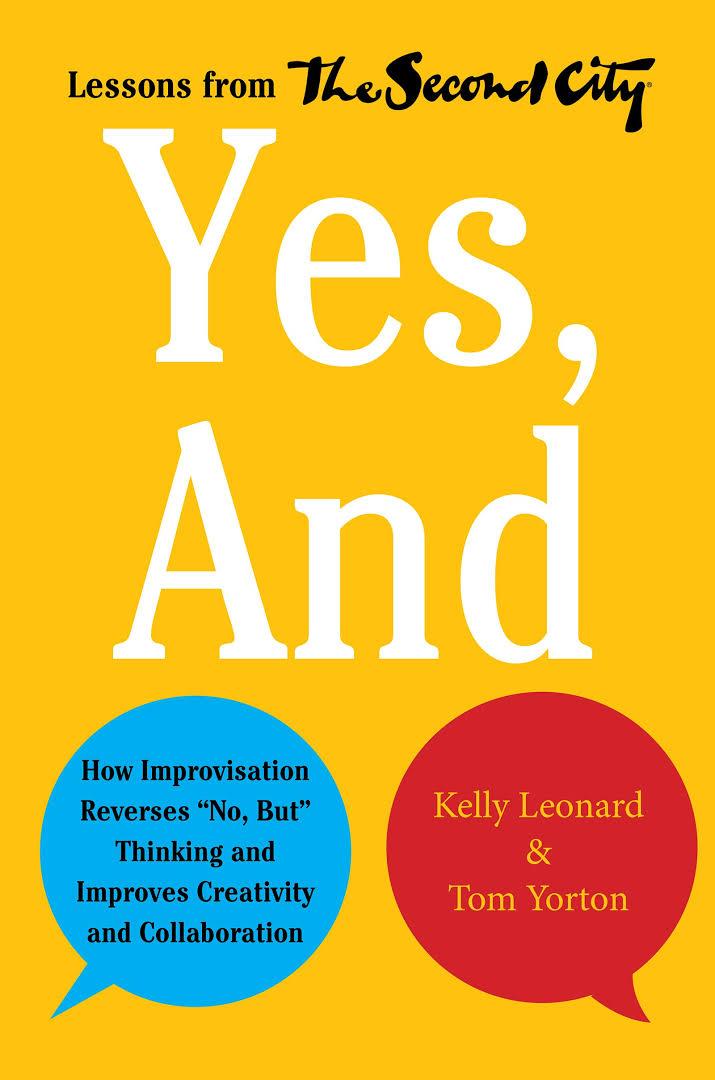
Yes, And
How Improvisation Reverses No, But Thinking and Improves Creativity and Collaboration
Kelly Leonard; Tom Yorton
References
In the Archive
How to Reference This Page
The Improv Archive. (2026). Paul Sills. Retrieved October 11, 2026, from https://improvarchive.org/people/paul-sills
The Improv Archive. "Paul Sills." The Improv Archive, 2026. https://improvarchive.org/people/paul-sills.
The Improv Archive. "Paul Sills." The Improv Archive, 2026, https://improvarchive.org/people/paul-sills. Accessed October 11, 2026.
The Improv Archive is a systemically maintained repository. The archive itself acts as the corporate author.