Severn Darden
Severn Darden (November 9, 1929, New Orleans, Louisiana, to May 26, 1995, Santa Fe, New Mexico) was an actor, comedian, and founding member of both the Compass Players and The Second City. Known for his intellectual wit and absurdist sensibility, Darden was part of the original eight-member cast when The Second City opened on December 16, 1959. His signature routines, including "The Metaphysics Lecture" and "Football Comes to the University of Chicago," blended philosophy and comedy in ways that defined the early Second City style. He later appeared in more than twenty films, including The President's Analyst (1967) and Real Genius (1985).
Darden was born in New Orleans, Louisiana, to a prominent family. His father, Severn Teakle Darden, was an attorney who served as Orleans Parish District Attorney. Darden attended the University of Chicago from the late 1940s through the early 1950s, studying philosophy and literature. He became a campus legend for his eccentric performances and participated in student theatre productions, including a staging of T.S. Eliot's Murder in the Cathedral in 1948.
In 1955, Darden became a founding member of the Compass Players, the pioneering improvisational comedy troupe that performed near the University of Chicago campus. The Compass, founded by Paul Sills and David Shepherd, was the first professional ensemble dedicated to improvisational theatre in the United States. Darden performed alongside Mike Nichols, Elaine May, Shelley Berman, and Barbara Harris.
When Sills and Bernie Sahlins co-founded The Second City on December 16, 1959, Darden was one of the original eight cast members. His performances at Second City drew on his philosophical education and his gift for absurdist intellectual humor. "The Metaphysics Lecture," in which Darden delivered a deadpan improvisational lecture on philosophy, became one of the company's most celebrated routines. "Football Comes to the University of Chicago" satirized the intersection of athletics and intellectualism at an institution that had famously abolished its football program.
In 1961, Darden recorded The Sound of My Own Voice and Other Noises, an album featuring Second City ensemble members including Alan Arkin and Barbara Harris that preserved his improvisational comedy style in audio form.
Darden transitioned to film and television in the 1960s. His film credits include They Shoot Horses, Don't They? (1969), The President's Analyst (1967), Conquest of the Planet of the Apes (1972), Battle for the Planet of the Apes (1973), Real Genius (1985), and Back to School (1986). His television guest appearances spanned decades, including Car 54, Where Are You? (1962), The Monkees (1967 to 1968), Mary Hartman, Mary Hartman (1976 to 1977), and Cheers (1983).
Darden underwent triple heart bypass surgery in the 1980s, which led to semi-retirement from performing. He relocated to Santa Fe, New Mexico, in 1992 and suffered a stroke in 1994. He died of heart failure on May 26, 1995, at age sixty-five. Darden's work with Paul Sills, Roger Bowen, Eugene Troobnick, and other Compass Players alumni made him a central presence in the social network that connected University of Chicago intellectual culture to what would become the Chicago comedy tradition, a lineage later traced through Second City, iO, and the subsequent generations of American improvisers they trained.
Historical Context
Darden's presence in both the Compass Players and the original Second City cast placed him at the center of the two foundational moments of American improvisational theatre. His participation in the Compass from 1955 and his continuation into The Second City from 1959 made him one of the few performers who bridged the transition between the two institutions, carrying the improvisational philosophy of the Compass directly into Second City's format.
His intellectual approach to improvisation reflected the University of Chicago milieu from which the Compass Players emerged. While other performers brought skills in character work or physical comedy, Darden's contribution was a distinctive blend of philosophical depth and absurdist humor that demonstrated improvisation could operate at a high intellectual level. His "Metaphysics Lecture" was not merely a comedy routine but a demonstration that improvisational performance could engage with ideas as complex as formal philosophy.
Darden's transition from the improvisation stage to film and television in the 1960s followed a path that many Second City alumni would later trace. His screen career, while never reaching the commercial heights of some later Second City performers, demonstrated that the training in spontaneous character work and scene construction that Second City provided could translate into professional acting across multiple media.
Legacy
Darden's New York Times obituary praised him as a "master of improvisation," a characterization that reflected his standing among the performers who created the American improvisational theatre movement. His influence was primarily artistic rather than institutional: he did not build training centers or write pedagogical manuals, but his performances established what improvisational comedy could aspire to in terms of intellectual depth and artistic ambition.
His original cast membership at The Second City connects him to the founding moment of the institution that would train generations of performers who reshaped American comedy. The performance style he helped establish in those early years, combining satirical observation of American culture with genuine intellectual engagement, became the template for what Second City audiences expected and what the company's training program aimed to produce.
The Sound of My Own Voice and Other Noises (1961) preserves Darden's improvisational work in a form that subsequent generations can study, documenting the performance style of Second City's founding ensemble at the peak of their creative partnership.
Recommended Reading
Books are ordered from the strongest direct connection outward to broader relevance.

Something Wonderful Right Away
An Oral History of The Second City and The Compass Players
Jeffrey Sweet

The Art of Chicago Improv
Short Cuts to Long-Form Improvisation
Rob Kozlowski

Theatrical Improvisation
Short Form, Long Form, and Sketch-Based Improv
Jeanne Leep

The Second City Unscripted
Revolution and Revelation at the World-Famous Comedy Theater
Mike Thomas

Long Form Improvisation and American Comedy
The Harold
Matt Fotis
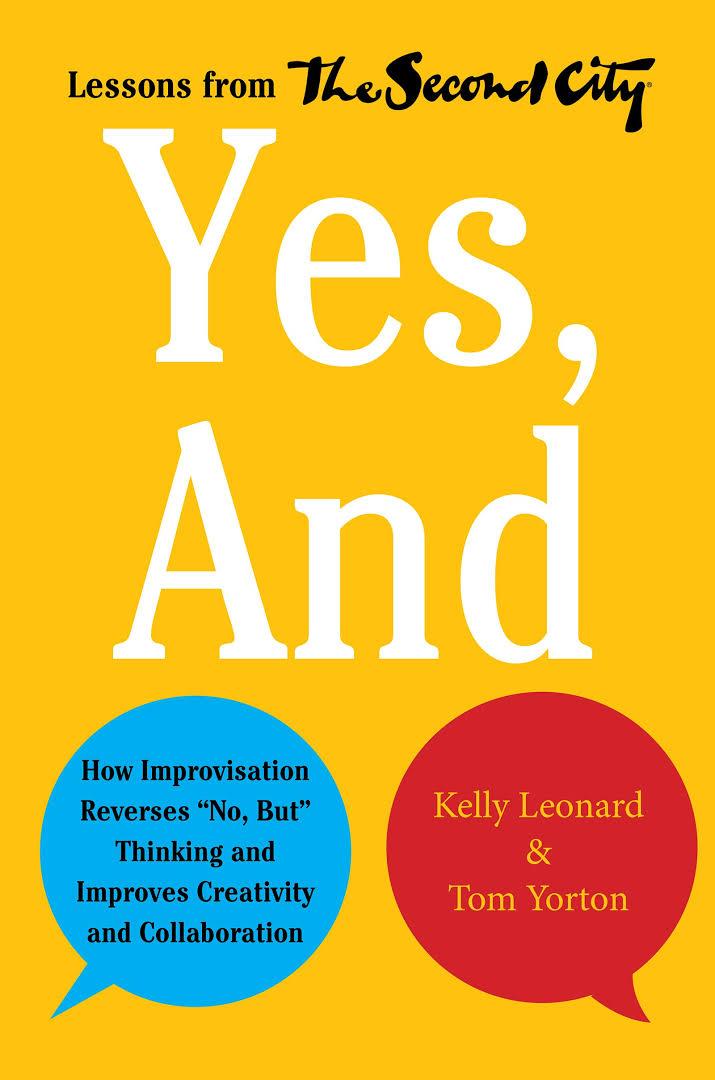
Yes, And
How Improvisation Reverses No, But Thinking and Improves Creativity and Collaboration
Kelly Leonard; Tom Yorton
References
In the Archive
How to Reference This Page
The Improv Archive. (2026). Severn Darden. Retrieved October 11, 2026, from https://improvarchive.org/people/severn-darden
The Improv Archive. "Severn Darden." The Improv Archive, 2026. https://improvarchive.org/people/severn-darden.
The Improv Archive. "Severn Darden." The Improv Archive, 2026, https://improvarchive.org/people/severn-darden. Accessed October 11, 2026.
The Improv Archive is a systemically maintained repository. The archive itself acts as the corporate author.