Thomas Aldredge
Tom Aldredge (February 28, 1928 to July 22, 2011) was an American actor who was a founding member of The Premise, Theodore J. Flicker's pioneering improvisational theatre in Greenwich Village that opened in 1960 and ran for 1,249 performances. He went on to a five-decade Broadway career that included originating roles in Stephen Sondheim's Into the Woods (1987) and Passion (1994), receiving five Tony Award nominations, and appearing as Hugh DeAngelis in HBO's The Sopranos (2000 to 2007).
Aldredge was born in Dayton, Ohio, the son of Lucienne Juliet Marcillat and William Joseph Aldredge, a colonel in the United States Army Air Corps. He originally intended to become a lawyer and enrolled as a pre-law student at the University of Dayton. In 1947, after attending a performance of the original Broadway production of A Streetcar Named Desire, he abandoned law and committed to acting, transferring to DePaul University's Goodman School of Drama, where he earned a BFA in 1953.
He worked in Chicago Educational Television as producer and director from 1955 to 1957 before moving to New York, where he appeared off-Broadway in Electra in 1957 and made his Broadway debut in 1959 as Danny in The Nervous Set, a musical written and directed by Theodore J. Flicker.
In November 1960 Flicker recruited Aldredge as one of the founding cast members of The Premise, a professional improvised comedy theatre at 154 Bleecker Street in Greenwich Village. The original ensemble included Joan Darling, George Segal, and Dolores Welber. The show ran for 1,249 performances with scenes created entirely from audience suggestions and current events. Over the course of its run, the company grew to include Buck Henry, Gene Hackman, James Frawley, Peter Bonerz, Sandy Baron, and others. The Premise expanded to the Shoreham Theatre in Washington, D.C. in 1962 and to the Comedy Theatre in London's West End that same year. In 1964 Aldredge appeared in The Troublemaker, a film based on The Premise directed by Flicker.
Aldredge's subsequent Broadway career spanned five decades and more than thirty productions. He received his first Tony nomination for Sticks and Bones (1972) and won a Drama Desk Award for the same role. He originated the role of Norman Thayer Jr. in On Golden Pond (1978) opposite Frances Sternhagen, appeared opposite Elizabeth Taylor in The Little Foxes (1981), and originated the dual role of the Narrator and the Mysterious Man in Sondheim and Lapine's Into the Woods (1987). He originated Dr. Tambourri in Sondheim and Lapine's Passion (1994), receiving his fourth Tony nomination, and reprised the Narrator in the 2002 Into the Woods revival for his fifth nomination. His television career included 23 episodes as Hugh DeAngelis in The Sopranos, along with roles in Damages, Boardwalk Empire, and Law and Order. He was married to the celebrated costume designer Theoni V. Aldredge from 1953 until her death in January 2011. He died six months later on July 22, 2011, in Tampa, Florida, from lymphoma at age 83. His career on Broadway encompassed dozens of productions across five decades, from the 1950s through the 1990s, and his work as a character actor extended to film and television, where he appeared in productions including Network (1976), The Seduction of Joe Tynan (1979), and Tootsie (1982). His stage work often paired him with directors who valued detailed naturalistic character work, and his Tony Award nomination for Into the Woods (1987) recognized a body of work built on precisely observed comic and dramatic characterization.
Historical Context
Aldredge's presence in the founding cast of The Premise places him at a critical juncture in American improv history. The Premise was the first significant professional improvised comedy theatre in New York City, predating The Second City's New York presence by several years. As one of its original four performers, Aldredge helped establish that audience-driven improvisation could sustain a long-running professional theatrical enterprise in one of the world's most competitive theatre markets.
His career trajectory from The Premise to five decades of Broadway work illustrates the relationship between improvisational training and classical theatrical performance. The skills he developed performing unscripted comedy in The Premise's basement theatre on Bleecker Street, including spontaneity, ensemble awareness, and the ability to build character in real time, informed a career that encompassed Sondheim musicals, Shakespeare, and contemporary drama. His work with Flicker connected him to the Compass Players tradition through Flicker's earlier work in Chicago and St. Louis, making Aldredge a carrier of that lineage into the New York theatrical mainstream.
Legacy
Aldredge's career demonstrates that improvisational performance and classical theatre are not separate disciplines but overlapping practices that can reinforce each other over a lifetime. His trajectory from founding member of one of America's earliest improv theatres to Tony-nominated Broadway veteran, originating roles for Stephen Sondheim while maintaining the spontaneity and ensemble awareness developed in improv, offers a model for how improvisational training can serve a full theatrical career.
The roster of performers who passed through The Premise alongside Aldredge, including George Segal, Buck Henry, and Gene Hackman, went on to collectively reshape American film and theatre. Aldredge's own journey to roles in The Sopranos, Into the Woods, and Passion extended the Premise's influence across the full spectrum of American dramatic performance, from experimental comedy to the highest levels of musical theatre and prestige television.
Recommended Reading
Books are ordered from the strongest direct connection outward to broader relevance.

Something Wonderful Right Away
An Oral History of The Second City and The Compass Players
Jeffrey Sweet

The Funniest One in the Room
The Lives and Legends of Del Close
Kim Howard Johnson
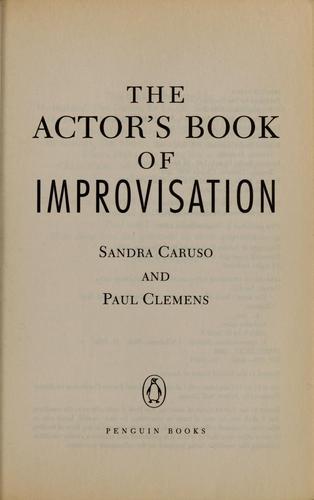
The Actor's Book of Improvisation
Sandra Caruso; Paul Clemens

Mask Improvisation for Actor Training and Performance
the compelling image
Sears A. Eldredge
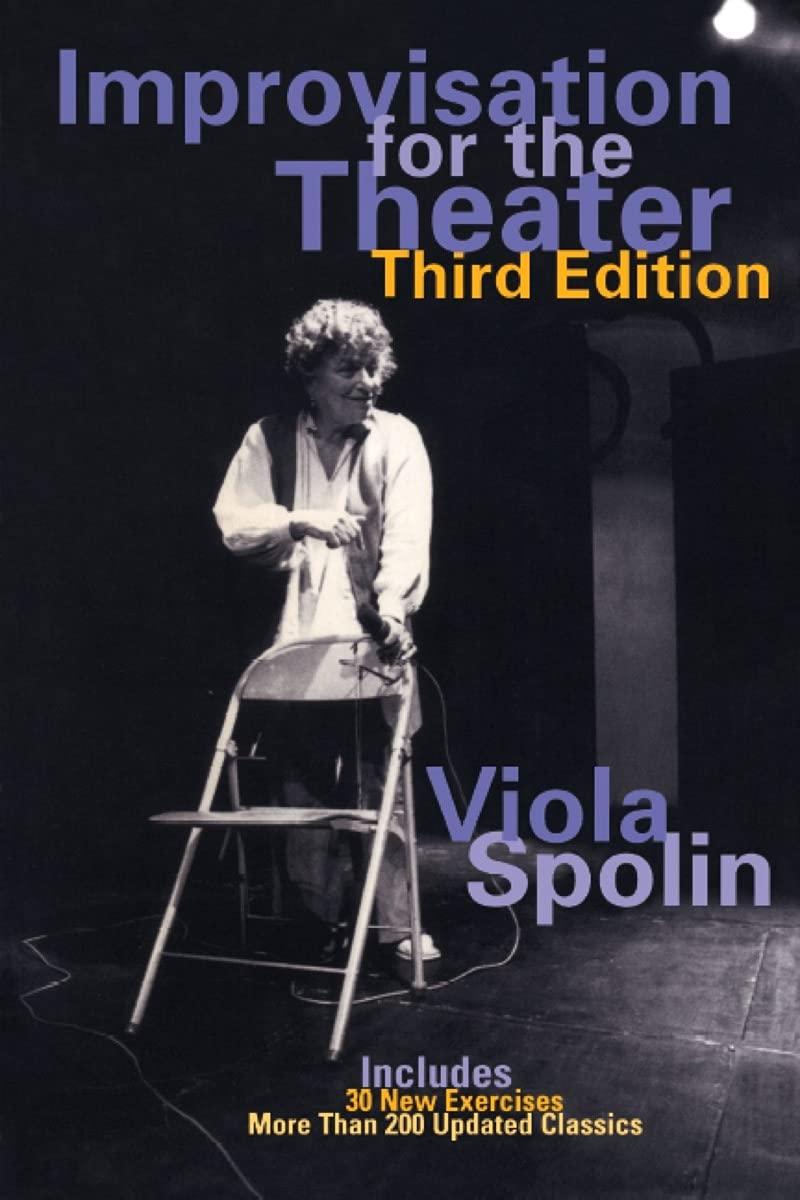
Improvisation for the Theater
A Handbook of Teaching and Directing Techniques
Viola Spolin

The Second City Unscripted
Revolution and Revelation at the World-Famous Comedy Theater
Mike Thomas
References
In the Archive
How to Reference This Page
The Improv Archive. (2026). Thomas Aldredge. Retrieved September 29, 2026, from https://improvarchive.org/people/thomas-aldredge
The Improv Archive. "Thomas Aldredge." The Improv Archive, 2026. https://improvarchive.org/people/thomas-aldredge.
The Improv Archive. "Thomas Aldredge." The Improv Archive, 2026, https://improvarchive.org/people/thomas-aldredge. Accessed September 29, 2026.
The Improv Archive is a systemically maintained repository. The archive itself acts as the corporate author.