Viola Spolin (1906-1994) was the Chicago educator, director, and author who created the Theater Games system, the foundational pedagogy for improvisational acting in the United States. Trained by social educator Neva Boyd at Hull House and forged through a decade of WPA recreation work in Chicago's immigrant neighborhoods, Spolin developed a method of actor training built on structured play, side-coaching, and a discipline she called spontaneity. Her landmark book, Improvisation for the Theater (1963), translated the games into print and established improv as a teachable practice with its own theory of learning. Through her son Paul Sills, who co-founded the Compass Players and The Second City, her method reached every major American improv institution operating today.
Career
Spolin's formal training began in the early 1920s when she enrolled at Hull House's Recreational Training School in Chicago to study with Neva Boyd, a pioneering social educator who used games and folk play as tools for integrating immigrant communities. Between approximately 1924 and 1927, Spolin absorbed Boyd's play theory and began applying it specifically to drama. She supplemented this training from 1931 to 1935 by studying dramatics at DePaul University's night school under Charlotte Chorpenning at The Goodman Theater, Chicago's major civic stage.
By 1937 she was teaching folk dancing and creative dramatics for the Works Progress Administration at Hull House and other WPA sites across Chicago. In 1939 she was named drama supervisor for the Chicago WPA Recreational Project, a post she held until 1941. The WPA period was the practical laboratory where Spolin systematized her games: she needed structured, teachable activities that could be delivered to diverse urban populations with little theatrical background, and those constraints drove her toward game-forms with clear objectives, rules, and intrinsic theatrical problems.
In 1942 she relocated to Los Angeles and founded the Young Actors Company in Hollywood, a training theater for children and young people from age six upward. The Young Actors Company operated until approximately 1955, giving Spolin more than a decade of sustained work refining Theater Games as a complete training system. Students were not simply taught to perform scripted scenes; they trained through games and produced full productions, becoming one of the first youth ensembles in America to develop primarily through improvisational pedagogy.
In 1955 she returned to Chicago and directed for Playwrights Theatre Club before beginning game workshops with the Compass Players, the first professional improvisational ensemble in the United States, which her son Paul Sills had co-founded. In 1960 she returned to Chicago full-time to conduct improvisation workshops directly for the cast of The Second City, the successor ensemble Sills had co-founded with Bernie Sahlins and Howard Alk in 1959. These workshops brought her games into the working laboratory of professional comedy performance and provided the real-world testing that shaped the final manuscript of her major book.
Improvisation for the Theater was published in 1963 by Northwestern University Press. The first two editions sold over 100,000 copies combined. The book codified more than 200 theater games, articulated the pedagogical theory behind them, and introduced the concepts of point of concentration, side-coaching, and spontaneity to a broad readership of theater practitioners, teachers, and social workers. A revised second edition appeared in 1972.
In 1976, Spolin founded the Spolin Theater Game Center in Hollywood, California, where she served as artistic director and taught through the early 1990s. During this period she also taught at Sarah Lawrence College, Brandeis University, the University of Southern California, and the Esalen Institute in Big Sur. She continued to revise her work through the final decade of her life. Theater Games for Rehearsal: A Director's Handbook appeared in 1985, adapting her methods specifically to the rehearsal process from casting through opening night. Theater Games for the Classroom followed in 1986, extending the system explicitly into educational settings. A posthumous third edition of Improvisation for the Theater was published in 1999 by Northwestern University Press.
Historical Context
Before Spolin, the American theater had no systematic pedagogy for improvisation. Acting teachers drew on European traditions rooted in text analysis, physical score, and Stanislavski method. Spolin's intervention was to propose that improvisation was not a corrective or a warm-up but a complete discipline in its own right, with teachable structures, explicit objectives, and its own theory of learning.
Her specific historical contribution was to bridge two traditions that had operated separately. Neva Boyd's play theory held that game structures naturally produced social and cognitive growth through intrinsic motivation rather than external instruction. Meanwhile, the American theater was beginning to explore ensemble devising and non-scripted performance, particularly in the Chicago coffeehouse circles that produced the Compass Players. Spolin brought the pedagogy of play directly into that theatrical ferment.
The timing of Improvisation for the Theater (1963) was historically significant. The Second City had been operating for four years and was attracting national attention. Critics and journalists lacked a frame for what was happening at 1616 North Wells Street. Spolin's book gave the theater establishment a vocabulary and a conceptual framework: improvisation was a discipline, not a personality trait. It could be taught, practiced, and built upon.
Her WPA work also positioned improvisation within a tradition of civic and democratic pedagogy. Working with immigrant communities in Chicago's neighborhoods, Spolin demonstrated that games could cross language and class barriers and create ensemble cohesion without the social sorting that formal theatrical training typically imposed. This lineage gave American improv a democratic ideological foundation that distinguishes it from European devised theater traditions.
Spolin did not arrive through nightclub satire or television comedy. She came out of Chicago's settlement-house and recreation culture, where games were a means of building contact, confidence, and social responsiveness. That origin explains why her method remained usable far beyond comedy performance: it was designed from the beginning to work on human beings, not just performers.
Key Events
Neva Boyd Establishes Hull House Game Program
Sociologist and educator Neva Boyd establishes a game and recreation program at Hull House, the Chicago settlement house co-founded by Jane Addams. Boyd uses games and group activities as tools for community development and social integration among immigrant populations. Her approach, which emphasizes spontaneous play and ensemble cooperation, directly influences a young social worker named Viola Spolin, who studies with Boyd and absorbs her philosophy of learning through play.
Viola Spolin Develops Her Theater Games System
Working at the Recreation Training School in Chicago, Viola Spolin begins developing the system of theater exercises and games she will later codify into her influential textbook. Drawing on Neva Boyd's use of play as a pedagogical tool, Spolin designs games that teach theater fundamentals through intuition and immediate experience rather than analysis or imitation. Her games emphasize point of concentration, side-coaching, and the principle that all people are capable of improvising when given the right conditions.
Viola Spolin Publishes "Improvisation for the Theater"
Northwestern University Press publishes "Improvisation for the Theater" by Viola Spolin, providing the first comprehensive written framework for theater games as a pedagogical and artistic practice. The book's 220 exercises, organized around principles of intuition, ensemble, and point of concentration, give theater educators a structured vocabulary for teaching improvisation. The book becomes a foundational text for theater programs worldwide and establishes improvisation as a legitimate theatrical discipline.
Viola Spolin, Creator of Theater Games, Dies in Los Angeles
Viola Spolin died on November 25, 1994 in Los Angeles at the age of 88. The inventor of Theater Games and author of "Improvisation for the Theater," Spolin created the foundational exercises that made modern improvisational theatre possible. Her work influenced generations of performers, educators, and theatre practitioners worldwide.
Teaching Philosophy
Spolin's pedagogical framework was built on the concept of spontaneity, which she defined specifically as the capacity to respond to a problem in the present moment without relying on preplanned action. For Spolin, most acting training produced approval-seeking behavior: performers working toward predetermined responses, calculating what an audience or director wanted rather than genuinely engaging with the live problem in front of them. Theater games were designed to interrupt that habit.
The centerpiece of her system was what she called the point of concentration (POC): a specific, concrete problem embedded in each game that players focused on solving. The POC was never a result to achieve but a problem to engage with; the theatrical behaviors required for good performance, she argued, would emerge naturally from players solving genuine problems with genuine attention. Asking an actor to be truthful produced self-consciousness. Asking an actor to discover whether the chair across the room was heavy without breaking physical contact with a scene partner produced real behavior.
Side-coaching was Spolin's delivery method. Rather than stopping a game to give notes, she called guidance to players while play was in progress: share your voice, open your eyes, support your partner. This kept players in the experience rather than shifting them into analytical reflection, which she saw as the enemy of spontaneity. The side-coaching vocabulary she developed became standard language in American improv training and continues to be used, often without attribution, in studios with no direct lineage to her.
Her concept of not-knowing asked performers to enter scenes without agenda, genuinely open to discovery rather than moving toward a planned conclusion. Her insistence that games, not exercises, were the right structure was also pedagogically distinctive. Exercises have correct solutions. Games have problems. Players solve game problems through genuine play; this genuine engagement, she believed, was the only reliable path to the physical and vocal behaviors theater required.
Spolin also refused to reduce improvisation to joke production. For Spolin, the game sharpened awareness of partner, environment, body, language, and audience. Comedy was often a result, but the underlying goal was fuller contact and more available human behavior.
Legacy
Spolin's most direct institutional legacy was the career of her son Paul Sills, who carried Theater Games from Young Actors Company through Playwrights Theatre Club, the Compass Players, and ultimately The Second City. The Second City's ensemble method, its reliance on improvised scenes to develop material, and its workshop culture all descend directly from Spolin's system. Sills later created Story Theater, which toured nationally and ran on Broadway, also using her games as the developmental engine.
Among performers who trained directly under her, Alan Arkin and Barbara Harris developed their craft through Chicago-era workshops shaped by Spolin's method. Arkin went on to an Academy Award-winning film career and has cited the improvisational training of his Chicago years as formative.
The downstream effects of Improvisation for the Theater are measurable in institutional terms: by the 1980s the book had been adopted as a primary text at theater programs at Northwestern, UCLA, and dozens of conservatories and university drama departments. It remains in print and in active use more than six decades after first publication.
Beyond theater, Spolin's games were adopted into Drama in Education programs beginning in the late 1960s, into corporate training and organizational development from the 1970s onward, and into social work, psychology, conflict resolution, and medical communication training. The applied improv field, now a global industry, traces its theoretical foundations directly to the game structures Spolin codified in 1963.
The Spolin Theater Game Center, founded in 1976 in Hollywood, trained a generation of Los Angeles-area performers. Her granddaughter Aretha Sills continues to teach Spolin method workshops internationally.
Del Close, who encountered her method through Second City in the early 1960s, later cited the Spolin tradition as the foundation for his development of long-form improvisation, including the Harold. The Harold and its descendants, now the dominant form in independent improv theaters worldwide, are thus downstream of Spolin's original game structures.
Her papers, spanning 1925 to 2003, are preserved at Northwestern University's Charles Deering McCormick Library of Special Collections, providing primary source documentation for her entire career.
Early Life and Training
Viola Spolin was born November 7, 1906, in Chicago, Illinois, to Russian Jewish immigrant parents. She grew up in a household that treated play as a communal practice: her extended family gathered regularly to sing, invent parlor games, and stage improvised plays of their own devising. This early immersion in social play as a natural mode of expression shaped the assumptions that would underlie all of her later work as an educator.
As a young adult she enrolled at Hull House's Recreational Training School, where she studied with Neva Boyd beginning around 1924. Boyd, a pioneering figure in the American play theory movement, argued that game structures produced social learning and human development through intrinsic motivation rather than instruction. Spolin absorbed this framework completely and spent the next decade testing it in theatrical contexts, eventually reorienting Boyd's social-work pedagogy into the first systematic approach to acting training through improvisational play. She later supplemented her training from 1931 to 1935 by studying dramatics at DePaul University's night school under Charlotte Chorpenning at The Goodman Theater.
Personal Life
Spolin had two sons, Paul Sills and Bill Sills. Paul Sills became a major American theater director and the primary carrier of her theatrical method, co-founding the Compass Players, Playwrights Theatre Club, and The Second City in Chicago before creating Story Theater. Spolin spent significant periods of her adult life divided between Chicago, where her theatrical work was centered, and Los Angeles, where she founded and ran the Young Actors Company and later the Spolin Theater Game Center. She died in Los Angeles on November 22, 1994, at the age of 88.
Companies and Organizations
Associated venues and institutional relationships currently documented in the archive.
Games and Formats
Formats, games, and exercises originated by or closely associated with this person.
Recommended Reading
Books are ordered from the strongest direct connection outward to broader relevance.
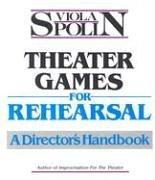
Theater Games for Rehearsal
Viola Spolin
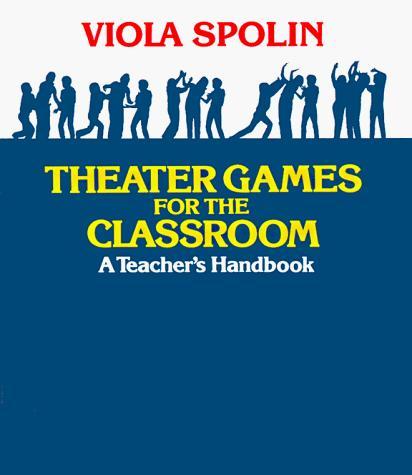
Theater Games for the Classroom
Viola Spolin
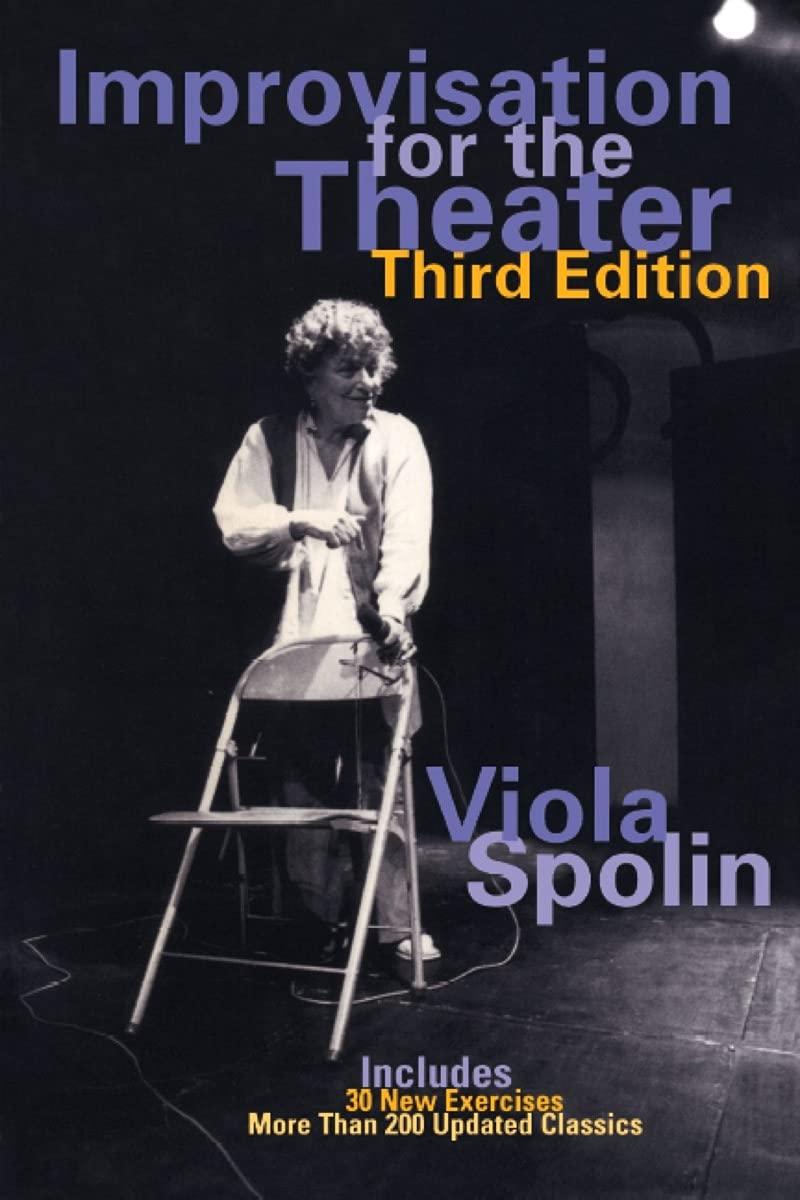
Improvisation for the Theater
A Handbook of Teaching and Directing Techniques
Viola Spolin
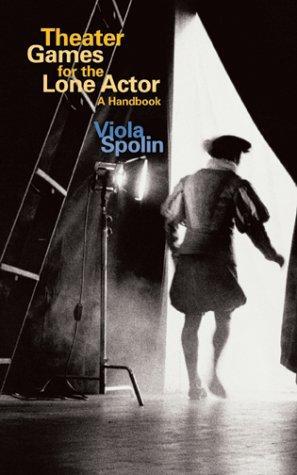
Theater Games for the Lone Actor
Viola Spolin

Business Improv
Experiential Learning Exercises to Train Employees
Val Gee
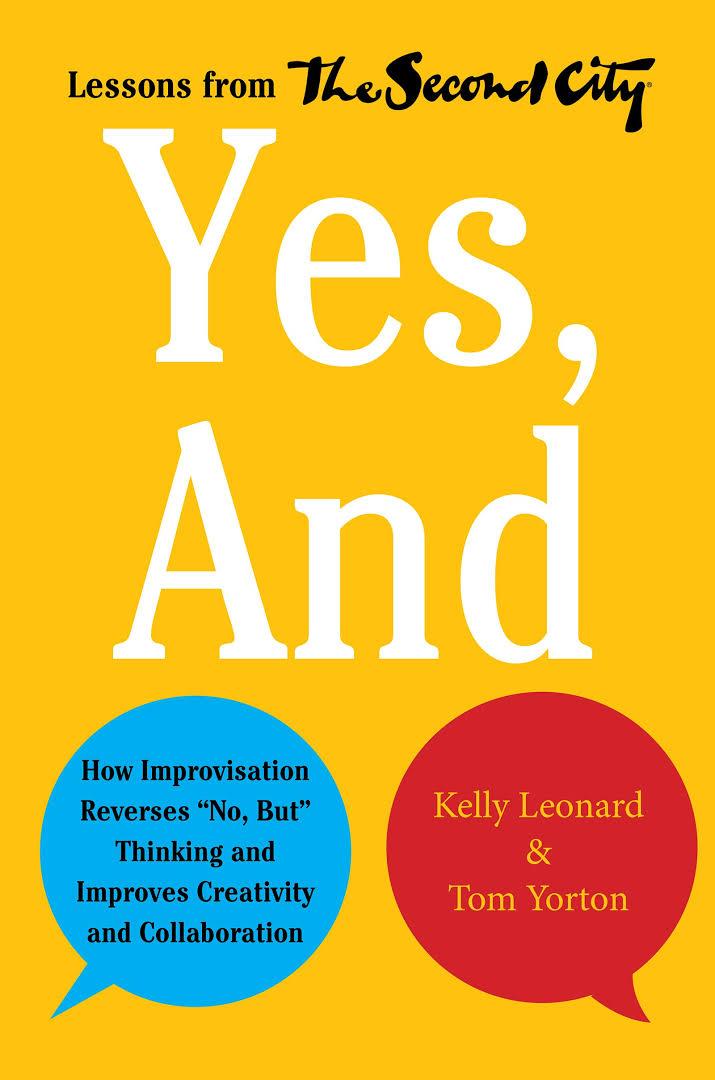
Yes, And
How Improvisation Reverses No, But Thinking and Improves Creativity and Collaboration
Kelly Leonard; Tom Yorton
References
In the Archive
How to Reference This Page
The Improv Archive. (2026). Viola Spolin. Retrieved September 28, 2026, from https://improvarchive.org/people/viola-spolin
The Improv Archive. "Viola Spolin." The Improv Archive, 2026. https://improvarchive.org/people/viola-spolin.
The Improv Archive. "Viola Spolin." The Improv Archive, 2026, https://improvarchive.org/people/viola-spolin. Accessed September 28, 2026.
The Improv Archive is a systemically maintained repository. The archive itself acts as the corporate author.