Impro for Storytellers
Keith Johnstone's Impro for Storytellers is the essential companion and expansion to his groundbreaking earlier work, Impro. Published in 1999, this book is a massive, practical toolbox designed to help theaters, schools, and directors implement the Johnstone system. If Impro was the philosophy, Impro for Storytellers is the manual. It contains the specific rules, scoring systems, and side-coaching instructions for Theatresports, Maestro, and Gorilla Theatre—the competitive formats that Johnstone invented to bring the excitement of sports to the theater. Johnstone argues that the audience wants to see the actor in trouble; they want to see the risk of failure and the triumph of the rescue. This book provides the mechanisms to create that danger safely.
The work is organized as a vast encyclopedia of games, lists, and essays. It covers everything from Fast Food Stanislavski (quick ways to get emotional depth) to the strict rules of Narrative tilting. Johnstone provides a deep dive into Status Transactions, offering hundred of examples of how a raised eyebrow or a shifted foot can alter the power dynamic of a scene. The book is particularly noted for its focus on Audience Interaction, teaching the performer how to handle hecklers, how to solicit suggestions, and how to use the audience's energy to fuel the show. He challenges the actor to be mischievous, to break the fourth wall, and to treat the theater not as a temple but as a playground.
The text is written in Johnstone's trademark provocative, witty, and often contrarian voice. He rails against safe, boring theater and urges the performer to embrace their own dark imagination. He provides a detailed guide on how to judge and score scenes, a controversial element of his work that is designed to externalize the audience's judgment and free the actor from the fear of it. Impro for Storytellers serves as the bible for any group performing Theatresports or related formats. It is an inexhaustible resource for games, directing tips, and profound insights into human nature. It remains one of the most practical and entertaining books ever written on the craft of performance.
Key Concepts
The specific rules and structures for competitive improv shows that generate high stakes and audience engagement.
Techniques for advancing a story by upsetting the balance of the scene and forcing a new equilibrium.
Advanced exercises for manipulating social rank to create comedy and drama.
Viewing audience resistance or interaction as a fuel for the scene rather than a disruption.
A Johnstone term for the bad habit of over-working or trying too hard, rather than reacting simply.
Who Benefits from Reading this Book
Those looking to produce high-energy, audience-friendly shows like Theatresports.
Educators looking for a vast library of exercises to solve specific acting problems.
Actors seeking to expand their range and learn how to handle the pressure of the stage.
Storytellers looking for tools to generate plot and character conflict dynamically.
Reception & Legacy
Impro for Storytellers is universally praised as a treasure trove of theatrical knowledge. Critics and practitioners alike highlight the sheer volume of practical exercises and the wit of Johnstone's commentary. It is considered the definitive manual for the narrative and competitive styles of improvisation. While some find Johnstone's personality abrasive, the efficacy of his methods is undeniable. It is a book that performers return to again and again throughout their careers.
Connections
- authorKeith Johnstone
Publication Context
Keith Johnstone publishes "Impro for Storytellers," a comprehensive follow-up to his landmark "Impro" that expands his theories of narrative, status, and spontaneity with additional exercises, games, and insights from decades of teaching and directing. The book addresses the specific challenges of sustained narrative in improvisation, offering tools for developing longer and more structured improvisational pieces. It becomes an important companion to "Impro" for practitioners working in longer forms.
Related Reading
See all books →
Impro
Improvisation and the Theatre
Keith Johnstone

Acting Through Improv
Improv Through Theatresports
Lynda Belt; Rebecca Stockley

The Improv Handbook
The Ultimate Guide to Improvising in Comedy, Theatre, and Beyond
Tom Salinsky; Deborah Frances-White

The Young Actor's Book of Improvisation
Dramatic Situations
Sandra Caruso; Susan Kosoff

Drama Games and Improvs
Games for the Classroom and Beyond
Justine Jones; Mary Ann Kelley
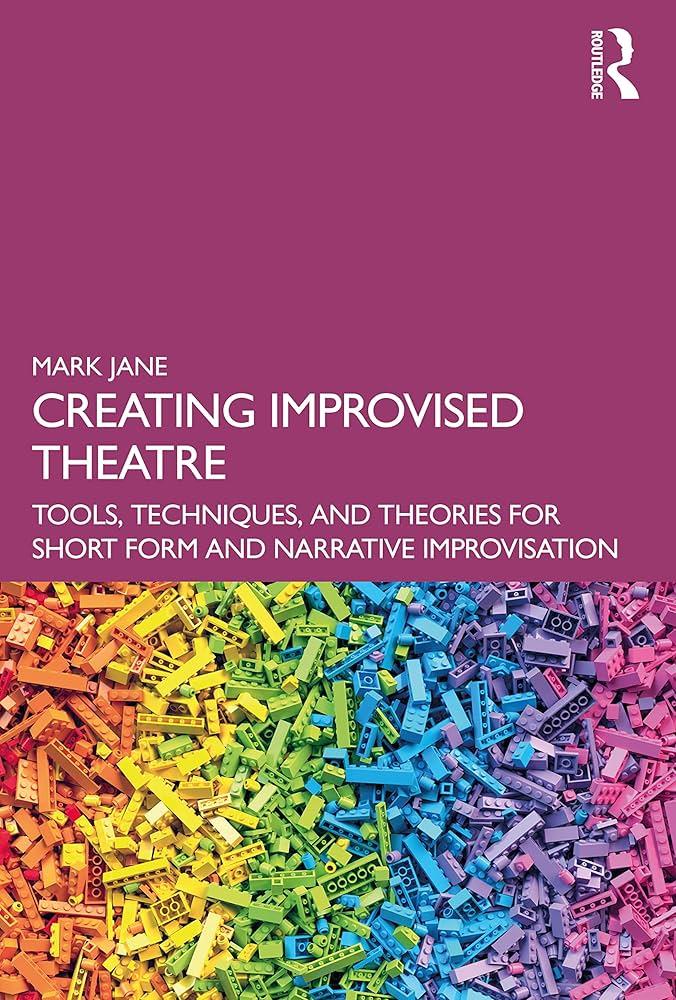
Creating Improvised Theatre
Tools, Techniques, and Theories
Mark Jane
About This Book
How to Reference This Page
The Improv Archive. (2026). Impro for Storytellers. Retrieved September 28, 2026, from https://improvarchive.org/books/impro-for-storytellers
The Improv Archive. "Impro for Storytellers." The Improv Archive, 2026. https://improvarchive.org/books/impro-for-storytellers.
The Improv Archive. "Impro for Storytellers." The Improv Archive, 2026, https://improvarchive.org/books/impro-for-storytellers. Accessed September 28, 2026.
The Improv Archive is a systemically maintained repository. The archive itself acts as the corporate author.