Keith Johnstone
Keith Johnstone (1933-2023) was the British-Canadian teacher, director, and writer who created one of improv's two major international lineages, distinct from and parallel to the Chicago tradition. Developing his system at London's Royal Court Theatre in the late 1950s and 1960s, then maturing it at the University of Calgary and Loose Moose Theatre Company from 1972 onward, Johnstone built a practice grounded in status dynamics, mask work, narrative play, and competitive formats such as Theatresports. His books Impro (1979) and Impro for Storytellers (1999) became primary texts across dozens of countries, and Theatresports is performed under license in more than thirty nations. For improvisers outside the United States, Johnstone is frequently the foundational figure rather than a secondary one.
Career
At the Royal Court Theatre, Johnstone began as a play reader and advanced to associate director by the mid-1960s, working alongside George Devine and Tony Richardson during the most transformative period in postwar British theater. His responsibilities included running actor training workshops, and it was in those workshops that he began developing the ideas that would define his career: exercises built around status transactions, the acceptance of first impulses, physical transformation through mask, and the deliberate lowering of performers' inhibitions. His approach was explicitly in tension with Stanislavski-based naturalism, and it created institutional friction that eventually led to his departure from the Royal Court.
From 1966 to 1971 he held a teaching position at the Royal Academy of Dramatic Art (RADA), where he continued developing and testing his workshop practices with students training for professional theater careers. In 1967 he formed Theatre Machine, an improvising ensemble that transformed his studio discoveries into public performance. Theatre Machine toured internationally and demonstrated that his workshop-based techniques could sustain a full performance format, generating a repertoire of forms rather than remaining private rehearsal experiments.
In 1972 he accepted a position at the University of Calgary, initially as a visiting lecturer and eventually as a full professor, a post he held until his retirement as professor emeritus in 1995. Calgary provided a stable institutional base across more than two decades and the physical distance from London that allowed his ideas to develop independently of British theatrical fashion.
In 1977 he co-founded Loose Moose Theatre Company in Calgary with Mel Tonken, a local veterinarian who provided financial backing and organizational partnership. Loose Moose became the central laboratory for Johnstone's mature work. In the same period he introduced Theatresports, a competitive improvisation format modeled on athletic competition, with teams performing scenes judged on creativity and humor, audience suggestions driving the material, and mechanisms including the gong and penalty timeout structuring the encounter. Theatresports spread to the United Kingdom, Australia, and across Europe and became one of the most widely licensed improvisation formats in the world.
His first major book, Impro: Improvisation and the Theatre, was published by Methuen in 1979. The book covered status, spontaneity, narrative, and mask and gave practitioners worldwide an accessible theoretical framework for teaching and practicing improvised performance. Theater critic Irving Wardle described it as the most dynamic, funny, wise, practical, and helpful book ever written on improvisation. The book's international reach gave Johnstone's work a global presence that no amount of touring could have achieved independently.
In 1994 he published Don't Be Prepared, an adaptation of his methods for educational Theatresports contexts. In 1998 he established the International Theatresports Institute, which granted performance rights for Theatresports, Maestro Impro, and Gorilla Theatre internationally. Impro for Storytellers followed in 1999, extending his narrative work for advanced practitioners. His autobiographical collection The Last Bird appeared in 2012. He continued developing formats including Life Game throughout his later years at Loose Moose.
Historical Context
Johnstone's historical importance is that he founded the second major lineage of modern improvisation, one that emerged independently of Chicago's institutions and spread via a completely different network of theaters, festivals, competitions, and published works.
His context was postwar British experimental theater, not American cabaret and satire. The Royal Court in the late 1950s was the center of the British theatrical revolution that produced John Osborne, Harold Pinter, and a generation of working-class writers and directors. Johnstone's response to that environment was to look at what actors couldn't do, specifically the capacity for genuine spontaneity under the inhibitions that formal training and approval-seeking produced. His diagnoses were pedagogical and psychological rather than political or literary.
Theatresports, which Johnstone introduced in 1977, changed the economics of improv outside the United States. A competitive format with audience judges, explicit scoring, and the structure of an athletic event could fill a theater without the brand recognition that Chicago's institutional names carried. This made improv viable as public entertainment in cities where no equivalent of Second City existed, and it seeded a generation of independent theaters across the English-speaking world and beyond.
Impro (1979) arrived before any comparable American text and circulated among theater educators, directors, and actors who had no contact with Chicago's institutions. The book gave the international theater community its first full theoretical vocabulary for improvisation as a discipline, making Johnstone's ideas the default framework for practitioners who encountered improv through academic or institutional channels rather than through comedy clubs and revue theaters.
Malcolm Gladwell's discussion of Johnstone's status work in Blink (2005) brought his ideas to a mainstream audience well beyond theater, extending his influence into behavioral science, management, and popular psychology.
Key Events
Loose Moose Theatre Company Founded in Calgary
Keith Johnstone founds Loose Moose Theatre Company in Calgary, Alberta, creating the institutional home for his developing system of improvisational theater. Loose Moose becomes the birthplace of Theatresports and a laboratory for Johnstone's ongoing experiments with narrative, status, and spontaneity. The company's work, grounded in Johnstone's distinctive pedagogy, influences improvisers throughout Canada and internationally.
Keith Johnstone Introduces Theatresports
Keith Johnstone introduces the Theatresports format at Loose Moose Theatre in Calgary, creating a competitive framework in which two or more teams of improvisers perform scenes scored by judges. The format combines the spirit of athletic competition with improvisational aesthetics, creating immediate stakes and audience engagement. Theatresports spreads rapidly across Canada, the United Kingdom, Australia, and eventually worldwide, becoming one of the most widely performed improv formats in history.
Keith Johnstone Publishes "Impro"
Methuen publishes "Impro: Improvisation and the Theatre" by Keith Johnstone, one of the most widely read and influential books in the history of improvisational theater. Drawing on his experience as a playwright, director, and teacher, Johnstone develops original theories of status, spontaneity, narrative, and mask that provide an alternative vocabulary for understanding and teaching improvised performance. The book's directness, humor, and practical insight make it essential reading for improvisers, actors, and educators worldwide.
Keith Johnstone Establishes the International Theatresports Institute
On May 23, 1998, Keith Johnstone formalized the international licensing of his competitive formats by establishing the International Theatresports Institute. The ITI grants performance rights for Theatresports, Maestro Impro (also known as Micetro), and Gorilla Theatre, and distributes official format guides co-authored by Johnstone with Patti Stiles and Shawn Kinley. The institute provided a legal and pedagogical framework for the hundreds of organisations worldwide that perform Theatresports under licence.
Keith Johnstone Publishes "Impro for Storytellers"
Keith Johnstone publishes "Impro for Storytellers," a comprehensive follow-up to his landmark "Impro" that expands his theories of narrative, status, and spontaneity with additional exercises, games, and insights from decades of teaching and directing. The book addresses the specific challenges of sustained narrative in improvisation, offering tools for developing longer and more structured improvisational pieces. It becomes an important companion to "Impro" for practitioners working in longer forms.
Keith Johnstone Dies in Calgary at Age Ninety
Keith Johnstone died on March 11, 2023, at Rockyview General Hospital in Calgary, Alberta, at the age of ninety. Johnstone created the Theatresports competitive format in the late 1970s and authored Impro: Improvisation and the Theatre (1979) and Impro for Storytellers (1998), two of the most widely read books in improvisational performance. His emphasis on status, spontaneity, and acceptance shaped the pedagogy of improvisation schools across North America, Europe, and Australia.
Teaching Philosophy
Johnstone's pedagogical starting point was a diagnosis: formal education and conventional theater training both suppress the spontaneous, imaginative capacity that children exhibit naturally and adults lose through schooling, social pressure, and the fear of being judged foolish. His entire system was designed to undo that suppression.
Status was his central conceptual tool. In Johnstone's analysis, every interaction between people involves a continuous negotiation of relative social status, expressed through eye contact, posture, timing, volume, and hundreds of micro-behaviors that actors mostly perform unconsciously. Making status explicit and playable gave improvisers a concrete, physical mechanism for building genuine relationships on stage rather than performing abstract emotional states.
His mask work was not decorative but transformative. Johnstone believed that certain physical forms, when worn, could shift a performer's psychology directly, bypassing the self-conscious mind and inducing states of genuine imaginative engagement that deliberate effort could not produce. Mask exercises were accordingly treated with ritual seriousness in his workshops.
His approach to narrative was similarly systematic. He identified a small set of universal narrative patterns, including the hero's departure and return, and taught improvisers to recognize and extend these patterns rather than invent story from scratch. The reincorporation of earlier material, treating callbacks not as jokes but as narrative fulfillment, was central to his account of what makes improvised story satisfying.
Competition, in Theatresports, was not a distraction from artistry but a productive pressure that prevented the timidity that improvisers often retreated to in the absence of stakes. The gong and the audience judge imposed consequence, which made performers commit more fully than they would under the looser conventions of workshop improv.
His famous instruction to offer the first thought rather than the cleverest one was a direct pedagogical intervention against the self-editing habit that most adults bring to performance, and it remains among the most cited principles in improv pedagogy worldwide.
Legacy
Johnstone's legacy is measurable in institutional terms: Theatresports is performed under license in more than thirty countries, and the International Theatresports Institute continues to grant rights and distribute format documentation internationally. For many improv theaters outside the United States, Theatresports was the founding format and Impro the founding text.
Among his direct students at Loose Moose Theatre, Bruce McCulloch went on to national prominence as a member of The Kids in the Hall, the Canadian sketch ensemble whose sensibility was shaped by the improvisational culture Johnstone established in Calgary. Andrew Phung, a later Loose Moose alumnus, became a prominent Canadian television actor.
Impro has remained continuously in print since 1979 and is among the most widely assigned texts in actor training programs globally. It is taught alongside Viola Spolin's Improvisation for the Theater as one of the two foundational texts of the field, a pairing that frames the Chicago and the Johnstone lineages as the dual sources of contemporary improv pedagogy.
Malcolm Gladwell's treatment of Johnstone's status work in Blink (2005) extended his ideas into popular science and organizational psychology, generating a secondary readership that had no connection to theater. Corporate training programs, educational initiatives, and therapeutic applications of his methods have spread through channels that Johnstone himself did not develop but whose foundations lie in his pedagogical framework.
Formats he invented or systematized, including Theatresports, Maestro Impro, Gorilla Theatre, and Life Game, continue to generate performance and training activity across Europe, Asia, Australia, and Latin America. His death in March 2023, at the age of ninety, prompted tributes from improv organizations on every continent.
Early Life and Training
Keith Johnstone was born February 21, 1933, in Brixham, Devon, England, to Richard and Linda Carter Johnstone; his father was a pharmacist and the family lived above their pharmacy. He was evacuated to Glastonbury at age seven during the Second World War, an interruption that impressed upon him the instability of ordinary life and the institution of school as something to be navigated rather than trusted. He trained as a teacher at St. Luke's College in Exeter from 1951 to 1953, where he encountered a more progressive approach to pedagogy than his own schooling had offered. His first teaching position was at a primary school in Battersea, London, from 1953 to 1955, where his direct experience with children's imaginative capacity reinforced his growing conviction that formal education systematically suppressed creativity.
In 1956 he won an Observer magazine short story competition, a result that brought him to the attention of the Royal Court Theatre and led to his appointment as a play reader. That entry into the professional theater set the direction of everything that followed.
Personal Life
Johnstone married Ingrid von Darl; the marriage ended in divorce in 1981. He had two sons, Benjamin and Dan. He relocated to Calgary in 1972 and remained there for the rest of his life, building his career at the University of Calgary and through Loose Moose Theatre Company across more than five decades in the city. He retired as professor emeritus from the University of Calgary in 1995. He died on March 11, 2023, at Rockyview General Hospital in Calgary, from diabetic sepsis, at the age of ninety.
Companies and Organizations
Associated venues and institutional relationships currently documented in the archive.
Games and Formats
Formats, games, and exercises originated by or closely associated with this person.
Recommended Reading
Books are ordered from the strongest direct connection outward to broader relevance.

Impro
Improvisation and the Theatre
Keith Johnstone
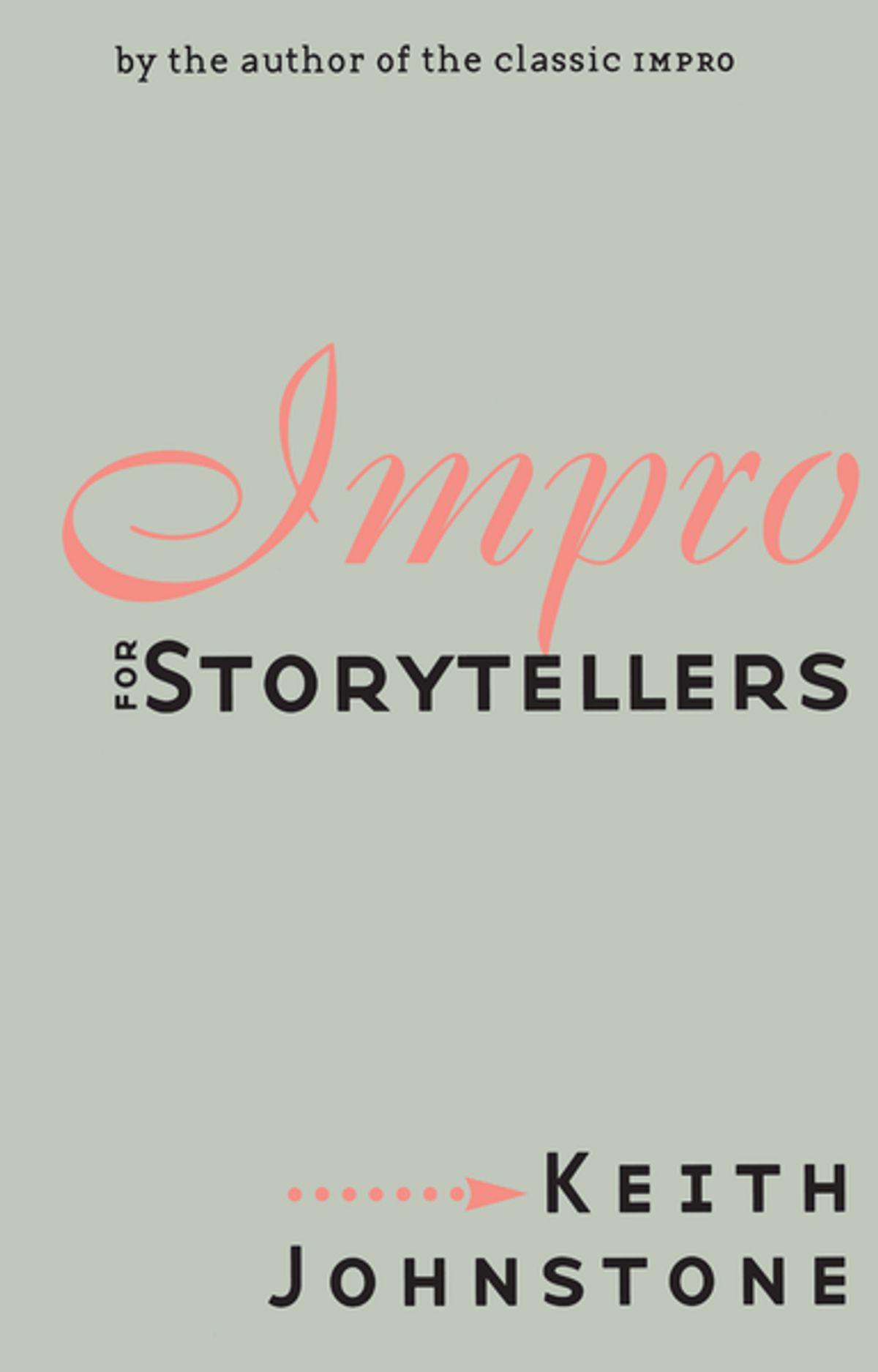
Impro for Storytellers
Keith Johnstone

The Art of Chicago Improv
Short Cuts to Long-Form Improvisation
Rob Kozlowski

Devising Performance
A Critical History
Deirdre Heddon; Jane Milling

Theatrical Improvisation
Short Form, Long Form, and Sketch-Based Improv
Jeanne Leep
Creating Improvised Theatre
Tools, Techniques, and Theories
Mark Jane
References
In the Archive
How to Reference This Page
The Improv Archive. (2026). Keith Johnstone. Retrieved September 28, 2026, from https://improvarchive.org/people/keith-johnstone
The Improv Archive. "Keith Johnstone." The Improv Archive, 2026. https://improvarchive.org/people/keith-johnstone.
The Improv Archive. "Keith Johnstone." The Improv Archive, 2026, https://improvarchive.org/people/keith-johnstone. Accessed September 28, 2026.
The Improv Archive is a systemically maintained repository. The archive itself acts as the corporate author.