Improvise
Scene from the Inside Out
Mick Napier's Improvise: Scene from the Inside Out is a provocative, analytical, and highly influential manifesto that redefined the Chicago Style and launched a new generation of improvisational thinking. Published in 2004, the book reflects Napier's deep experience as the founder of the Annoyance Theatre and his tenure as a master teacher of the rules-breaking and choice-driven school. It positions improv not as a series of safe rules, but as a rigorous theatrical discipline that prioritizes self-reliance, boldness, and the discovery of complex, unscripted structures. Napier challenges the dogma of traditional improv pedagogy—specifically the rules of "Don't ask questions" or "Don't deny"—arguing that blindly following these edicts leads to tentative, polite, and ultimately boring scenes. Instead, he empowers the improviser to trust their own instincts and to make strong, unilateral choices that drive the action forward.
The central premise of the work is a direct challenge to the fear-based habits of the improviser. Napier argues that most rules are actually crutches designed to prevent bad scenes, but they also prevent great ones. He advocates for The Power of the Choice, urging the performer to enter every scene with a single, clear, and unchangeable POV or gift before another person even speaks. The book is particularly noted for its focus on individual responsibility, teaching the performer to take total control of their own character and their own fun rather than waiting for a partner to save them. He provides a clear and rigorous methodology for the opening, the scene start, and heightening, giving instructions on how to coordinate the meta-rhythm of the unscripted show. This approach shifts the focus from "What should we do?" to "What am I doing?", creating a dynamic where two strong, independent choices collide to create something unexpected.
The text is written in a direct, passionate, and often hilariously blunt voice, filled with anecdotal insider stories from the Chicago scene. He emphasizes that the truth is funny and urges the performer to be obvious and to fail with pleasure. Improvise is not just a manual for actors; it is a call to arms for anyone who wants their work to feel truly alive, intelligent, and authentically communal. It remains one of the most widely read and influential books in the entire history of the performing arts, essential for those who want to move beyond the basics and master the art of the scene.
Key Concepts
The belief that authentic emotional reactions are the engine of high-level performance rather than rules or formality.
Entering every interaction with a single, clear, and unchangeable emotional POV or gift before your partner speaks.
Using questions, denials, and bad habits strategically to drive more honest and surprising drama and comedy.
Techniques for identifying and expanding the meta-meanings and themes of a performance in real-time.
Rewiring the ego's relationship to failure, treating it as the source of surprise and personal growth.
Who Benefits from Reading this Book
Performers looking to reboot their presence and to find new modes of discovery in their scripted and unscripted work.
Instructors seeking a clear and effective curriculum for training their troupes in choice-driven mastery and ensemble skill.
Those seeking a technical and rigorous alternative to sentiment-based or Method systems of training.
Individuals looking for a mindset that embraces uncertainty and the power of the honest choice in comedic creation.
Reception & Legacy
Improvise has been hailed as one of the most useful and rigorous books in the field of contemporary improv training. Reviewers often praise Mick Napier for his clarity and for his refusal to rely on the easy clichés of sketch-based comedy. The book's focus on choice and self-reliance is frequently cited as its major strength. It is regarded as an essential textbook for any individual committed to the serious art of the unscripted moment.
Connections
- authorMick Napier
Publication Context
Heinemann publishes "Improvise: Scene from the Inside Out" by Mick Napier, offering a contrarian take on established improv conventions. Napier argues that many standard rules taught in improv training, such as "never say no," are oversimplifications that can limit performers rather than free them. The book provides an alternative framework grounded in character, specificity, and personal accountability, and becomes an influential counterweight to more prescriptive approaches to improv education.
Related Reading
See all books →
Truth in Comedy
The Manual of Improvisation
Charna Halpern; Del Close; Kim Howard Johnson

Behind the Scenes
Improvising Long Form
Mick Napier

Impro
Improvisation and the Theatre
Keith Johnstone

Improvising Now
A Practical Guide to Modern Improv
Rob Norman

The 5 Elements of Improv
How to Take Your Improv to the Next Level
Andrew M. Spragge; Karen L. Eichler
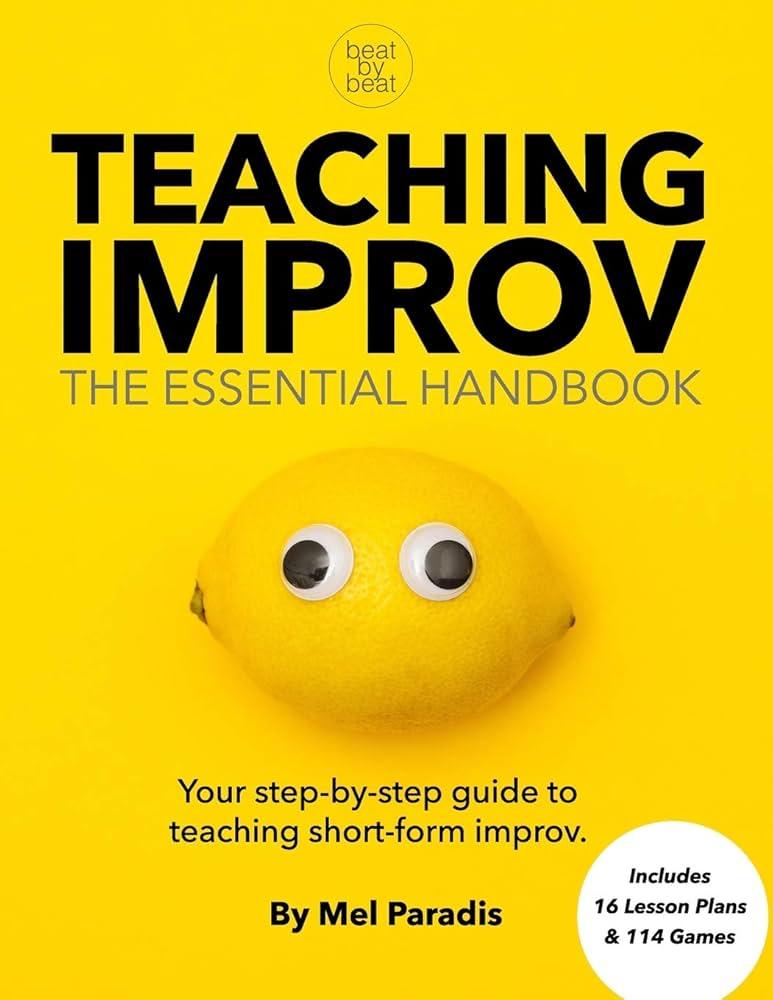
Teaching Improv
The Essential Handbook
Mel Paradis
About This Book
Publisher Description
This is a test description from the publisher.
About the Author
Max Dickins is a comedian and coach.
How to Reference This Page
The Improv Archive. (2026). Improvise. Retrieved September 28, 2026, from https://improvarchive.org/books/improvise-scene-from-the-inside-out
The Improv Archive. "Improvise." The Improv Archive, 2026. https://improvarchive.org/books/improvise-scene-from-the-inside-out.
The Improv Archive. "Improvise." The Improv Archive, 2026, https://improvarchive.org/books/improvise-scene-from-the-inside-out. Accessed September 28, 2026.
The Improv Archive is a systemically maintained repository. The archive itself acts as the corporate author.