Circle of Extraordinary Coincidences
Circle of Extraordinary Coincidences is an exercise in which players share personal stories and discover surprising connections, overlaps, and coincidences between them. The revelations build ensemble bonds and provide rich personal material for future scene work. The exercise demonstrates that truth is often stranger and more compelling than invention.
Structure
Setup
Players stand or sit in a circle. The facilitator sets the frame: everyone in this room has a story, and some of those stories overlap in ways nobody has discovered yet.
Phase 1: Open Sharing
Players share brief personal stories - real experiences, not invented - that have specific details: a place, a time, a specific unusual event, a memorable person. The stories are short (one to two minutes) and concrete. The facilitator encourages specificity over generality.
Phase 2: Listening for Overlap
As each story is told, players listen actively for any points of connection: same city, same year, same kind of experience, same unusual detail. When they notice a connection, they note it but wait.
Phase 3: Connection Discovery
After several stories, the facilitator invites connections: "Did anyone hear something that connected to your own story?" Players share the overlaps they noticed. Coincidences - genuine, surprising ones - almost always emerge. Two people who went to the same obscure museum. Three people who experienced the same unusual weather event. The same book appearing in three different stories.
The Effect
The discovery that experiences overlap in surprising ways creates genuine ensemble bonding. It also demonstrates that personal truth is richer, stranger, and more relatable than invented material.
How to Teach It
How to Explain It
"Share something real and specific. A place, a time, something that actually happened. The stranger the better. We'll find out what we have in common."
Why It Matters
Circle of Extraordinary Coincidences builds ensemble trust through the discovery of unexpected shared experience. It also trains performers in the specific storytelling skill of using personal truth as scene material - the discovery that their actual life contains more compelling material than anything they might invent is one of the foundational realizations of improv training. The exercise reinforces that specificity in performance (a real place, a real year, a real detail) creates stronger connection than generality.
Common Coaching Notes
- Push for specificity. "Something unusual happened" is not a story. "I was the only person on a ferry in the Azores at 3am and the captain asked me to hold the wheel" is.
- Let the discoveries happen naturally. Don't force connections. If the group listens well, real connections will emerge. Forced connections are less valuable than discovered ones.
- This exercise changes what performers think of as "interesting." The idea that their real life is more interesting than their invented one is transformative for many performers.
Debrief Questions
- What was the most surprising coincidence that emerged?
- What happened when you heard a story that matched part of yours?
- How does this change your relationship to using personal material in scene work?
Worth Reading
See all books →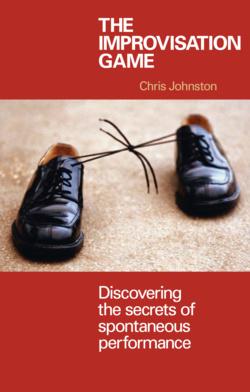
The Improvisation Game
Discovering the Secrets of Spontaneous Performance
Chris Johnston

Group Improvisation
The Manual of Ensemble Improv Games
Peter Campbell Gwinn; Charna Halpern

Playing Along
37 Group Learning Activities Borrowed from Improvisational Theater
Izzy Gesell

Theatrical Improvisation, Consciousness, and Cognition
Clayton D. Drinko

Something from Nothing
The Technique of Improvisation
Richard Goteri

Improvisation Starters
A Collection of 900 Improvisation Situations for the Theater
Philip Bernardi
Related Exercises
Story Circles
Story Circles is a collaborative storytelling exercise in which small groups sit in circles and build stories together, with each person contributing a segment before passing to the next. The exercise develops listening, narrative awareness, and the ability to build on others' contributions.
Building Rapport
Structured activities for establishing connection and trust with colleagues through improvisational active engagement.
Random Images
Random Images is an applied improvisation exercise from Joseph A. Keefe's Improv Yourself in which partners select five unrelated images for each other and each person creates an original story combining all five images into a coherent narrative. The exercise develops the ability to find connections between disparate elements, a core skill in both creative thinking and improvisation.
Triangles
Triangles is a movement exercise in which each player secretly selects two other people in the space and attempts to maintain an equilateral triangle with them as all players move simultaneously. Because everyone's target pairs are different and unknown to others, the formation shifts continuously with no fixed resolution. The exercise demonstrates how invisible individual choices produce complex collective patterns, and builds sustained spatial awareness and attention to others.
Radical Relationality
Radical Relationality is an applied improvisation exercise from The Applied Improvisation Mindset in which participants explore deep interconnection through physical and verbal practices. The exercise challenges individualistic defaults by making visible the ways in which each person's actions, choices, and presence shape and are shaped by everyone else in the group.
Be Specific
Participants silently exchange imaginary objects in a circle, then trace how objects transformed, illustrating the importance of specific communication.
How to Reference This Page
The Improv Archive. (2026). Circle of Extraordinary Coincidences. Retrieved September 28, 2026, from https://improvarchive.org/exercises/circle-of-extraordinary-coincidences
The Improv Archive. "Circle of Extraordinary Coincidences." The Improv Archive, 2026. https://improvarchive.org/exercises/circle-of-extraordinary-coincidences.
The Improv Archive. "Circle of Extraordinary Coincidences." The Improv Archive, 2026, https://improvarchive.org/exercises/circle-of-extraordinary-coincidences. Accessed September 28, 2026.
The Improv Archive is a systemically maintained repository. The archive itself acts as the corporate author.