Do More with Less
Do More with Less is an applied improvisation exercise inspired by the improvisational principle that constraints generate creativity. Participants identify a real or hypothetical problem they face with limited resources, then use constraint-based thinking to generate solutions that work without the resources they think they need. The exercise challenges the assumption that more resources automatically produce better solutions.
Structure
Setup
Participants identify a genuine resource constraint they face: limited budget, limited staff, limited time, limited tools. The facilitator frames the constraint not as an obstacle but as the condition of the creative challenge.
Constraint Acceptance
Participants are instructed to accept the constraint as permanent rather than as a temporary condition to overcome. The exercise begins from that acceptance: given that this resource will not appear, what can be done?
Assumption Reversal
A second phase introduces a structured technique: participants identify three assumptions they hold about what the task requires, then reverse each assumption. For each reversal, they generate at least one idea that becomes possible if the reversed assumption is true.
Alternative Generation
Groups brainstorm low-cost, low-resource alternatives to their assumed approaches, evaluated not by how closely they resemble the standard approach but by how well they serve the actual underlying goal.
Conclusion
Groups present their most promising alternatives and discuss which ideas might be genuinely implementable.
How to Teach It
Objectives
Do More with Less targets creative constraint thinking, assumption identification, and the productive reframing of resource scarcity from obstacle to creative condition. It addresses the organizational tendency to defer action until conditions are ideal.
How to Explain It
"You don't have what you think you need. That's not going to change. Given that, what can you actually do? Let's find out what's possible from where you actually are."
Common Pitfalls
Participants often spend the exercise describing what they would do with more resources rather than generating alternatives within the constraint. The facilitator must firmly redirect: the resources are not coming. What works without them?
In Applied Settings
Learning Objectives
Do More with Less addresses the organizational tendency to wait for ideal conditions before acting, and develops the capacity to generate meaningful progress within genuine constraints. The exercise builds creative resourcefulness, the identification and reversal of limiting assumptions, and the willingness to begin from where the team actually is rather than from where it wishes it were.
Workplace Transfer
The skills developed transfer directly to project management in resource-constrained environments, startup and early-stage organizational contexts, nonprofit and public sector settings where resource scarcity is structural, and any organizational situation where waiting for sufficient resources means not acting at all. The assumption-reversal technique is a portable analytical tool that participants can apply independently.
Facilitation Context
The exercise is used in innovation workshops, organizational problem-solving sessions, entrepreneurship programs, nonprofit leadership development, and any applied setting where resource constraints are a real and ongoing feature of the participants' work.
Debrief Framing
Facilitators ask: "Which alternative surprised you most? Which assumption, when reversed, opened up the most new possibilities? What would it look like to actually try this alternative? What is one small step you could take this week that requires no additional resources?"
Skills Developed
Worth Reading
See all books →
Applied Improvisation
Leading, Collaborating, and Creating Beyond the Theatre
Theresa Robbins Dudeck; Caitlin McClure

The Improvisation Edge
Secrets to Building Trust and Radical Collaboration at Work
Karen Hough
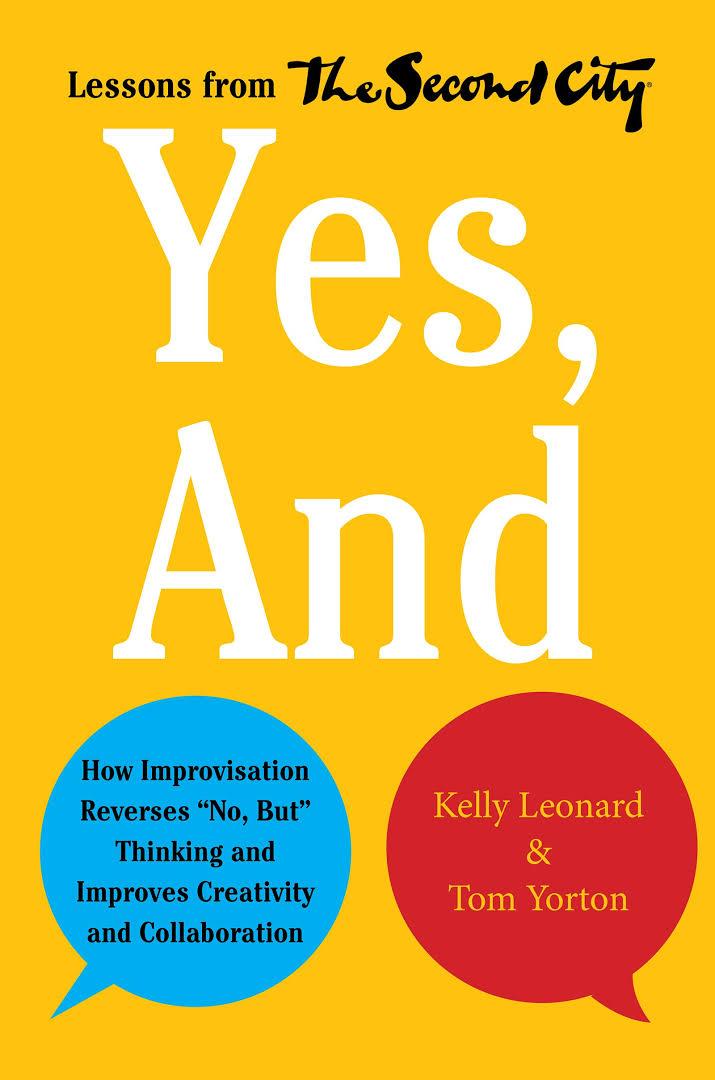
Yes, And
How Improvisation Reverses No, But Thinking and Improves Creativity and Collaboration
Kelly Leonard; Tom Yorton

The Applied Improvisation Mindset
Tools for Transforming Individuals, Organizations, and Communities
Theresa Robbins Dudeck; Caitlin McClure

Brain Disruption
Radical Innovation in Business Through Improv
Bruce Montgomery; Gail Montgomery

The Improv Mindset
How to Make Improvisation Your Superpower for Success
Keith Saltojanes
Related Exercises
Problem Solving
Problem Solving is an applied improvisation exercise from Business Improv in which teams tackle challenges using "Yes, And" principles and other improvisational techniques. Rather than following traditional analytical frameworks, participants generate solutions through rapid ideation, collaborative building, and the willingness to explore unconventional approaches.
Prioritizing
Prioritizing is an applied improvisation exercise from Business Improv in which teams practice rapid prioritization and decision-making under time pressure. Using improvisational techniques, participants learn to sort competing demands, make clear choices with incomplete information, and commit to a direction without prolonged deliberation.
Creative Solution Building
Creative Solution Building is an applied improvisation exercise in which participants use improvisational principles -- acceptance, building, and collaborative emergence -- to develop solutions to presented problems or scenarios. Rather than analyzing the problem and generating solutions individually, participants build solutions incrementally through a structured ensemble process, with each contribution extending and complying with what has already been offered.
Creative Inspiration
Creative Inspiration is a category of applied improvisation exercises that use unexpected prompts, arbitrary constraints, and non-linear starting points to spark creative thinking and generate innovative approaches to familiar problems. The exercises work by disrupting habitual thinking patterns: participants are forced to make associations and connections they would not reach through direct analytical approaches. They are used in innovation, ideation, and creative problem-solving programs.
Silo-Busting Exercise
Silo-Busting Exercise is an applied improvisation exercise in which a team facing a real challenge invites people from a completely separate department to join their brainstorming session. The outside participants bring fresh perspectives, unfamiliar frameworks, and no institutional assumptions, breaking the echo-chamber dynamic that limits innovation within isolated teams.
Managing Change
Managing Change is an applied improv exercise that uses structured improvisation to help participants navigate and practice the psychological and behavioral responses to unexpected change in organizational contexts. The exercise creates controlled conditions of disruption and adaptation, training the specific skills of remaining present, communicating openly, and collaborating effectively when plans, expectations, or structures are suddenly altered.
The Lineage
Explore the schools and structures that influenced or evolved from Do More with Less.
The Improvisation Edge (Karen Hough)
How to Reference This Page
The Improv Archive. (2026). Do More with Less. Retrieved September 28, 2026, from https://improvarchive.org/exercises/do-more-with-less
The Improv Archive. "Do More with Less." The Improv Archive, 2026. https://improvarchive.org/exercises/do-more-with-less.
The Improv Archive. "Do More with Less." The Improv Archive, 2026, https://improvarchive.org/exercises/do-more-with-less. Accessed September 28, 2026.
The Improv Archive is a systemically maintained repository. The archive itself acts as the corporate author.