Emotional Carpool
Emotional Carpool is an applied improv exercise in which participants enter an imaginary car one at a time, each bringing a strong emotion that all other passengers must immediately adopt as their own. The exercise explores emotional contagion -- the phenomenon in which the emotional state of one person spreads through a group -- and trains adaptability, emotional awareness, and the ability to shift registers on demand.
Structure
Setup
Four to five participants are assigned as carpool riders. The car is mimed -- a cluster of chairs or a space designated as the vehicle. A facilitator or group member designates the arrival order.
Progression
The first passenger enters and establishes an emotion through physicality and voice without naming it. All other passengers in the car adopt that emotion. The interaction continues in that shared emotional state for thirty to sixty seconds.
A new passenger enters, bringing a different emotion. The shift is immediate and physical -- the new arrival's emotional state displaces the previous one, and all passengers (including the first) adapt to the new temperature of the car.
The exercise continues until all riders have boarded and the group has navigated multiple emotional shifts across the journey.
Conclusion
The final scene can end at a destination -- the car arriving, passengers exiting -- or the facilitator can call time when sufficient emotional range has been explored.
How to Teach It
Objectives
Emotional Carpool targets emotional range, rapid register-shifting, and the observation and adoption of another person's affective state. It also reveals how quickly a group's emotional culture can be altered by a single strong presence.
How to Explain It
"When you enter the car, you bring the weather. Everyone catches it immediately. No one explains it -- you just feel it and show it."
Scaffolding
Begin with highly distinct, easily legible emotions (joyful, furious, terrified, sleepy) before introducing subtler combinations. In early rounds, the facilitator can announce the arriving passenger's emotion to the group before they enter, making the transition explicit before the group learns to read it from the performer alone.
Common Pitfalls
Passengers sometimes resist the new emotional arrival rather than absorbing it. The coaching note is that emotional contagion in this exercise is not optional -- the shift is the rule. Performers who "hold on" to the previous emotion are not playing the exercise. The interesting material is in how each character absorbs the same emotion differently, not in resisting the shift.
In Applied Settings
Learning Objectives
In applied settings, Emotional Carpool makes emotional contagion visible and discussable. Most workplace participants have experienced a colleague or leader whose emotional state transformed the atmosphere of a meeting or team interaction, but they rarely have language or tools for understanding how that transmission happens. The exercise names the mechanism and gives participants firsthand experience of both sending and receiving emotional states, making the invisible dynamic concrete.
Workplace Transfer
Emotional contagion in organizational settings operates constantly: the leader who walks into a meeting tense and distracted, the team member who arrives to a call with visible frustration, the presenter whose anxiety becomes the room's anxiety. Participants who have experienced Emotional Carpool begin to track their own emotional broadcast -- asking not only "What am I feeling?" but "What am I transmitting?" This awareness directly supports emotionally intelligent leadership, meeting facilitation, and interpersonal communication.
Facilitation Context
Emotional Carpool is used in emotional intelligence training, leadership development, and team culture workshops. It is appropriate for groups of 8 to 25. The exercise works in a large open space or across chairs arranged as a mock vehicle. It is particularly effective in leadership cohorts working on self-awareness and team impact.
Debrief Framing
Ask participants: "What did you notice about how quickly the group shifted? Which emotions were easiest to spread? Which were hardest to resist? When in your work life do you enter a room and set the emotional temperature -- intentionally or not?"
Skills Developed
Worth Reading
See all books →
Applied Improvisation
Leading, Collaborating, and Creating Beyond the Theatre
Theresa Robbins Dudeck; Caitlin McClure

The Applied Improvisation Mindset
Tools for Transforming Individuals, Organizations, and Communities
Theresa Robbins Dudeck; Caitlin McClure

Improvised Theatre and the Autism Spectrum
A Practical Guide
Gary Kramer; Richie Ploesch
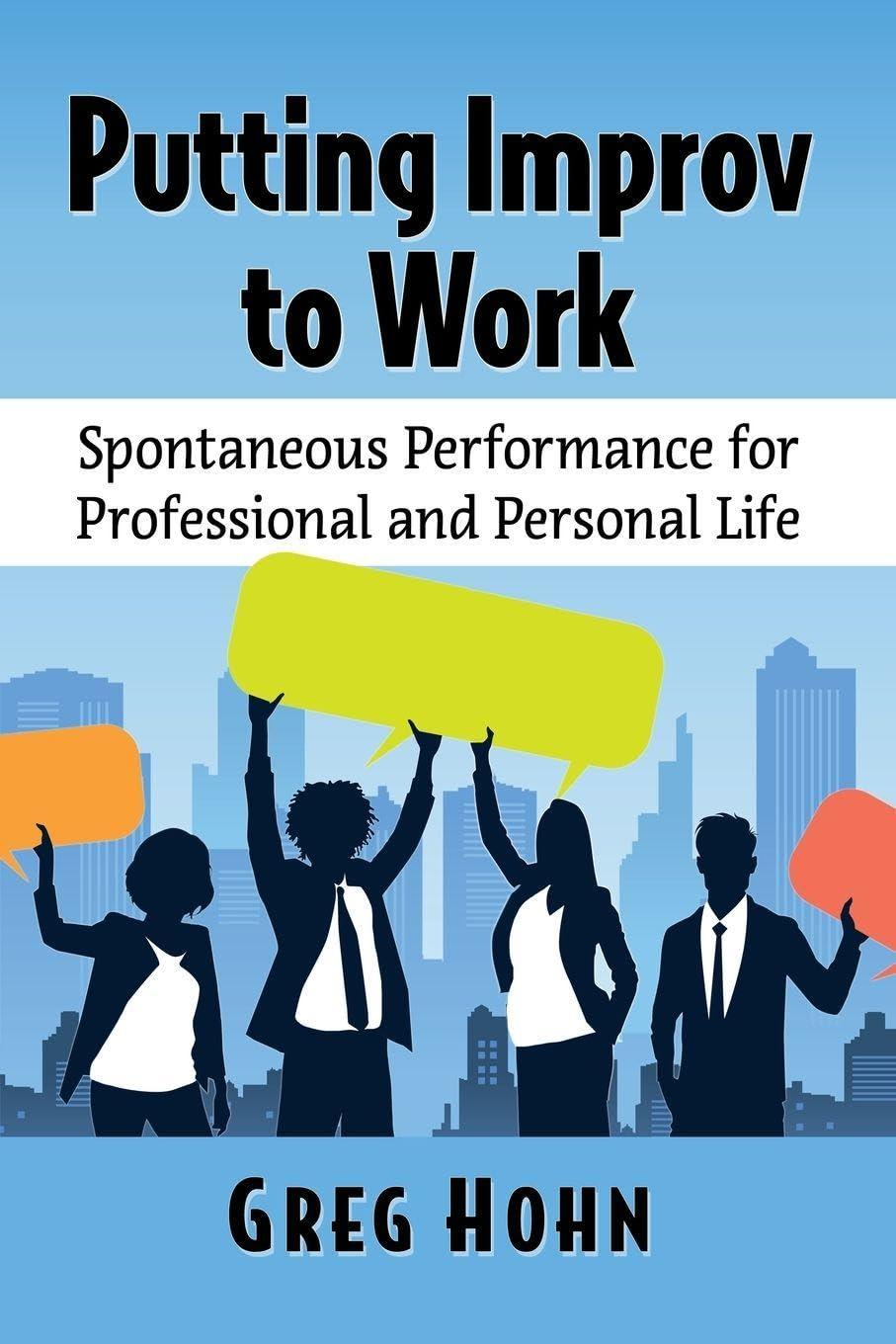
Putting Improv to Work
Spontaneous Performance for Leadership, Learning, and Life
Greg Hohn
The Improvisation Game
Discovering the Secrets of Spontaneous Performance
Chris Johnston
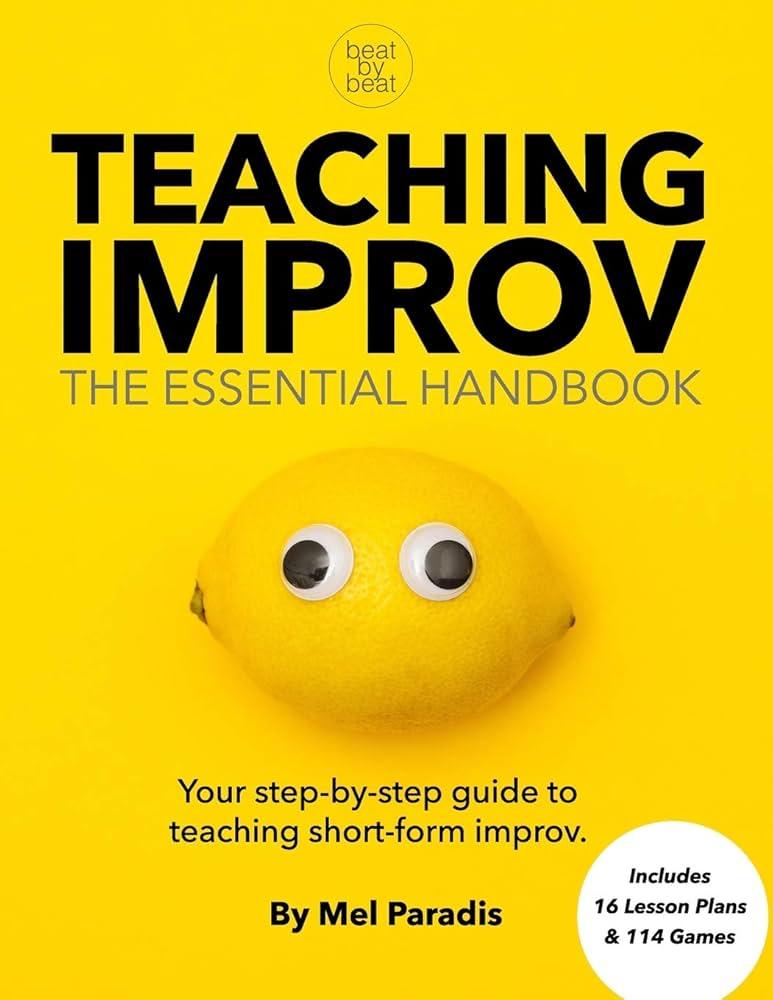
Teaching Improv
The Essential Handbook
Mel Paradis
Related Exercises
Emotional Squares
Emotional Squares is a spatial improv exercise and game in which the performance area is divided into a grid of squares, each assigned a distinct emotion. Performers moving through the space must immediately adopt the emotional state of whatever square they occupy. Crossing into a new square produces an immediate emotional shift. The game rewards bold physical choices and clear, committed transitions between emotional states as performers navigate the grid.
Emotional Endowment
Emotional Endowment is an applied improv exercise in which partners endow each other with an emotional state or characteristic that the other must accept and embody. One player assigns an emotional reality to their partner -- "You are devastated," "You are secretly thrilled" -- and the partner must accept that endowment fully without negotiating, correcting, or breaking the offer. The exercise develops awareness of emotional offers, the practice of acceptance, and the difference between explaining an emotion and inhabiting it.
Emotional Option
Emotional Option is an applied improv exercise in which participants hold a paired conversation while a facilitator calls out different emotions at intervals. The pairs must continue their conversation in the register of the newly assigned emotion without stopping or acknowledging the transition. The exercise trains rapid emotional adaptability, the awareness that emotional state is a choice, and the practical skill of continuing a conversation under shifting emotional pressure.
Continuing Emotions
Continuing Emotions is a scene game in which performers cycle through a series of emotional states at the direction of a caller. Each emotional shift must be justified within the scene's reality rather than simply displayed, with characters finding a reason to feel the new state given what has just happened. The game trains emotional range, commitment, and the ability to sustain scene logic through rapid change.
Emotional Self-Control
Emotional Self-Control is a category of applied improv exercises that develop the ability to manage emotional responses in high-stress, provocative, or emotionally charged situations. The exercises use improv techniques to create low-stakes environments in which participants practice recognizing their own emotional triggers, interrupting automatic reactions, and choosing intentional responses. The goal is to expand the gap between stimulus and response in situations where emotional reactivity typically causes professional and interpersonal harm.
The Lineage
Explore the schools and structures that influenced or evolved from Emotional Carpool.
Applied Improvisation (Dudeck & McClure)
How to Reference This Page
The Improv Archive. (2026). Emotional Carpool. Retrieved September 29, 2026, from https://improvarchive.org/exercises/emotional-carpool
The Improv Archive. "Emotional Carpool." The Improv Archive, 2026. https://improvarchive.org/exercises/emotional-carpool.
The Improv Archive. "Emotional Carpool." The Improv Archive, 2026, https://improvarchive.org/exercises/emotional-carpool. Accessed September 29, 2026.
The Improv Archive is a systemically maintained repository. The archive itself acts as the corporate author.