Gibberish Malapropism
Gibberish Malapropism is a scene game in which performers speak mostly in English but periodically substitute gibberish for key nouns or verbs. The audience and scene partners must infer the meaning of each gibberish word from context. The game rewards clear, specific scene-work: the more vividly the scene establishes its world, the more accessible the gibberish substitutions become. It trains contextual specificity and attentiveness in both performers and audience.
Structure
Setup
A suggestion is taken to establish a scene context. Two or more performers enter and begin a scene in English.
The Game
At natural moments in the scene, performers replace key words -- typically nouns or verbs -- with gibberish substitutions. The gibberish word is used consistently: once a performer has gibberished a specific word, that same gibberish stands in for it throughout the scene.
Context carries the meaning. If the scene is clearly set in a kitchen and a performer asks for the "flibbernak," the audience infers that the flibbernak is a kitchen implement relevant to what is happening. The performer's physical behavior, tone, and the logic of the scene supply the definition.
Escalation
Multiple gibberish words may accumulate over the course of the scene. The game intensifies as performers must track their own invented vocabulary and use it consistently.
Ending
The game ends when the scene reaches a natural conclusion or when the host closes the scene. A game that has built a rich gibberish vocabulary may end with a moment of heightened absurdity or a callback to an established gibberish word.
How to Teach It
Objectives
Gibberish Malapropism trains contextual clarity: the scene must be specific and grounded enough that its missing words can be inferred. It also develops vocabulary tracking -- performers must remember and use their own invented words consistently.
How to Explain It
"You're playing a regular scene, but some words are in a different language -- a made-up one. Every time you use a made-up word, use it consistently. The context has to do the work of telling us what it means."
Scaffolding
Begin with a single gibberish word per scene before adding multiple substitutions. Encourage performers to choose words that appear frequently in the scene -- the repetition helps the audience track the vocabulary and increases the comedy.
Common Pitfalls
The game loses clarity when performers change the gibberish word for the same object across the scene, destroying the internal vocabulary. The other common drift is generic scene-work that provides insufficient context for the gibberish -- the audience cannot infer what a word means if the scene is vague.
How to Perform It
Audience Intro
"In this scene, our performers will be speaking mostly English -- but they'll also be using a few words from another language. You'll have to figure out what those words mean from the scene."
Cast Size
Ideal: 2 to 4 performers. The game works best with a small cast where the vocabulary stays manageable.
Staging
Standard scene staging. No special arrangement required. Performers should be able to interact physically to help contextualize the gibberish words.
Key Skills
Contextual clarity, vocabulary consistency, scene-grounded specificity.
Wrap-Up Logic
End when the scene reaches a strong narrative beat or when a key gibberish word lands in a heightened context. Avoid extending the scene past the point where the gibberish vocabulary has been fully established and used.
Worth Reading
See all books →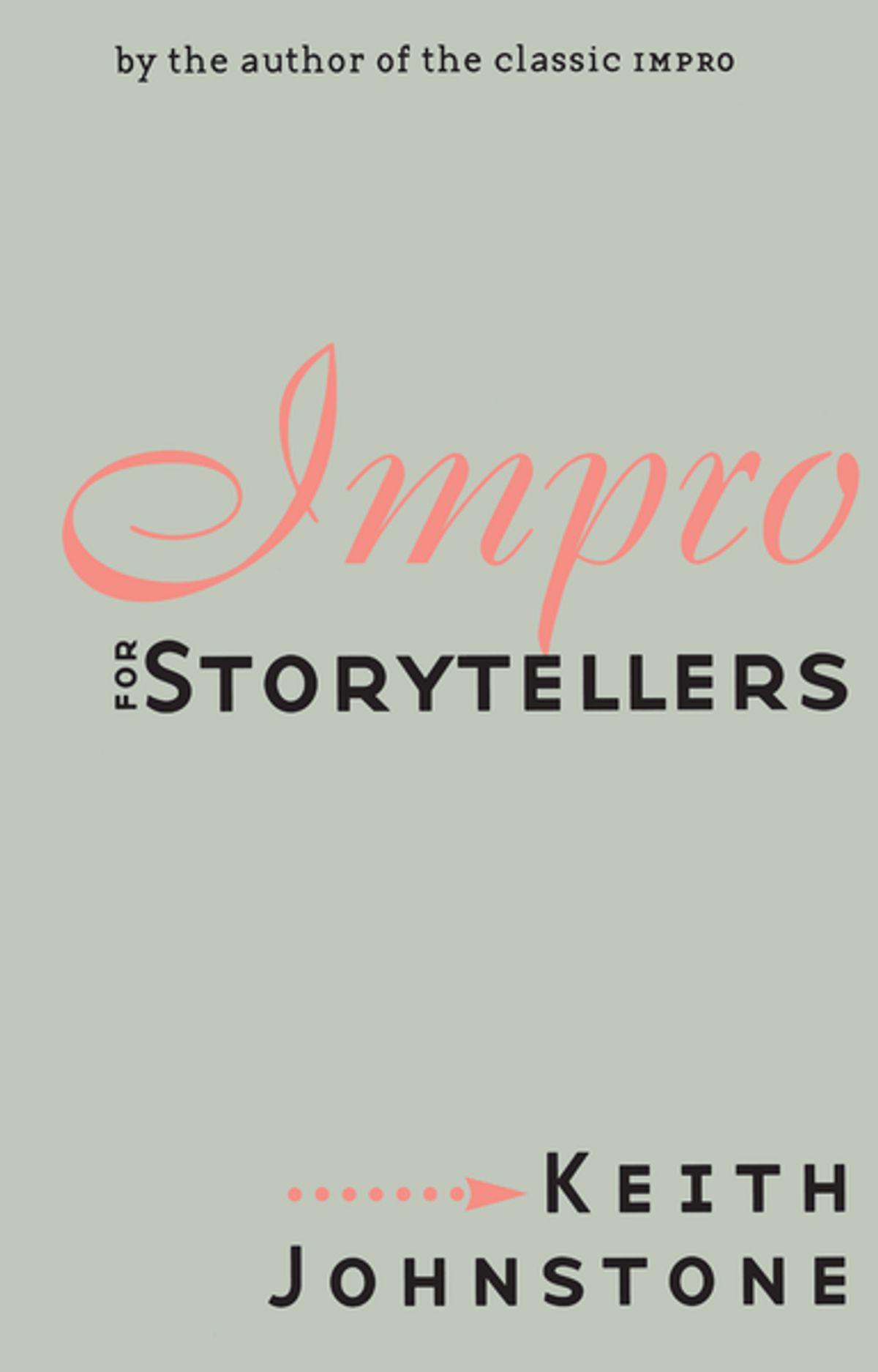
Impro for Storytellers
Keith Johnstone
Theater Games for Rehearsal
Viola Spolin

Group Improvisation
The Manual of Ensemble Improv Games
Peter Campbell Gwinn; Charna Halpern
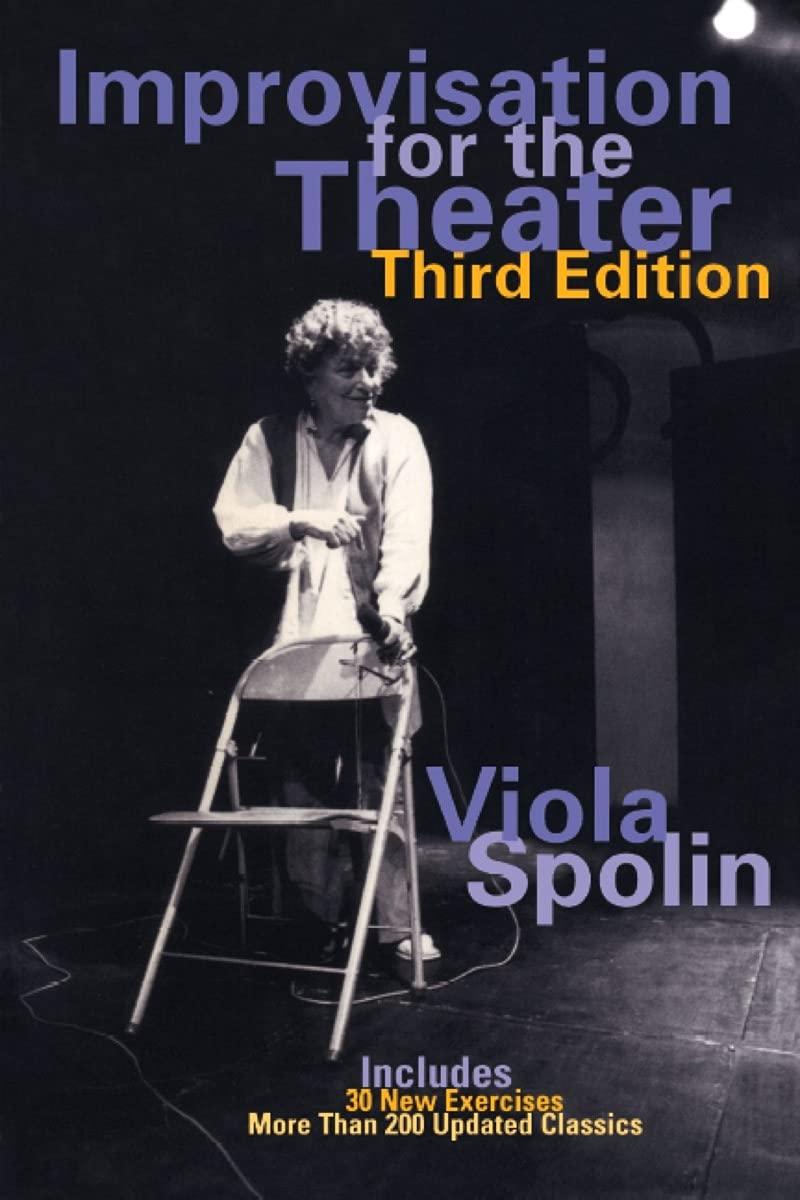
Improvisation for the Theater
A Handbook of Teaching and Directing Techniques
Viola Spolin

Semiotics and Pragmatics of Stage Improvisation
Domenico Pietropaolo; Paul Bouissac

The Improv Handbook
The Ultimate Guide to Improvising in Comedy, Theatre, and Beyond
Tom Salinsky; Deborah Frances-White
Related Exercises
Switch Gibberish
Switch Gibberish is a scene game in which performers alternate between speaking coherent dialogue and speaking in invented gibberish language. The switch happens on a signal from the facilitator or host, requiring performers to maintain scene continuity across radically different modes of communication.
Gibberish
Gibberish is a foundational improv exercise in which performers communicate using invented nonsense language while relying on vocal tone, facial expression, gesture, and physical action to convey meaning. The exercise demonstrates that communication transcends words and that audiences read emotional truth through nonverbal channels. Gibberish builds confidence in physical and vocal expression, frees performers from dependence on clever dialogue, and reveals how much information the body communicates before language enters the picture. It is one of the most widely used exercises across all improv traditions and appears in the training curricula of Viola Spolin, Keith Johnstone, and nearly every major improv school.
Replay Gibberish
Replay Gibberish is a short-form game in which a scene is first performed in coherent dialogue, then replayed entirely in gibberish. The performers must convey the same story, emotions, and relationships using only invented sounds, facial expressions, and physicality, demonstrating how much communication exists beyond words.
Gibberish Games
Gibberish Games is an applied exercise in which two participants hold a conversation entirely in made-up, invented language -- gibberish -- while a third person translates for the rest of the group. The exercise trains attention to nonverbal cues: tone, rhythm, gesture, facial expression, and physical presence carry the meaning that words normally would. Participants learn to read and respond to a speaker's full communicative body rather than filtering attention through vocabulary alone.
How to Reference This Page
The Improv Archive. (2026). Gibberish Malapropism. Retrieved September 29, 2026, from https://improvarchive.org/exercises/gibberish-malapropism
The Improv Archive. "Gibberish Malapropism." The Improv Archive, 2026. https://improvarchive.org/exercises/gibberish-malapropism.
The Improv Archive. "Gibberish Malapropism." The Improv Archive, 2026, https://improvarchive.org/exercises/gibberish-malapropism. Accessed September 29, 2026.
The Improv Archive is a systemically maintained repository. The archive itself acts as the corporate author.