Group Freeze
Group Freeze is a variation of Freeze Tag in which the entire ensemble participates simultaneously rather than tagging in one at a time. When a freeze is called, all performers stop in position, and any player can initiate the next scene from any frozen body in the tableau. The group format creates a faster pace, a wider variety of stage pictures, and greater collective responsibility for the game's momentum. Every performer is always on stage and always available to initiate.
Structure
Setup
All performers begin on stage. A brief scene starts between two or more players; the others find positions in the space and play into the scene or hold peripheral positions.
Freeze
Anyone -- including performers not currently at the center of the scene -- can call "Freeze!" All performers stop in whatever position they are in. The caller enters the space, physically taps a frozen performer, and takes their exact position.
New Scene
The caller begins a new scene justified by the position they have assumed. The new scene need not connect to the previous one. The initiated position is the only constraint -- the new scene grows from that physical starting point.
Continuation
The game continues indefinitely, with anyone able to call freeze at any time. The pace can be fast, producing rapid scene shifts, or can allow scenes to develop before the next freeze.
Ending
The game ends when the host brings the ensemble to a bow, or after a designated number of freezes. A game that builds momentum typically ends at a scene's peak rather than its resolution.
How to Teach It
Objectives
Group Freeze trains group-mind, the ability to justify any physical position, and collective responsibility for game momentum. It builds the habit of full presence for every performer at all times, since any performer can be tapped or can call freeze.
How to Explain It
"Everyone is always in the game. Anyone can call freeze. When you call it, everyone stops -- and you walk in, take someone's position exactly, and start a brand new scene from that body. The position tells you where to start."
Scaffolding
Begin with slower freeze cycles that allow scenes to develop before the next initiation. As the group develops the justification skill, encourage faster cycling to build momentum. The key muscle is physicality: the new scene must be justified by the position, not by a concept the caller had in mind before calling freeze.
Common Pitfalls
Performers sometimes call freeze primarily to rescue a slow scene rather than to initiate from a specific physical choice. The coaching note is that a freeze is strongest when called because a frozen position is genuinely interesting, not when called as an emergency exit. Avoid freeze patterns that concentrate all initiation in one or two performers.
How to Perform It
Audience Intro
"Everyone on stage can freeze the action at any moment. When they do, someone steps in, takes the frozen position exactly, and starts a completely different scene. Watch the bodies."
Cast Size
Ideal: 5 to 10 performers. Smaller groups move faster; larger groups produce more varied tableau.
Staging
Open staging, full stage. All performers remain visible at all times. The audience should see every frozen body when a freeze is called.
Wrap-Up Logic
End at a scene's comedic peak or after a string of rapid-fire freezes that demonstrate the game's momentum. The host can call a final blackout after a freeze lands particularly well.
Worth Reading
See all books →
Group Improvisation
The Manual of Ensemble Improv Games
Peter Campbell Gwinn; Charna Halpern
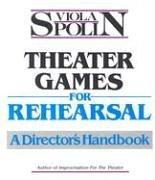
Theater Games for Rehearsal
Viola Spolin

Acting Through Improv
Improv Through Theatresports
Lynda Belt; Rebecca Stockley

Playing Along
37 Group Learning Activities Borrowed from Improvisational Theater
Izzy Gesell

Improvisation Starters
A Collection of 900 Improvisation Situations for the Theater
Philip Bernardi
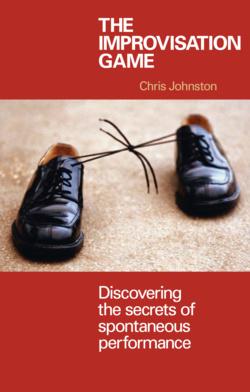
The Improvisation Game
Discovering the Secrets of Spontaneous Performance
Chris Johnston
Related Exercises
Freeze Tag
Freeze Tag is one of the most widely performed short-form improv games across all traditions. Two players begin a scene; at any point, a player on the sidelines calls "Freeze" and the performers stop in their exact physical positions. The caller taps out one performer, assumes that performer's frozen pose, and initiates an entirely new scene inspired by the inherited body position. The game rewards quick associative thinking, bold physical initiations, and the ability to find new meaning in an existing tableau. Freeze Tag is a staple of short-form shows, improv classes, and workshop warm-ups worldwide.
Freeze Tag Round One
Freeze Tag Round One is an applied improv exercise in which one person strikes a physical pose in the center of a circle and freezes. The next person enters and completes the picture -- adding themselves physically to create a scene with the frozen player. The exercise develops spatial reading, physical commitment, and the ability to find a scene within a tableau without verbal negotiation.
Freeze Tag Round Two
Freeze Tag Round Two extends Round One by requiring the entering player to justify their physical choice with one short sentence or action immediately after entering. Rather than simply completing a frozen picture silently, the entering player establishes a brief scene -- naming the relationship, the situation, or the location -- before both players are released. The addition of verbal justification trains the integration of physical and narrative scene-building.
Final Freeze
Final Freeze is an exercise in which players improvise a scene that must end in a specific physical tableau or frozen image called by the facilitator or agreed upon in advance. The scene must arrive at the designated freeze organically through the scene's own logic rather than forcing its way there artificially. The exercise develops narrative construction skills and the ability to engineer a predetermined ending from a completely open beginning.
Bobsledding Bodies
Bobsledding Bodies is a physical warm-up exercise in which players form a tight line and navigate the space together, shifting direction and speed as a unit. The exercise builds group awareness, physical coordination, and the ability to respond as an ensemble to subtle changes in momentum.
How to Reference This Page
The Improv Archive. (2026). Group Freeze. Retrieved September 28, 2026, from https://improvarchive.org/exercises/group-freeze
The Improv Archive. "Group Freeze." The Improv Archive, 2026. https://improvarchive.org/exercises/group-freeze.
The Improv Archive. "Group Freeze." The Improv Archive, 2026, https://improvarchive.org/exercises/group-freeze. Accessed September 28, 2026.
The Improv Archive is a systemically maintained repository. The archive itself acts as the corporate author.