Invocation
Invocation is a group opening exercise in which the ensemble collectively summons the energy, imagery, and thematic associations of a single audience suggestion through a ritualistic spoken-word performance. The ensemble stands in a circle or cluster and riffs vocally on the suggestion, building a shared stream of imagery, associations, and emotional responses. The Invocation creates source material for subsequent scenes while unifying the ensemble's focus and establishing a collective creative state. Developed by Del Close, the Invocation is a signature opening for Harold performances and other long-form shows.
Structure
The ensemble receives a single-word suggestion from the audience, typically an object. The group gathers in a tight formation, often a circle or a semicircle facing the audience.
One performer begins speaking about the suggestion: not defining it but free-associating around it, exploring its textures, memories, emotional resonances, and cultural connections. Other performers join in, overlapping and building on each other's contributions. The speaking is not conversational; it is incantatory, with a rhythmic, heightened quality that distinguishes it from ordinary speech.
The ensemble builds in intensity. Individual voices weave together, sometimes speaking simultaneously, sometimes yielding to a single voice that captures a particularly resonant image. The associations move outward from the literal object to its metaphorical, emotional, and narrative possibilities.
The Invocation runs for two to five minutes. The facilitator or a designated ensemble member reads the energy and ends the Invocation at a peak moment, often with a collective physical gesture or a sudden silence.
The images, phrases, and themes generated during the Invocation become the raw material for the scenes that follow. Performers draw on the shared pool of associations rather than introducing unconnected ideas, creating thematic coherence across the show.
How to Teach It
How to Explain It
"We are going to open with an invocation. We speak together, as one voice, calling in the space, the story, the night. Listen to each other. Slow down to the pace of the slowest voice. Begin."
The Invocation is an advanced opening that requires comfort with poetic language, group synchronization, and the willingness to speak without a clear plan. Introduce it after the ensemble has developed basic group mind skills through simpler exercises like Hot Spot or group free association.
Coach for specificity over abstraction. An Invocation about "keys" that produces images of "a grandmother's key ring, heavy with keys to rooms that no longer exist" is more useful than one that stays at the level of "keys open doors, doors lead to places." Specific images generate specific scenes.
The most common failure is performers waiting for their turn to speak rather than joining the flow. The Invocation is not a round-robin; it is a collective voice that swells and recedes. Coach performers to speak when moved rather than when it is their turn, and to overlap with others rather than waiting for silence.
The ritual quality of the Invocation matters. The exercise creates a transition from the everyday world into the performance state. Treating it as a casual warm-up rather than a focused collective act diminishes its function. The ensemble should approach the Invocation with the seriousness of purpose that Del Close intended: a genuine summoning of creative energy around the suggestion.
Worth Reading
See all books →
Theatrical Improvisation
Short Form, Long Form, and Sketch-Based Improv
Jeanne Leep

The Art of Chicago Improv
Short Cuts to Long-Form Improvisation
Rob Kozlowski

The Upright Citizens Brigade Comedy Improvisation Manual
Matt Besser; Ian Roberts; Matt Walsh

Theatrical Improvisation, Consciousness, and Cognition
Clayton D. Drinko

Long Form Improvisation and American Comedy
The Harold
Matt Fotis
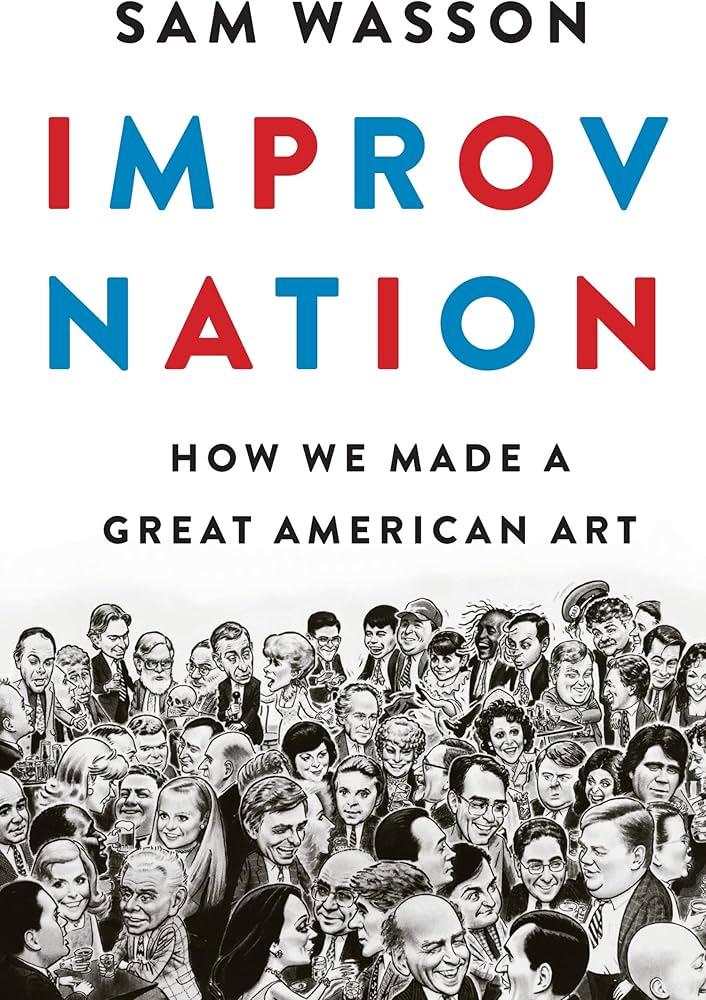
Improv Nation
How We Made a Great American Art
Sam Wasson
Related Exercises
Character Monologue
Character Monologue is an exercise in which a performer delivers an extended solo speech in character, speaking directly to the audience or to the ensemble. The sustained solo performance builds stamina, character depth, and the ability to hold attention without scene support from other players. Character Monologue develops the skill of generating detailed, specific character voices and perspectives under the pressure of uninterrupted stage time. The exercise serves as a core training tool for monologue-based long-form formats such as The Armando, where monologues function as the engine that generates scene material for the rest of the ensemble.
Mantra
Mantra is a vocal and mental exercise in which performers select and repeat a single word or short phrase, gradually shifting its rhythm, volume, pitch, and emotional intensity. The repetition strips away self-consciousness and helps players discover how meaning transforms through delivery alone. The same word spoken softly becomes a prayer; spoken forcefully becomes a command; spoken rapidly becomes a plea. Mantra prepares performers for emotionally committed scene work by building comfort with vocal extremes and sustained focus. The exercise draws on meditation practices adapted for theatrical training.
Cocktail Party
Cocktail Party is a multi-scene ensemble exercise and game in which several pairs of performers simultaneously engage in separate conversations at an imagined social gathering. The overlapping dialogues create a rich, layered environment in which performers must maintain their own character and scene while tracking the conversations happening around them. As connections emerge between the separate conversations, performers weave themes, characters, and references across the pairs. The game trains ensemble awareness, the ability to sustain a character in the background, and the skill of recognizing shared themes and patterns across simultaneous scenes. As described in Truth in Comedy, the Cocktail Party allows performers to explore the value of connections in improvisation.
Give and Take
Give and Take is a foundational scene technique and exercise in which performers practice transferring and sharing focus within a scene. Only one action, conversation, or event holds the audience's attention at a time, and performers must silently negotiate who has focus and who yields it. The exercise trains the essential ensemble skill of knowing when to step forward and when to step back, making it one of the most important exercises for developing group awareness. Give and Take is used in both theatrical improv and applied improvisation settings, where it teaches collaborative turn-taking and active listening.
How to Reference This Page
The Improv Archive. (2026). Invocation. Retrieved September 29, 2026, from https://improvarchive.org/exercises/invocation
The Improv Archive. "Invocation." The Improv Archive, 2026. https://improvarchive.org/exercises/invocation.
The Improv Archive. "Invocation." The Improv Archive, 2026, https://improvarchive.org/exercises/invocation. Accessed September 29, 2026.
The Improv Archive is a systemically maintained repository. The archive itself acts as the corporate author.