Remember the Time
Remember the Time is a paired exercise in which partners co-create a shared fictional memory, each contributing details as if recalling a real event they experienced together. The exercise develops collaborative storytelling, active listening, and the ability to build on a partner's offers without contradiction.
Structure
Setup
Players pair up and face each other. The facilitator provides a general prompt such as "Remember that time we went to the beach?" or allows pairs to choose their own starting memory. Both players treat the fictional event as something they genuinely experienced together.
Progression
One partner begins by offering a detail about the shared memory: "Oh yes, and the water was so cold that morning." The other partner builds on it: "Right, and you were the first one to jump in anyway." Each contribution adds a new detail while accepting everything previously established.
The conversation flows naturally, with both partners alternating contributions. Neither player controls the narrative alone. The memory grows richer as details accumulate: sensory information, emotional reactions, other people who were there, and unexpected events that occurred.
The exercise works best when players speak with genuine warmth and nostalgia, as if actually reminiscing. This emotional authenticity makes the fictional memory feel vivid and specific.
Variations
A group version has the entire ensemble share one collective memory, with each person adding a detail in turn. A conflict version asks partners to remember an event they disagree about, building a shared narrative while maintaining different emotional perspectives on what happened. A prompt version provides increasingly unusual starting scenarios: "Remember the time we accidentally ended up on a fishing boat in Norway?"
How to Teach It
Objectives
Remember the Time develops the Yes-And principle in a conversational format that feels natural rather than performative. Partners practice accepting offers, adding specificity, and building shared reality without the pressure of being watched by an audience. The exercise also trains emotional connection between scene partners.
How to Explain It
"You and your partner share a memory of something that never happened. Talk about it as if you were both there. Add details. Build on what your partner says. Treat every contribution as true."
Scaffolding
Begin with everyday prompts (a holiday, a road trip, a dinner party) before moving to more unusual scenarios. Encourage sensory detail over plot. "What did it smell like?" produces richer material than "What happened next?"
Common Pitfalls
The most common error is one partner dominating the storytelling while the other simply agrees. Both partners must contribute equally. A second issue is players contradicting established details, saying "No, it was Tuesday" instead of building on the existing reality. Remind players that everything their partner says is true.
In Applied Settings
Remember the Time works in team-building contexts as a trust and rapport exercise. Co-creating a fictional shared experience mirrors the collaborative construction of shared organizational narratives. Facilitators use the debrief to explore how teams build consensus, how listening shapes collaboration, and how accepting a colleague's contribution (even when unexpected) strengthens the collective output. The exercise is also used in conflict resolution training, where the ability to hold multiple perspectives on a shared experience is a critical skill.
Skills Developed
Worth Reading
See all books →
The Improv Handbook
The Ultimate Guide to Improvising in Comedy, Theatre, and Beyond
Tom Salinsky; Deborah Frances-White

When I Say This, Do You Mean That?
Enhancing Communication
Cherie Kerr; Julia Sweeney

Applied Improvisation
Leading, Collaborating, and Creating Beyond the Theatre
Theresa Robbins Dudeck; Caitlin McClure
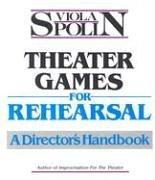
Theater Games for Rehearsal
Viola Spolin

Group Improvisation
The Manual of Ensemble Improv Games
Peter Campbell Gwinn; Charna Halpern
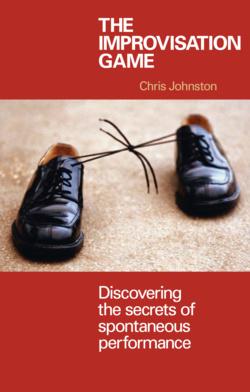
The Improvisation Game
Discovering the Secrets of Spontaneous Performance
Chris Johnston
Related Exercises
Play Date
Play Date is an applied improvisation exercise in which participants engage in unstructured play together, rediscovering the value of spontaneity, curiosity, and shared joy. The exercise removes the pressure of productivity and invites adults to reconnect with the generative power of purposeless play.
Rituals
Rituals is a scene exercise in which performers explore the behavioral rhythms of repeated, patterned actions: the small ceremonies people perform when making coffee, setting a table, greeting a colleague, or preparing for sleep. By slowing down and physicalizing the precise sequence of a ritual, players develop attention to behavioral specificity and discover that the way a character moves through their routines reveals character, relationship, and emotional state as clearly as explicit dialogue.
Story Circles
Story Circles is a collaborative storytelling exercise in which small groups sit in circles and build stories together, with each person contributing a segment before passing to the next. The exercise develops listening, narrative awareness, and the ability to build on others' contributions.
And Then
And Then is a storytelling exercise in which each contribution to a group story must begin with the phrase "and then." The connective phrase enforces forward momentum and prevents storytellers from stalling or backtracking. The exercise trains narrative drive and the habit of advancing rather than circling.
Share Your Story
Share Your Story is an applied improvisation exercise in which participants practice crafting and delivering compelling personal narratives using improvisational storytelling techniques. The exercise develops the ability to structure real experiences into engaging stories that connect with listeners.
The Lineage
Explore the schools and structures that influenced or evolved from Remember the Time.
Applied Improvisation (Dudeck & McClure)
How to Reference This Page
The Improv Archive. (2026). Remember the Time. Retrieved September 28, 2026, from https://improvarchive.org/exercises/remember-the-time
The Improv Archive. "Remember the Time." The Improv Archive, 2026. https://improvarchive.org/exercises/remember-the-time.
The Improv Archive. "Remember the Time." The Improv Archive, 2026, https://improvarchive.org/exercises/remember-the-time. Accessed September 28, 2026.
The Improv Archive is a systemically maintained repository. The archive itself acts as the corporate author.