Underscore
Underscore is a scene exercise in which a live musician provides continuous music beneath an improvised scene, offering an emotional layer that performers can follow, play against, or let shape their choices. The exercise trains sensitivity to nonverbal emotional cues and builds the habit of receiving external offers from non-human sources. It is a standard element of improv training that uses live or recorded sound as an environmental collaborator.
Structure
Setup
A musician (typically a pianist, guitarist, or keyboard player) sits at the side of the space. Two or more performers set up to play a scene. The musician begins playing before the scene starts and continues throughout.
Exercise
The scene begins normally. The musician listens to the scene and responds with musical choices: a genre, a tempo, an emotional key. The music does not narrate the scene literally but provides an underlying emotional register.
Performers allow the music to inform their choices without literalizing it. If the music goes tense, the performers do not necessarily make the scene literally threatening; they listen for what emotional reality the music is evoking and let that reality enter the scene through behavior, physicality, or subtext.
The musician may shift the music to lead the scene rather than follow it. When the musician moves from a minor key to a major one, or from slow to fast, performers should register the shift and allow the scene to follow. This bidirectional listening creates a genuine call-and-response between music and action.
Variations
In a soundscape version, performers create environmental sounds vocally or with objects rather than live instruments, and scenes play underneath the created soundscape. In recorded-music versions, a facilitator controls a playlist and shifts tracks to prompt emotional changes; this is less interactive but accessible without a live musician.
How to Teach It
How to Explain It
"The music is your scene partner. Let it affect you. If the tempo changes, something has changed for your character. If the volume drops, respond to that. You are not illustrating the music: you are in relationship with it."
Objectives
Underscore develops two related skills: receiving offers from non-human sources, and responding to emotional information without literalizing it. Performers who have difficulty with Underscore typically literalize the music: a tense chord produces a chase scene, slow music produces a funeral. The goal is emotional integration, not dramatic illustration.
The exercise also develops the capacity to hold two tracks of awareness simultaneously: the logic of the scene and the emotional signal of the music.
Coaching the Musician
The musician's role is to respond and lead in alternation. For the first minute, follow the performers. Then begin to lead: shift genre, shift tempo, shift key. Watch how the performers respond. The best musical directors in improv are improvisers themselves, and this exercise is as much a training exercise for the musician as for the performers.
Coaching the Performers
- "Listen with your body, not your head. What does the music make you want to do physically?"
- "Don't illustrate. Let the music be underneath, not on top."
- "If the music changes and you don't, you've stopped listening."
- "The music knows what the scene needs before you do. Trust it."
Without a Musician
For groups without a live musician, a facilitator can control recorded music and shift tracks at key moments. This is less responsive but still develops performer sensitivity to external emotional signals. Brief the facilitator to shift tracks deliberately, not randomly: shifts should happen when the scene reaches a decision point or a plateau.
History
Live musical underscore has been a defining element of Second City performance since the company's earliest years. Fred Kaz, who served as Second City's musical director from 1961 to 1971, was known for his ability to support scenes in real time, providing music that amplified emotional content without overwhelming the performers. Second City Unscripted documents Kaz as the person who would "underscore scenes and also let you know when the scene was over by playing the-scene-is-over music" : a description of underscore as both dramatic support and structural signal.
The exercise as a discrete training form : playing scenes beneath live music specifically to develop performer responsiveness , belongs to the general tradition of musical accompaniment in actor training, applied to improv pedagogy. Asaf Ronen addresses the directorial dimension of musical underscore in improv, instructing players to use cultural associations from "soap operas, romantic comedies, sitcoms, awards shows, dramas" to guide the keyboard player's choices rather than describing emotions directly.
Worth Reading
See all books →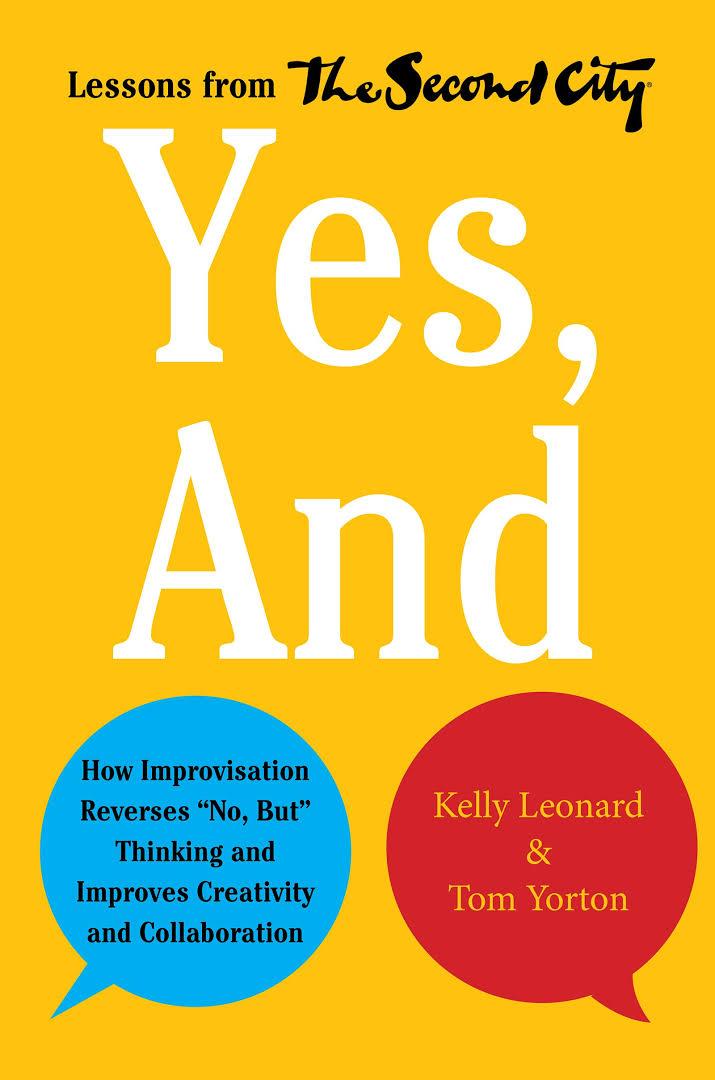
Yes, And
How Improvisation Reverses No, But Thinking and Improves Creativity and Collaboration
Kelly Leonard; Tom Yorton

The Second City Unscripted
Revolution and Revelation at the World-Famous Comedy Theater
Mike Thomas

The Applied Improvisation Mindset
Tools for Transforming Individuals, Organizations, and Communities
Theresa Robbins Dudeck; Caitlin McClure

Truth in Comedy
The Manual of Improvisation
Charna Halpern; Del Close; Kim Howard Johnson

Improvisation In The Arts Of The Middle Ages And Renaissance
Timothy J. McGee
Improv for Actors
Dan Diggles
Related Exercises
Scene to Music
Scene to Music is an exercise in which performers improvise a scene while a musician or recorded soundtrack plays underneath, allowing the music to influence the emotional tone, pacing, and genre of the scene. The exercise trains performers to listen beyond their scene partners and respond to an external atmospheric element.
Animal Understudy
Animal Understudy is a scene game in which performers play a scene using the physicality and vocal qualities of assigned animals while maintaining human characters and dialogue. The animal influence colors every choice without replacing the scene's content. The game produces unexpected character work and physical comedy.
Orchestra
Orchestra is a group exercise in which players create a collective musical composition using voices, body percussion, and physical gesture. A conductor cues volume, tempo, solo moments, and ensemble dynamics. The exercise trains ensemble responsiveness, collective listening, and the ability to follow and surrender to shared direction without losing individual contribution.
Pivot
Pivot is a scene exercise in which performers identify the moment when a scene needs to shift direction and make a deliberate choice to change it. The facilitator may call "Pivot" to signal the moment, or players practice identifying pivot points themselves. The exercise develops editorial awareness and trains the skill of knowing when a scene needs to evolve rather than repeat.
How to Reference This Page
The Improv Archive. (2026). Underscore. Retrieved September 28, 2026, from https://improvarchive.org/exercises/underscore
The Improv Archive. "Underscore." The Improv Archive, 2026. https://improvarchive.org/exercises/underscore.
The Improv Archive. "Underscore." The Improv Archive, 2026, https://improvarchive.org/exercises/underscore. Accessed September 28, 2026.
The Improv Archive is a systemically maintained repository. The archive itself acts as the corporate author.