Orchestra
Orchestra is a group exercise in which players create a collective musical composition using voices, body percussion, and physical gesture. A conductor cues volume, tempo, solo moments, and ensemble dynamics. The exercise trains ensemble responsiveness, collective listening, and the ability to follow and surrender to shared direction without losing individual contribution.
Structure
Setup
The group stands in an arc or semicircle facing one player designated as the conductor. No instruments or materials are required. Players may be pre-assigned instruments or sections, or may choose their own.
Orchestration Variant (Spolin)
Viola Spolin documents an exercise called Orchestration in Improvisation for the Theater (1963). Four or more players each decide what musical instrument they will be and agree upon a scene context (Where, Who, and What). The focus is on taking on the qualities of that instrument physically and sonically within the scene, playing as part of a collective ensemble. Players physicalize the instrument's weight, posture, and movement as well as producing its sounds.
Conductor-Led Variant
Augusto Boal documents "The Orchestra and the Conductor" in Games for Actors and Non-Actors (1992) as part of a suite of rhythm-based ensemble exercises. A conductor stands facing the group. Each player or section produces a distinct rhythmic sound or vocal pattern. The conductor raises and lowers their hands to indicate volume, points to individuals or groups to cue solos, and uses gesture to shape the collective composition. Players must watch the conductor continuously and respond immediately to cues.
Andy Goldberg describes a performance-oriented variant in Improv Comedy (1991): three to six performers form a small orchestra on stage with the conductor facing them, back to the audience. Each performer chooses or is assigned a musical style or section. The conductor shapes a live composition.
Progression
Begin with simple, distinct sounds assigned to each player or section. The conductor establishes a basic pulse, then begins shaping the ensemble: bringing in solo voices, building to full ensemble, dropping to near-silence. As the group develops facility, the conductor can introduce more complex cues: pitch changes, tempo shifts, call-and-response between sections, sudden stops and starts.
How to Teach It
How to Explain It
"I am the conductor. When I point to your section, you play: make a sound, a rhythm, anything. Hold it until I cut you off. When I bring in another section, you listen and respond. We are building a sound together. Tune in to what the other sections are doing."
Objectives
The Orchestra exercise develops two core ensemble skills. The first is sustained collective listening: players must maintain continuous awareness of the conductor while producing their own sound, integrating peripheral attention with focused contribution. The second is response latency: the time between a conductor's cue and the ensemble's response should compress across the session as players develop trust in the shared signal system.
In Boal's framework, the exercise also trains participants to examine the dynamics of leadership and collective response: who determines the sound, who follows, and what happens when a player anticipates rather than responds to direction.
Scaffolding
For groups new to the exercise, begin with three or four distinct sounds and very simple cues (louder, softer, stop, start) before introducing solo cueing and cross-section dynamics. The conductor role can rotate through players so that everyone experiences both leading and following.
For applied improvisation contexts, the exercise maps directly onto discussions of leadership, active listening, and team coordination. The conductor role offers a visceral demonstration of how direction is received differently depending on clarity, timing, and trust.
Common Coaching Notes
- "Watch the conductor. Your sound is always secondary to what you see."
- "Do not stop between the cue and the response. The cue is the sound."
- "Conductor: your hands are the score. Make them clear enough to read."
- "Ensemble: when you are in a solo, everything else goes quiet. Hold that."
History
The Orchestra exercise as a model for ensemble training draws from two distinct traditions.
Viola Spolin includes Orchestration in Improvisation for the Theater (1963), where it appears as a Where/Who/What exercise in which players physically embody musical instruments within a scene context. Spolin's approach integrates the ensemble composition with character and environment, linking vocal production to physical presence.
Augusto Boal developed "The Orchestra and the Conductor" as part of his rhythm and body-awareness exercises in Games for Actors and Non-Actors (1992). Boal's version emphasizes collective listening and responsiveness to shared direction within a political-theatrical framework: the exercises train the kind of attentive, adaptive group awareness that Boal saw as foundational for ensemble physical theatre.
The conductor metaphor for ensemble leadership appears throughout applied and organizational improvisation literature. Bob Kulhan in Getting to Yes And (2015) uses the symphonic conductor as an image for how a facilitator calibrates energy and direction within a group, though this is rhetorical rather than a documented exercise form.
The short-form game variant Story Orchestra, cited by Susan Bucs in Embodied Playwriting (2014) as a precursor exercise, uses an orchestra frame for collective storytelling with conductor-directed participation.
Worth Reading
See all books →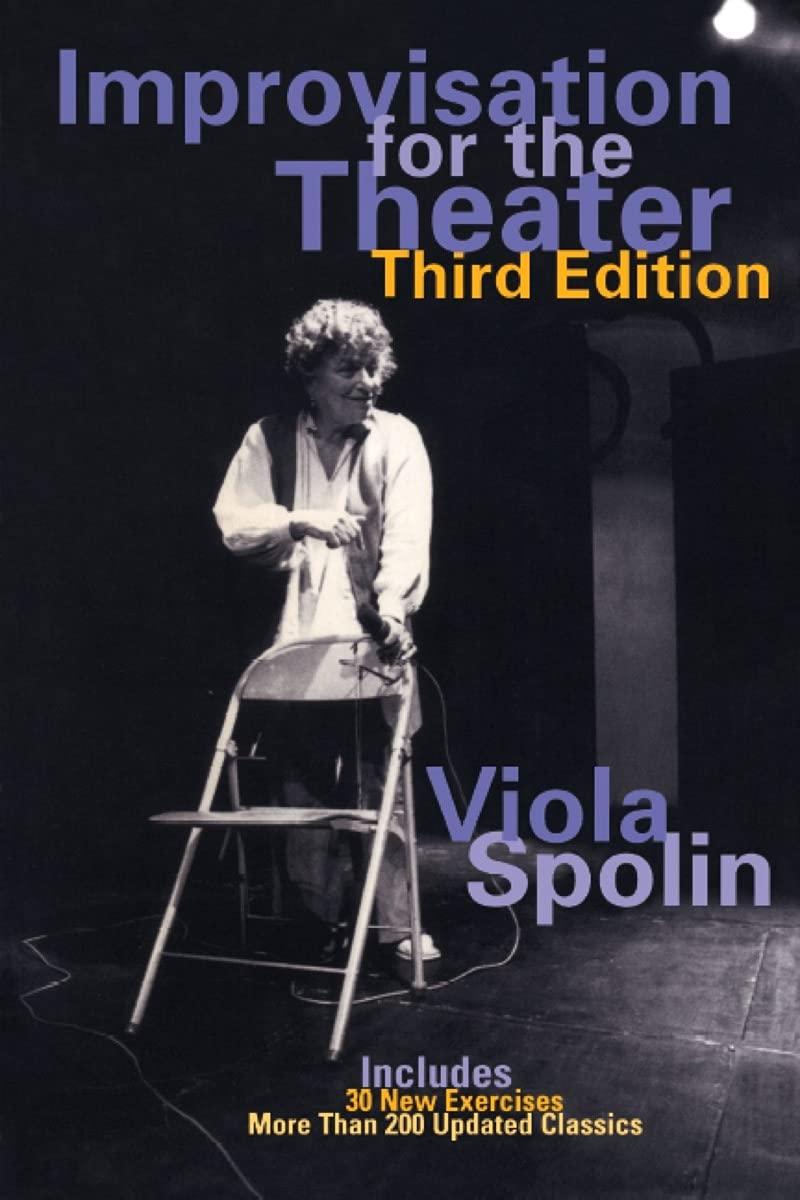
Improvisation for the Theater
A Handbook of Teaching and Directing Techniques
Viola Spolin

Embodied Playwriting
Improv and Acting Exercises for Writing
Hillary Haft Bucs; Charissa Menefee

Something from Nothing
The Technique of Improvisation
Richard Goteri

Improv Comedy (20th Anniversary Edition)
Andy Goldberg

Truth in Comedy
The Manual of Improvisation
Charna Halpern; Del Close; Kim Howard Johnson

Improv Ideas
A Book of Games and Lists
Mary Ann Kelley; Justine Jones
Related Exercises
Choir
Choir is a musical ensemble exercise in which the group creates a spontaneous vocal piece by layering sounds, harmonies, rhythms, and textures without a predetermined plan. A designated conductor guides the group's dynamics, bringing individual voices in and out, adjusting volume, and shaping the overall sound. The exercise builds musical listening, ensemble sensitivity, willingness to contribute individual sounds to a collective creation, and comfort with creating in the moment. Choir demonstrates that a group of non-musicians can produce complex, textured sound when each member commits to listening and responding to the whole rather than focusing on individual performance.
Xylophone
Xylophone is a musical exercise in which the group creates a human xylophone by assigning each player a different note or sound. A conductor plays the ensemble by pointing to individual players, creating improvised melodies and rhythms. The exercise trains responsiveness, musical awareness, and the ability to contribute a precise element to a group composition.
Popcorn
Popcorn is an ensemble energy exercise in which players crouch on the ground and pop up one at a time to shout a word, sound, or short phrase before dropping back down. The group must self-regulate so that pops do not overlap and the rhythm stays dynamic. The exercise builds group awareness, spontaneity, and the instinct to fill empty space without stepping on others.
Triangles
Triangles is a movement exercise in which each player secretly selects two other people in the space and attempts to maintain an equilateral triangle with them as all players move simultaneously. Because everyone's target pairs are different and unknown to others, the formation shifts continuously with no fixed resolution. The exercise demonstrates how invisible individual choices produce complex collective patterns, and builds sustained spatial awareness and attention to others.
Breathing
Breathing is a foundational warm-up exercise in which performers practice controlled inhalation and exhalation to release physical tension, quiet mental chatter, and center their focus before rehearsal or performance. Variations include diaphragmatic breathing, counted breath patterns, and synchronized group breathing in which an ensemble inhales and exhales together. The exercise builds awareness of the body as an instrument, training performers to recognize and release habitual tension patterns that restrict vocal production, physical freedom, and emotional availability. Breathing exercises appear across virtually every performance training tradition, from Viola Spolin's theatre games to Augusto Boal's actor preparation sequences, and remain one of the most universally practiced warm-up activities in both theatrical and applied improvisation contexts.
Virus
Virus is a physical ensemble exercise in which one player begins with a specific behavior, sound, or movement that spreads to others through proximity or contact, eventually infecting the whole group. The exercise demonstrates how energy and impulse propagate through an ensemble and trains players to notice and respond to the influence of their partners.
How to Reference This Page
The Improv Archive. (2026). Orchestra. Retrieved September 28, 2026, from https://improvarchive.org/exercises/orchestra
The Improv Archive. "Orchestra." The Improv Archive, 2026. https://improvarchive.org/exercises/orchestra.
The Improv Archive. "Orchestra." The Improv Archive, 2026, https://improvarchive.org/exercises/orchestra. Accessed September 28, 2026.
The Improv Archive is a systemically maintained repository. The archive itself acts as the corporate author.