Actor's Nightmare is a short-form scene game in which one performer reads scripted dialogue verbatim from a play or text while their partner improvises responses to justify those lines and sustain a coherent scene. The challenge for the improviser is to receive fixed, often unexpected lines and make them land within a believable dramatic reality.
Structure
Setup
Two performers take the stage. One receives a script: typically a few pages from a public-domain play, a scene excerpt, or printed text. The other performer has no text.
Progression
The scripted performer delivers their lines in order, as written, with full commitment and intention. The unscripted performer improvises everything else: responses, physicality, character, location, and relationship. Each scripted line arrives as a new offer; the improviser must accept the given circumstances and keep the scene moving forward.
The scripted performer can voice one character or pick between characters, selecting whichever choice gives the scene the most useful material. Minor adjustments, such as removing confusing pronouns, are permitted. The scripted performer should not comment on or mock the difficulty; both performers play the scene as if it were legitimate theatre.
Variations
The host can call "switch" mid-scene, at which point the improviser takes the script and the scripted performer must now improvise. A popular variation replaces a prepared script with live text messages from an audience member's phone, read as written.
Ending
The host ends the scene when the game has reached a satisfying moment or when the comedy of the dynamic is complete.
How to Teach It
How to Explain It
"One of you gets a script. Doesn't matter what it's from. You read the lines exactly as written, with full intention. You're not playing a joke: you're playing a character. The other person has nothing. Your job is to make everything your partner says make sense in the world you're creating together."
Common Notes
"Do not name the game. If the improviser stumbles, do not wink at the audience about it. Sell the scene."
"Scripted performer: read with intention. Give your partner something to work with emotionally, not just words."
Common Pitfalls
The most common failure is the improviser breaking the fourth wall to comment on the difficulty of the game. This collapses the scene's stakes immediately. Remind improvisers to stay inside the world rather than stepping outside to perform their effort.
How to Perform It
Audience Intro
"One of our performers is going to do a scene with a script. The other is completely improvising. We want to see if they can pull it off."
Cast Size
Two performers. One scripted, one unscripted.
Key Skills
Justification, listening for contextual clues, acceptance of given circumstances, scene grounding.
Wrap-Up Logic
End when the scene has a comedic peak, a satisfying dramatic beat, or when the improviser has made the scripted material fully land.
Technical Requirements
Print or display the script legibly. If using audience texts, the audience member should stay onstage for the duration.
Worth Reading
See all books →
Mask Improvisation for Actor Training and Performance
the compelling image
Sears A. Eldredge
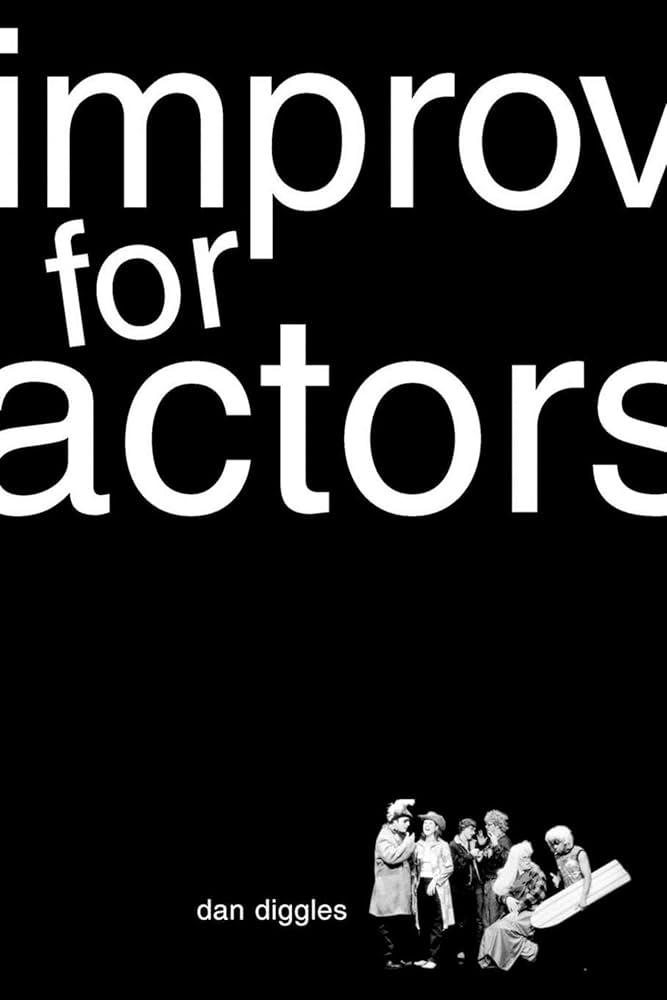
Improv for Actors
Dan Diggles

The Young Actor's Book of Improvisation
Dramatic Situations
Sandra Caruso; Susan Kosoff
Theater Games for Rehearsal
Viola Spolin
The Actor's Book of Improvisation
Sandra Caruso; Paul Clemens
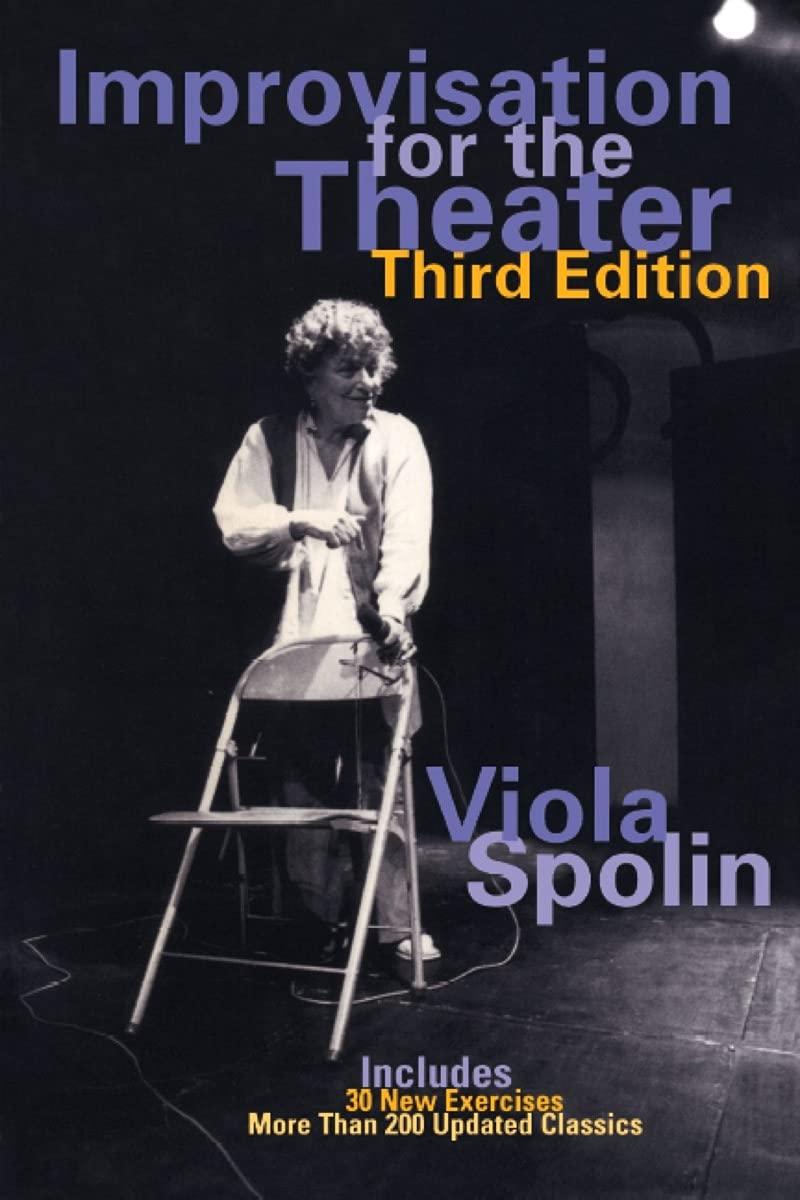
Improvisation for the Theater
A Handbook of Teaching and Directing Techniques
Viola Spolin
Related Games
Nightmare
Nightmare is a short-form game in which performers improvise a surreal, dreamlike scene based on a real fear, anxiety, or story contributed by an audience member or fellow performer. The scene follows dream logic rather than realistic causality, permitting sudden shifts, symbolic imagery, exaggerated repetition, and uncanny atmosphere. The game rewards bold emotional commitment, physical specificity, and the ability to sustain theatrical unreality over several minutes.
Script Tease
Script Tease is a short-form game in which performers hold actual scripts or random text and must incorporate the written lines into their improvised scene, reading from the page at key moments while making the pre-written text fit naturally within the context of the scene.
Don't Mess with Textus
Don't Mess with Textus is a scene game in which performers incorporate pre-written text -- lines from a play, a manual, a newspaper article, or any fixed document -- into an improvised scene. The challenge lies in making the fixed text feel natural, motivated, and contextually appropriate within the scene's reality rather than inserted or forced. The game trains adaptability, contextual responsiveness, and the ability to find the meaning in given language.
Replay Gibberish
Replay Gibberish is a short-form game in which a scene is first performed in coherent dialogue, then replayed entirely in gibberish. The performers must convey the same story, emotions, and relationships using only invented sounds, facial expressions, and physicality, demonstrating how much communication exists beyond words.
Last Letter Scene
Last Letter Scene is a hybrid game and exercise in which each line of dialogue must begin with the last letter of the previous line. The constraint forces performers to listen with acute precision -- not to the general content of what is said but to the exact final sound of each utterance -- while maintaining scene coherence, character, and forward momentum simultaneously.
Scene Replay
Scene Replay is a short-form game in which a scene is performed once, then replayed with a significant modification such as a new genre, emotional shift, or physical constraint. The replay preserves the original scene's structure and relationship while the imposed change reveals how a single variable transforms meaning, comedy, and dynamics.
How to Reference This Page
The Improv Archive. (2026). Actor's Nightmare. Retrieved September 28, 2026, from https://improvarchive.org/games/actors-nightmare
The Improv Archive. "Actor's Nightmare." The Improv Archive, 2026. https://improvarchive.org/games/actors-nightmare.
The Improv Archive. "Actor's Nightmare." The Improv Archive, 2026, https://improvarchive.org/games/actors-nightmare. Accessed September 28, 2026.
The Improv Archive is a systemically maintained repository. The archive itself acts as the corporate author.