Don't Mess with Textus
Don't Mess with Textus is a scene game in which performers incorporate pre-written text -- lines from a play, a manual, a newspaper article, or any fixed document -- into an improvised scene. The challenge lies in making the fixed text feel natural, motivated, and contextually appropriate within the scene's reality rather than inserted or forced. The game trains adaptability, contextual responsiveness, and the ability to find the meaning in given language.
Structure
Setup
Each performer receives a card with a fixed line of text: a phrase from a source document chosen by the host. Performers do not know each other's lines in advance. An audience suggestion establishes the scene's setting and relationship.
Incorporating the Text
During the scene, each performer must use their assigned text at a moment when it feels genuinely motivated by the scene's circumstances. The text cannot be forced in arbitrarily; it must be delivered as if it belongs in the scene's natural flow. The challenge is finding or creating the moment within the scene that makes the fixed line land authentically.
Discovery
Once each performer has delivered their text, they hold up the card to show the audience the source material. The gap between the text's original context and the scene context it was placed in is part of the game's revelation.
Conclusion
The host wraps after all performers have used their lines or when the scene has reached a natural conclusion.
How to Teach It
Objectives
Don't Mess with Textus trains contextual adaptation, the ability to find the authentic use of given material, and the acceptance of constraints as creative fuel rather than obstacles. It also develops the performer's skill in finding genuine motivation for language that was not originally written for their scene.
How to Explain It
"You have a line you must use. You don't get to decide when -- you get to decide when it's right. Wait for the moment when your line is actually true for your character, then use it. If the moment never comes, make a moment that makes it true."
Common Pitfalls
Performers sometimes force the line in at the earliest opportunity regardless of motivation, producing a jarring insertion that the other performers must work hard to recover from. Encourage patience: the most satisfying line uses are those where the audience does not notice the line was assigned until it is revealed.
How to Perform It
Audience Intro
"Each of our performers has been given a line from [source document]. They have to fit it into this scene so it sounds like it belongs. Watch and see if you can spot the moment."
Cast Size
Two to four performers, each with a fixed line.
Text Source
Text sources can range widely: technical manuals produce incongruously precise language; dramatic scripts produce sudden theatrical intensity; news articles produce strangely topical non sequiturs. The source's distance from the scene's context determines the game's challenge level.
Worth Reading
See all books →
Improvisation
Use What You Know, Make Up What You Don't
Brad Newton

Improvisation Starters
A Collection of 900 Improvisation Situations for the Theater
Philip Bernardi

The Young Actor's Book of Improvisation
Dramatic Situations
Sandra Caruso; Susan Kosoff
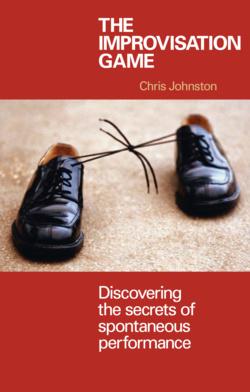
The Improvisation Game
Discovering the Secrets of Spontaneous Performance
Chris Johnston
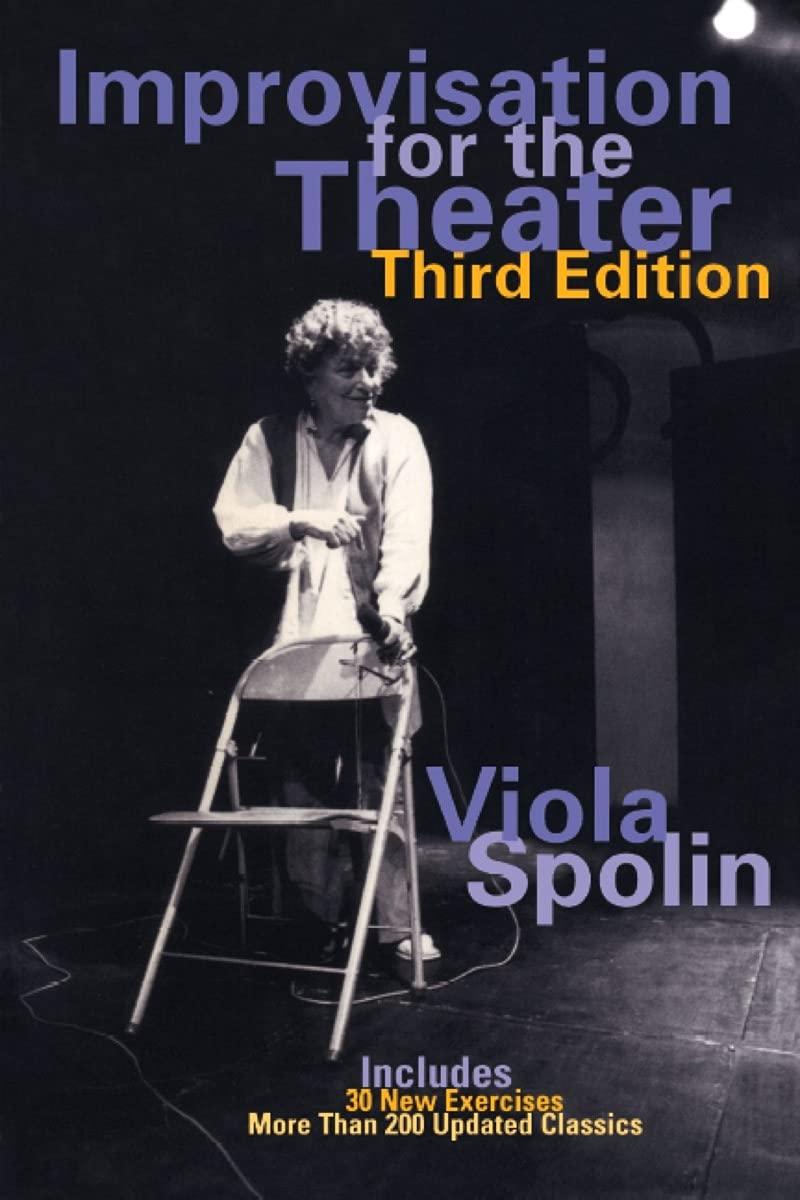
Improvisation for the Theater
A Handbook of Teaching and Directing Techniques
Viola Spolin

Improvising Now
A Practical Guide to Modern Improv
Rob Norman
Related Games
Non Sequitor
Non Sequitur is a hybrid game and exercise in which performers deliberately break logical connections between lines of dialogue, forcing each new statement to have no apparent relationship to the one before it. The exercise trains performers to let go of the need to make sense, builds comfort with absurdity, and paradoxically reveals how audiences will construct meaning even from disconnected material.
Script Tease
Script Tease is a short-form game in which performers hold actual scripts or random text and must incorporate the written lines into their improvised scene, reading from the page at key moments while making the pre-written text fit naturally within the context of the scene.
Last Letter Scene
Last Letter Scene is a hybrid game and exercise in which each line of dialogue must begin with the last letter of the previous line. The constraint forces performers to listen with acute precision -- not to the general content of what is said but to the exact final sound of each utterance -- while maintaining scene coherence, character, and forward momentum simultaneously.
3 Lines
3 Lines is a scene game in which each performer enters with exactly three predetermined or improvised lines that they must use during the scene. Players weave their fixed lines into the emerging narrative, creating unexpected connections. The constraint generates surprising juxtapositions and trains adaptability.
3 Line Scenes
3 Line Scenes is a compact scene drill and short-form game in which two players improvise a scene using only three lines in total. One player starts, the other responds, and the first player answers back. The short limit keeps the round simple, fast, and playable for new improvisers who are getting used to starting scenes in front of a group or audience.
How to Reference This Page
The Improv Archive. (2026). Don't Mess with Textus. Retrieved September 28, 2026, from https://improvarchive.org/games/dont-mess-with-textus
The Improv Archive. "Don't Mess with Textus." The Improv Archive, 2026. https://improvarchive.org/games/dont-mess-with-textus.
The Improv Archive. "Don't Mess with Textus." The Improv Archive, 2026, https://improvarchive.org/games/dont-mess-with-textus. Accessed September 28, 2026.
The Improv Archive is a systemically maintained repository. The archive itself acts as the corporate author.