Jeopardy
Jeopardy is a short-form game modeled on the television quiz show format, in which performers provide improvised questions to audience-supplied answers. The reversed format (answer first, then question) demands quick thinking and the ability to construct comedic setups from arbitrary punchlines. A host manages the game board and selects categories, while performer-contestants buzz in with their responses. The game rewards wit, timing, and the ability to find unexpected connections within the quiz show framework.
Structure
One performer serves as the host, standing at a podium or designated area. Two to four performers play as contestants, standing behind an imaginary buzzer. The audience suggests categories for the game board, or the host invents categories based on an audience suggestion.
The host selects a category and reads an answer: a statement phrased in the declarative form used on the television show ("This animal is responsible for the most traffic accidents in Finland"). The contestants buzz in and provide their responses in the form of a question ("What is a reindeer with a grudge?").
The host judges the responses, accepting or rejecting them with the authority and persona of a game show host. The comedy comes from the contestants' creative, absurd, or surprisingly logical questions and from the host's reactions to them.
The game progresses through multiple categories and escalating point values. Categories can be straightforward ("World History") or absurd ("Things Found Under the Couch of a Superhero"). The contrast between serious game show formality and absurd content drives the comedy.
The game ends with a Final round in which contestants wager their points and respond to a single high-stakes answer. The host announces the winner.
How to Teach It
How to Explain It
"I will give you an answer. Your job is to play a scene that justifies that answer. The answer is correct. You need to discover the question."
Jeopardy is an effective game for teaching quick thinking and the skill of working backward from a given piece of information. The reversed format (answer to question) exercises a different creative muscle than normal scene initiation and builds the flexible thinking that improv demands.
Coach contestants to listen to the full answer before buzzing in. Contestants who buzz in on the first few words and then improvise a response that has nothing to do with the answer waste the format's structure. The question must connect to the answer, even if the connection is absurd.
The game teaches performance personas. The quiz show format gives performers a clear behavioral template (contestant, host) that simplifies character choices. Students who struggle with open-ended character work find the defined roles of the game show format accessible and freeing.
Use the category selection to practice audience interaction skills. Categories suggested by the audience create genuine unpredictability that challenges the performers and engages the crowd. The host's ability to work with audience suggestions models the skill of incorporating external input into a performance.
How to Perform It
The host carries the game. A strong host maintains the game show persona throughout, treating the absurd proceedings with the same gravity as a real quiz show. The host's commitment to the format creates the comedic frame within which the contestants' answers land.
Contestants should respond quickly. The buzz-in format rewards speed over perfection. A fast, mediocre answer delivered with confidence is funnier than a perfect answer delivered after a long pause. The game show energy depends on rapid-fire exchanges.
The best answers find a surprising logic within the absurdity. A response that connects the given answer to an unexpected but defensible question creates a satisfying comic moment. Pure randomness ("What is a banana?") with no connection to the answer wastes the format's potential.
The game benefits from contestant characters. Performers who give their contestants distinct personalities (the overconfident scholar, the nervous first-timer, the contestant who buzzes in before thinking) add a layer of comedy beyond the question-and-answer format.
Worth Reading
See all books →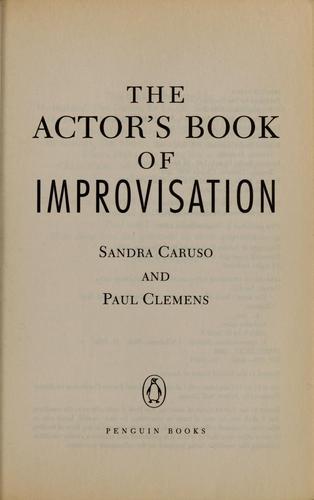
The Actor's Book of Improvisation
Sandra Caruso; Paul Clemens
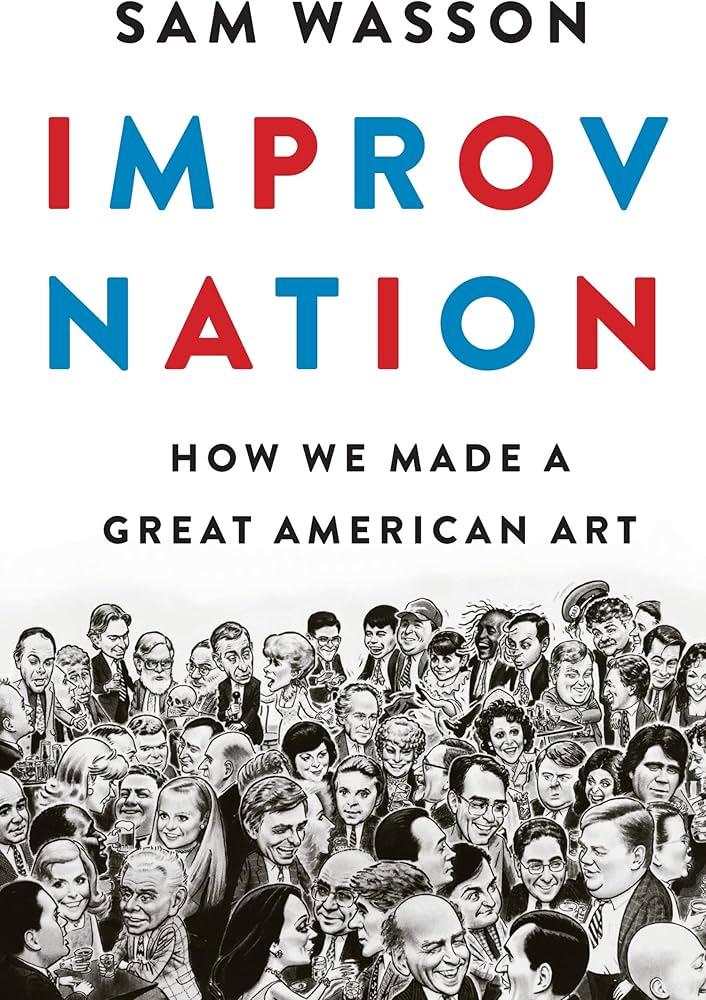
Improv Nation
How We Made a Great American Art
Sam Wasson
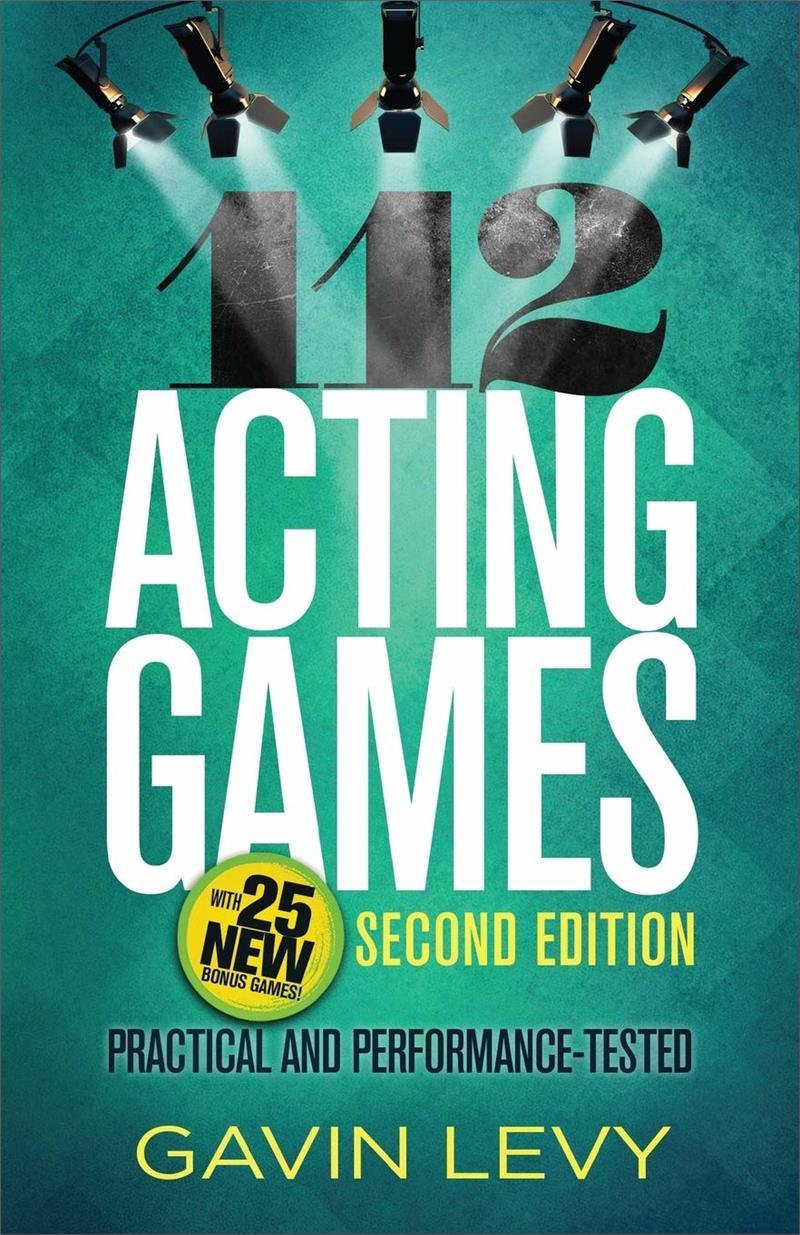
112 Acting Games
Gavin Levy
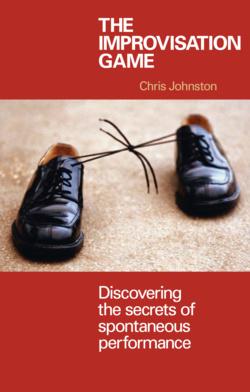
The Improvisation Game
Discovering the Secrets of Spontaneous Performance
Chris Johnston
Teaching Improv
The Essential Handbook
Mel Paradis

Something from Nothing
The Technique of Improvisation
Richard Goteri
Related Games
Reverse Trivial Pursuit
Reverse Trivial Pursuit is a game in which performers are given the answer and must improvise a plausible, entertaining, or absurd question that could have produced it. The exercise inverts the normal trivia format, training quick thinking, comedic framing, and the ability to work backward from a conclusion.
No P
No P is a short-form guessing game in which one performer must communicate an idea, tell a story, or answer questions without using any word that contains the letter P. The audience and host watch for violations, and the comedy arises from the performer's increasingly creative circumlocutions and the sudden, involuntary slips that reveal how deeply embedded common letters are in everyday speech.
Expert
Expert is a short-form game in which a performer plays a world-renowned authority on a topic suggested by the audience, fielding questions with total confidence regardless of actual knowledge. The comedy emerges from the contrast between the character's unwavering certainty and the absurdity of the claims. Scene partners or audience members ask questions, and the expert responds with authoritative detail, treating every answer as established fact. The game rewards commitment, verbal fluency, and the willingness to build elaborate fictions without hesitation.
Ding
Ding is a short-form game in which a host rings a bell or buzzer to signal a performer to replace their last line of dialogue with a new one. The host can ring repeatedly, demanding multiple replacements for the same moment, each new line erasing the previous one within the scene's reality. The game is one of the most widely performed short-form games in the world, popularized through its frequent appearance on Whose Line Is It Anyway? Ding rewards fast verbal invention, the ability to generate multiple alternatives under pressure, and the willingness to abandon a safe choice in favor of a riskier, funnier one.
Countdown
Countdown is a short-form game and exercise in which performers replay a scene in progressively shorter time limits, compressing the action from several minutes down to seconds. Each repetition demands sharper editing, bolder physical choices, and more efficient storytelling as the available time shrinks. The game reveals the essential beats of a scene by forcing performers to strip away everything nonessential, leaving only the core moments that drive the narrative. Countdown demonstrates that the emotional truth of a scene can survive extreme compression, and that clarity improves when performers are forced to prioritize.
Trivial Pursuit
Trivial Pursuit is a game show-style game in which performers must answer trivia questions and then perform scenes inspired by the topics. The combination of knowledge and improvisation creates a unique competitive format. The game rewards both broad general knowledge and the ability to transform factual content into entertaining performance.
How to Reference This Page
The Improv Archive. (2026). Jeopardy. Retrieved September 28, 2026, from https://improvarchive.org/games/jeopardy
The Improv Archive. "Jeopardy." The Improv Archive, 2026. https://improvarchive.org/games/jeopardy.
The Improv Archive. "Jeopardy." The Improv Archive, 2026, https://improvarchive.org/games/jeopardy. Accessed September 28, 2026.
The Improv Archive is a systemically maintained repository. The archive itself acts as the corporate author.