Economy
The principle of doing more with less in improvisation. Economy means choosing the most efficient way to communicate information, avoiding redundant exposition, and trusting that a single well-chosen line or gesture can carry more impact than extended explanation. Economical performers make every moment count.
At its core, economy in improvisation is the principle of doing more with less. It asks performers to choose the most efficient way to communicate information, avoiding redundant exposition and trusting that a single well-chosen line or gesture can carry more impact than extended explanation. Economical performers make every moment count, stripping away anything that does not serve the scene.
The concept draws from a broader artistic tradition. Ernest Hemingway's distinctive writing style, frequently cited in improvisation pedagogy, was characterized by economy and understatement, demonstrating that restraint could generate greater emotional resonance than excess. In improv, this same principle applies: a scene partner who communicates a relationship with one specific line ("You never came to my graduation") does more dramatic work than one who narrates backstory for thirty seconds. The audience fills in the gaps, and what they imagine is often richer than anything a performer could spell out.
Economy operates at multiple levels of performance. At the level of language, it means selecting precise words rather than piling on synonyms or qualifiers. At the level of physicality, it means that a single deliberate gesture, such as turning away from a scene partner at a key moment, can define a character's emotional state more powerfully than broad pantomime. At the structural level, economy means entering a scene as late as possible and leaving it as early as possible, trusting that the essential beats have landed without belaboring the point.
Teachers often coach economy by imposing constraints. A common exercise limits performers to a set number of words per line, forcing them to distill their contributions to essentials. Side-coaching phrases like "you've already made your point" or "trust the audience" redirect performers who are over-explaining. Instructors may also replay a scene and ask the group to identify which lines or moves could be removed without losing meaning, training the ensemble to recognize surplus.
A frequent misunderstanding is that economy means being minimal or withholding. In practice, economy is not about doing less for its own sake; it is about making every choice intentional and load-bearing. A performer who says very little but fails to advance the scene is not being economical; they are being passive. True economy requires clarity of intention. Each offer, whether verbal or physical, should carry specific information or emotional weight. The distinction is between purposeful restraint and mere absence of contribution.
Economy relates closely to several other improv concepts. It reinforces commitment, because a single bold choice only lands if the performer fully inhabits it rather than hedging with extra words. It supports the principle of "show, don't tell," since demonstrating a character's feelings through behavior is almost always more economical than narrating them. It also connects to listening, because performers who are genuinely attuned to what has already been established will not waste time restating information the scene has already provided. An ensemble with strong collective economy builds scenes that feel tight, purposeful, and alive, giving audiences space to lean in rather than sit back.
Further Reading
See all books →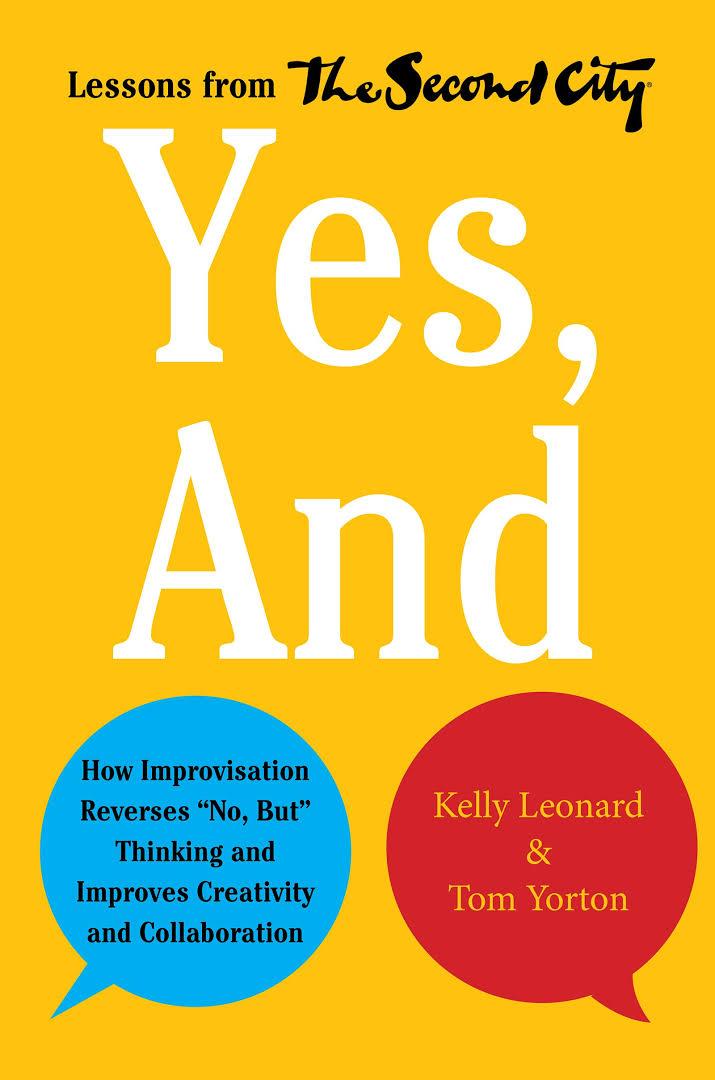
Yes, And
How Improvisation Reverses No, But Thinking and Improves Creativity and Collaboration
Kelly Leonard; Tom Yorton

Business Improv
Experiential Learning Exercises to Train Employees
Val Gee
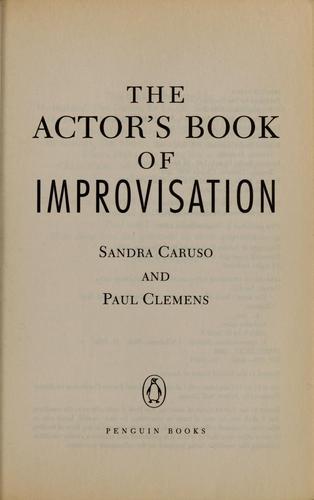
The Actor's Book of Improvisation
Sandra Caruso; Paul Clemens

Comedy and Distinction
The Cultural Currency of a 'Good' Sense of Humour
Sam Friedman

Legislative Theatre
Using Performance to Make Politics
Augusto Boal

Devising Performance
A Critical History
Deirdre Heddon; Jane Milling
How to Reference This Page
The Improv Archive. (2026). Economy. Retrieved September 28, 2026, from https://improvarchive.org/learn-improv/concepts/economy
The Improv Archive. "Economy." The Improv Archive, 2026. https://improvarchive.org/learn-improv/concepts/economy.
The Improv Archive. "Economy." The Improv Archive, 2026, https://improvarchive.org/learn-improv/concepts/economy. Accessed September 28, 2026.
The Improv Archive is a systemically maintained repository. The archive itself acts as the corporate author.