The Straight Man
The performer in a scene who reacts to absurdity with grounded, rational responses rather than contributing additional absurdity. The straight man provides the audience with a point of identification and makes the unusual behavior of the other character funnier through contrast. Playing straight requires discipline and the willingness to let a partner get the laughs.
In comedy and improvisation, the straight man is the performer who responds to absurdity with grounded, rational behavior rather than piling on additional chaos. This role provides the audience with a point of identification, an Everyman whose measured reactions make the unusual behavior of a scene partner funnier through contrast. The straight man does not simply stand still or feed lines; the performer actively constructs a believable reality against which comic invention can play. As Roger Bowen observed, "The more reality the straight man creates, the bigger the balloon the comic gets to pop."
The tradition stretches deep into comedy history. Vaudeville and variety acts codified the pairing of straight man and comic foil as one of the form's essential dualities, alongside setup and punchline. Abbott and Costello exemplified the dynamic, with Abbott playing the devious straight man while Costello served as the comic fool who subverted him. Bert Williams and George Walker brought the pairing into early twentieth-century American comedy, with Walker operating as the straight man in an act that navigated both comic convention and the racial politics of the era. Bob Newhart later demonstrated that the straight man could carry an entire routine alone, playing a grounded driving instructor reacting to an invisible, unheard student on the other end of a phone call. The audience never heard the other person, yet Newhart's deadpan responses made the absent comic voice vivid.
Del Close, one of the most influential teachers in modern improvisation, stressed the importance of the straight man to his ensembles at the Second City. No one in the company ever wanted to take the role, but Close impressed upon his performers that if a scene was going to work, someone had to hold the ground. This teaching reflects a broader principle in improvisation: playing straight requires discipline and a willingness to let a partner get the laughs. The straight man's restraint is what gives the comic performer room to escalate, and without that counterweight, absurdity has nothing to push against.
The concept connects to several core improv ideas. Working at the top of one's intelligence, a principle Close also championed, aligns naturally with straight man work, since the role demands that a performer engage authentically with the reality of the scene rather than mugging or commenting on the comedy. The audience identifies with the straight man precisely because that character mirrors their own rational response to the situation, a dynamic that practitioners of applied improvisation have noted works in corporate and educational settings as well as on stage.
One common misunderstanding is that the straight man is a static or lesser role. In practice, the position is fluid and can even become the comic center. Billy Crystal's Fernando character on Saturday Night Live occupied the traditional interviewer position, the seat usually reserved for the straight man, yet Crystal made his character so vivid that the guest became the grounding presence instead. This reversal illustrates that the straight man is a function within a scene, not a fixed identity. The role belongs to whoever is holding the reality at any given moment, and skilled improvisers pass that responsibility back and forth as a scene demands. Understanding this flexibility is part of what separates competent scene work from rigid comic formula.
Further Reading
See all books →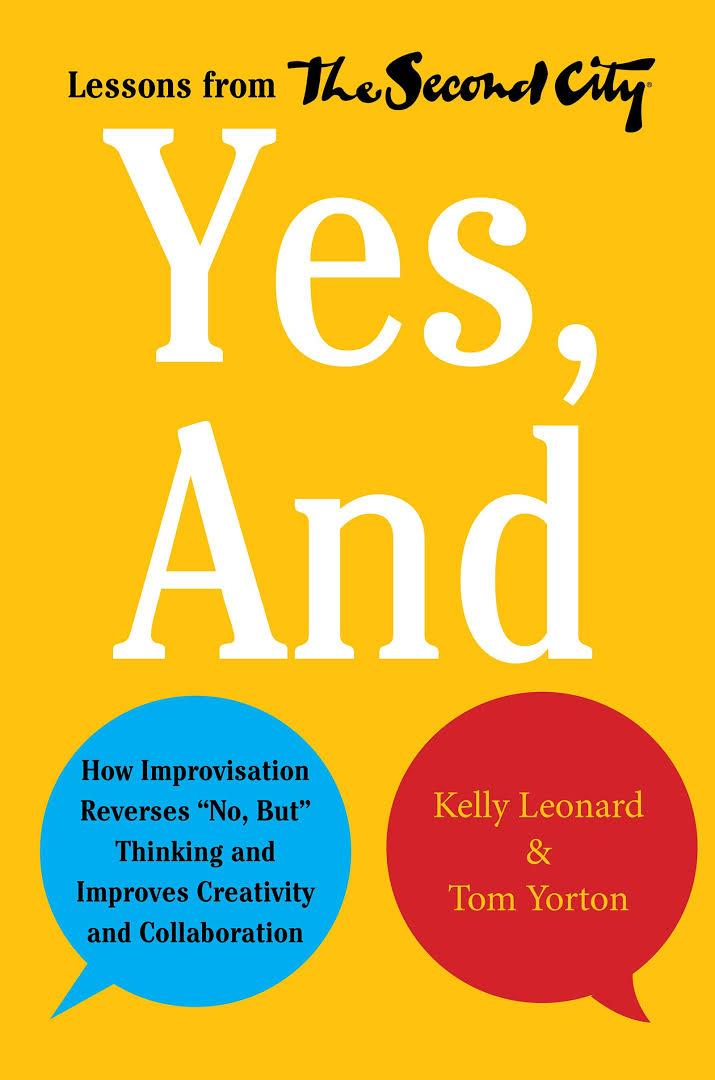
Yes, And
How Improvisation Reverses No, But Thinking and Improves Creativity and Collaboration
Kelly Leonard; Tom Yorton

The Second City Unscripted
Revolution and Revelation at the World-Famous Comedy Theater
Mike Thomas

The Improv Handbook
The Ultimate Guide to Improvising in Comedy, Theatre, and Beyond
Tom Salinsky; Deborah Frances-White

Something Wonderful Right Away
An Oral History of The Second City and The Compass Players
Jeffrey Sweet

The Upright Citizens Brigade Comedy Improvisation Manual
Matt Besser; Ian Roberts; Matt Walsh

Embodied Playwriting
Improv and Acting Exercises for Writing
Hillary Haft Bucs; Charissa Menefee
How to Reference This Page
The Improv Archive. (2026). The Straight Man. Retrieved November 5, 2026, from https://improvarchive.org/learn-improv/concepts/the-straight-man
The Improv Archive. "The Straight Man." The Improv Archive, 2026. https://improvarchive.org/learn-improv/concepts/the-straight-man.
The Improv Archive. "The Straight Man." The Improv Archive, 2026, https://improvarchive.org/learn-improv/concepts/the-straight-man. Accessed November 5, 2026.
The Improv Archive is a systemically maintained repository. The archive itself acts as the corporate author.