Anne Libera
Anne Libera is a Chicago-based comedy educator, director, and author who has been affiliated with The Second City since 1986 and has taught in the Second City Training Center since 1991. She served as Executive Artistic Director of the Second City Training Centers and Education Programs from 2001 to 2009, during which she created the Training Center's youth program, summer camp, directing program, and musical improv program. She holds the rank of Associate Professor at Columbia College Chicago, where she created the Comedy Writing and Performance BA, the first degree program of its kind in the United States. She is the author of The Second City Almanac of Improvisation (Northwestern University Press, 2004) and Funnier: A New Theory for the Practice of Comedy (Northwestern University Press, 2025).
Career
Libera joined The Second City in 1986, initially working in the box office. As an employee, she had access to free improvisation classes at the Training Center. Through those classes she discovered a mode of comic performance rooted in behavioral truth rather than joke delivery, a distinction she has since used as a cornerstone of her pedagogy. She progressed from student to performer to director and has taught in the Training Center since 1991.
From 2001 to 2009 she served as Executive Artistic Director of The Second City Training Centers and Education Programs. During this eight-year tenure she created the Training Center's youth program, summer camps, directing program, and musical improv program. Under her direction, The Second City Training Center expanded its scope from adult professional training into youth education and degree-adjacent instruction. After 2009 she continued as Artistic Associate at The Second City and later as Director of Comedy Studies.
As a director, Libera staged Stephen Colbert's solo show Describing a Circle at Live Bait Theater in Chicago and directed a series of Second City productions including The Madness of Curious George, Computer Chips and Salsa, The Second City Goes to War, The Second City Looks at the Windy City, and Bunny Bunny for the Illinois Theatre Centre. She also directed Second City touring productions across the United States and in Scotland and Austria.
Libera was recruited to Columbia College Chicago by Sheldon Patinkin, the Theatre Department chair whose lineage ran from Viola Spolin through Paul Sills to Patinkin himself. This recruitment placed Libera within a deliberate transmission of the Spolin tradition into academic instruction. She created the Comedy Writing and Performance BA at Columbia, the first undergraduate degree program of its kind in the United States, which began in 2011. The program partners with The Second City, requiring students to complete a semester-long immersion in improv, sketch writing, and performance at the institution. She holds the rank of Associate Professor in the School of Theatre and Dance and teaches History and Analysis of Modern Comedy and Comedy Survey I and II. A Comedy Writing and Performance BFA with expanded training in stand-up, sketch, improv, and clowning was scheduled to debut at Columbia in 2026.
With Kelly Leonard, Second City's Executive Director of Insights and Applied Improvisation, Libera co-developed the Second Science Project, a partnership with the University of Chicago's Center for Decision Research that used improvisational exercises to test and teach behavioral science concepts. She distinguished improv-based training from role-play on the grounds that role-play required performers to simulate behavior, while improvisation placed the participant in the actual experience of doing. Together with Leonard she also developed a six-week improvisational curriculum for family caregivers deployed at the Cleveland Clinic in Las Vegas.
Libera has presented at the Aspen Ideas Festival, Chicago Ideas Week, the Code Conference, and the Stanford Graduate School of Business, and has served on the governing board of Gilda's Club Chicago. She was featured in Inventing Improv: A Chicago Stories Special (WTTW/PBS, 2021), a documentary that traced the explicit transmission line from Viola Spolin through Paul Sills through Sheldon Patinkin to Libera's own teaching practice.
Her publications include The Second City Almanac of Improvisation (Northwestern University Press, 2004), an anthology of essays and practical material from Second City performers and directors including Tina Fey, Mick Napier, Keegan-Michael Key, Adam McKay, Susan Messing, and Fred Willard, organized around core improv concepts including object work, yes-and, scene relationships, character, status, and material development. Her second book, Funnier: A New Theory for the Practice of Comedy (Northwestern University Press, 2025), develops a unified theory of comedy organized around the poles of recognition, pain, and distance, with practical application to stand-up, sketch, film, and television writing. Former students Ashley Nicole Black, Chelsea Devantez, Ariel Dumas, and Jenny Hagel wrote the foreword. Students trained under Libera who went on to national prominence include Aidy Bryant, Kay Cannon, Jordan Peele, Amy Poehler, Kristen Schaal, and Steven Yeun.
Historical Context
The line from Viola Spolin's theater games through Paul Sills's ensemble practice at Compass Players and Second City, through Sheldon Patinkin's long stewardship at Second City and Columbia College Chicago, to Anne Libera's creation of the first Comedy Writing and Performance BA represents one of the clearest documented institutional transmissions of improv pedagogy into American higher education. Libera's own account of entering improv through a box office job and free Training Center classes captures the informal social architecture through which Second City trained the generation that succeeded it: entry through proximity, learning through access, advancement through demonstrated engagement rather than formal credential.
Her Executive Artistic Director tenure from 2001 to 2009 coincided with the period during which The Second City Training Center became the most globally recognized commercial improv training institution, expanding its Chicago and Toronto campuses and developing the corporate improv market. Her creation of youth programs and summer camps during this period extended the Training Center's reach into pre-professional development, a dimension of improv education that had previously been informal and ad hoc.
The Comedy Writing and Performance BA she created at Columbia College Chicago placed improv and comedy education within the structure of a four-year liberal arts degree for the first time in the United States. This institutional legitimation represented a significant shift in how the field positioned itself relative to academic theater education, creating a credential pathway for students who had previously trained through private institutions or community theaters without degree recognition.
Teaching Philosophy
Libera's pedagogical framework rests on a direct refusal of the innate-talent model of comedy. Her core claim, developed in both her teaching and her 2025 book Funnier, is that comedy is not a gift but a learnable craft with identifiable structural principles. Her theoretical architecture for comedy organizes around three axes: recognition (shared understanding between performer and audience), pain (the underlying discomfort that makes recognition register as comedy rather than mere observation), and distance (the gap between the performer's framing and the audience's direct experience of the subject).
She identifies improvisation specifically as a form of what she calls noisy, loud group mindfulness: a practice of being fully in the present moment without prepared material. This framing positions improv not primarily as an entertainment format but as a behavioral training methodology. Her work with the University of Chicago's Center for Decision Research applied this insight formally, using improv exercises to produce behavioral change in contexts where role-play failed because role-play required simulation rather than genuine action.
Her stated orientation toward comedy pedagogy: creating systems that prompt people to behave in certain ways. This systems focus, drawn from Viola Spolin's theater games, treats the structure of the exercise as the teacher rather than the instructor's correction. Her direction to performers and students to stop auditioning reflects a commitment to authentic presence as the precondition for both comic timing and genuine ensemble work.
Legacy
Libera's creation of the Comedy Writing and Performance BA at Columbia College Chicago established the institutional template for comedy education as a degree-granting academic discipline in the United States, a model that influenced subsequent programs at other institutions. Her alumni include Jordan Peele, Amy Poehler, Aidy Bryant, Kay Cannon, Kristen Schaal, and Steven Yeun, among the most prominent comedy and dramatic performers of their generation.
The Second City Almanac of Improvisation (2004) established a documentary record of the Training Center's pedagogical diversity during the period of the institution's greatest international expansion, preserving essays and methodological accounts from teachers and performers whose work would otherwise exist only in performance and classroom contexts. Funnier (2025) extended this work into a systematic theory of comedy applicable beyond improv to stand-up, sketch, film, and television.
Her Inventing Improv appearance explicitly identified her as a link in the Spolin-Sills-Patinkin chain of transmission, which was both a description of institutional lineage and a statement of the documentary importance of that lineage for American comedy education. Her development of the Second Science Project with Kelly Leonard and the Cleveland Clinic caregiver curriculum demonstrated that the improvisational methods she taught in the Training Center and at Columbia could be applied to behavioral change in medical and corporate contexts, contributing to the evidence base for applied improv as a distinct professional field.
Early Life and Training
Libera was born in Minneapolis, Minnesota. Her family relocated to Grand Forks, North Dakota when she was approximately one month old, then returned to the Minneapolis-Twin Cities area when she was about eight years old. She earned a BS in Theatre from Northwestern University in 1986. At Northwestern she was a dormitory neighbor of Stephen Colbert, later the host of The Late Show with Stephen Colbert, who has described knowing her for forty years and named her as a lasting influence on his sense of craft.
Personal Life
Libera was born in Minneapolis, Minnesota, and grew up primarily in the Minneapolis-Twin Cities area. She attended Northwestern University, where she earned a BS in Theatre in 1986. She has served on the governing board of Gilda's Club Chicago, a cancer support community organization named after comedian and Second City alumna Gilda Radner.
Recommended Reading
Books are ordered from the strongest direct connection outward to broader relevance.
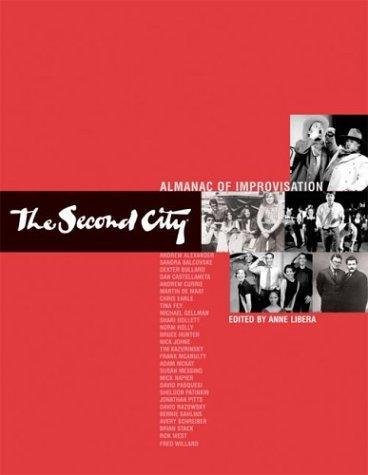
The Second City Almanac of Improvisation
Anne Libera

The Art of Chicago Improv
Short Cuts to Long-Form Improvisation
Rob Kozlowski

Theatrical Improvisation
Short Form, Long Form, and Sketch-Based Improv
Jeanne Leep

The Second City Unscripted
Revolution and Revelation at the World-Famous Comedy Theater
Mike Thomas

Long Form Improvisation and American Comedy
The Harold
Matt Fotis
Yes, And
How Improvisation Reverses No, But Thinking and Improves Creativity and Collaboration
Kelly Leonard; Tom Yorton
References
In the Archive
External Sources
- Northwestern University Press: The Second City Almanac of Improvisation
- Northwestern University Press: Funnier — A New Theory for the Practice of Comedy
- Columbia College Chicago: Finding What's Funny — Anne Libera on Comedy Craft (2025)
- WTTW: Inventing Improv — A Chicago Stories Special (2021)
- The Second City: Anne Libera People Page
How to Reference This Page
The Improv Archive. (2026). Anne Libera. Retrieved October 10, 2026, from https://improvarchive.org/people/anne-libera
The Improv Archive. "Anne Libera." The Improv Archive, 2026. https://improvarchive.org/people/anne-libera.
The Improv Archive. "Anne Libera." The Improv Archive, 2026, https://improvarchive.org/people/anne-libera. Accessed October 10, 2026.
The Improv Archive is a systemically maintained repository. The archive itself acts as the corporate author.