Bill Murray
Bill Murray is one of the most commercially successful and critically recognized performers to emerge from the American improv tradition. Born William James Murray on September 21, 1950, in Evanston, Illinois, he trained and performed at The Second City in Chicago beginning in 1973, where he was directed by Del Close and worked alongside John Candy and Betty Thomas. After the National Lampoon Radio Hour and Off-Broadway National Lampoon Show brought him to New York, he joined Saturday Night Live in 1977, where he remained through 1980 and won an Emmy Award for writing. His film career, spanning Ghostbusters, Groundhog Day, Lost in Translation (for which he received an Academy Award nomination), and collaborations with Wes Anderson, established him as among the defining screen presences of American comedy over five decades. He received the Kennedy Center Mark Twain Prize for American Humor in 2016.
Career
Bill Murray grew up in Wilmette, Illinois, the fifth of nine children in an Irish-Catholic family. His older brother Brian Doyle-Murray also became an actor and comedian. Murray caddied at the Indian Hill Golf Club in Winnetka during his youth, an experience he drew on decades later in Caddyshack. He attended Loyola Academy in Wilmette and enrolled at Regis University in Denver but did not graduate, leaving after a marijuana arrest in 1970 at O'Hare International Airport.
Murray joined The Second City in Chicago in 1973, performing in the Phase 46 revue directed by Del Close. He made his Second City debut the same week as John Candy. The cast also included Betty Thomas and his brother Brian Doyle-Murray. At Second City, Murray developed the character Nick the Lounge Singer, a sardonic entertainer performing incongruous rock songs in a Vegas-style setting, which he later brought to Saturday Night Live.
In 1973 Murray was cast in the National Lampoon Radio Hour, a nationally syndicated comedy program that featured John Belushi, Gilda Radner, Harold Ramis, and Chevy Chase. He remained with the Radio Hour through 1974. In 1975 he joined The National Lampoon Show, an Off-Broadway stage production featuring Belushi, Radner, and Ramis, which ran at the New Palladium in New York.
Murray joined the cast of Saturday Night Live in September 1977 as a featured player, succeeding Chevy Chase who had departed after the first season. He appeared across Seasons 2 through 5, from 1977 to 1980, in 66 episodes, becoming a full cast member in Season 3. His recurring characters included Nick the Lounge Singer and sportscaster Bill Murray. He won the Emmy Award for Outstanding Writing for a Comedy-Variety or Music Series in 1977 as part of the SNL writing staff.
His film career began with Meatballs in 1979, directed by Ivan Reitman, in which he played a summer camp counselor. Subsequent films included Caddyshack (1980), Stripes (1981), Tootsie (1982, ensemble cast), Ghostbusters (1984) and Ghostbusters II (1989, both with Dan Aykroyd and Harold Ramis), Scrooged (1988), What About Bob? (1991), Groundhog Day (1993), Ed Wood (1994), and Kingpin (1996).
Beginning with Rushmore (1998), Murray entered a sustained collaboration with director Wes Anderson that produced among the most praised work of his career. Rushmore was followed by The Royal Tenenbaums (2001), The Life Aquatic with Steve Zissou (2004), The Darjeeling Limited (2007), Fantastic Mr. Fox (2009, voice), Moonrise Kingdom (2012), The Grand Budapest Hotel (2014), Isle of Dogs (2018, voice), and The French Dispatch (2021).
Sofia Coppola's Lost in Translation (2003), in which Murray played an aging actor filming whisky commercials in Tokyo, earned him an Academy Award nomination for Best Actor. He received the BAFTA Award for Best Actor in a Leading Role and the Golden Globe Award for Best Actor in a Musical or Comedy for the performance.
Murray won the Primetime Emmy Award for Outstanding Supporting Actor in a Limited Series or Movie in 2015 for his performance as Arthur Robbins in Olive Kitteridge, alongside Frances McDormand. He received the Kennedy Center Mark Twain Prize for American Humor in 2016.
Historical Context
Murray's career traced the principal institutional path from which American comedy television emerged in the 1970s. His trajectory from The Second City in Chicago to the National Lampoon Radio Hour to Saturday Night Live followed the same corridor traveled by John Belushi, Gilda Radner, and Harold Ramis, establishing a lineage from improvisational theatre training to national broadcast comedy that became a standard professional route for the following generation of performers.
At The Second City, Murray was directed by Del Close at the moment when Close was developing the theories of long-form improvisation and director-centered ensemble work that would define the institution's teaching philosophy for decades. Murray's time in Phase 46 placed him in the theatrical context that Close was actively shaping, and his subsequent performance on Saturday Night Live as a sardonic, anti-glamorous presence extended the aesthetic sensibility Close valued.
Nick the Lounge Singer, which Murray developed at Second City and brought to SNL, became one of the program's most recognized recurring characters during his tenure and illustrated how Second City character work translated into television sketch comedy. The character's ironic deflation of entertainment-industry earnestness was consistent with the sensibility of the Second City revue format.
Murray's 1977 Emmy for writing on SNL came during the period when the show was establishing the first sustained institutional connection between improvisational training and nationally broadcast sketch comedy, and his involvement as both performer and writer reflected the integrated role many Second City alumni assumed at the program. His departure from SNL in 1980 coincided with the broader transition of that first generation of performers into film careers that would define American comedy films of the 1980s.
Legacy
Murray's career established a template for the Second City-to-SNL-to-film trajectory that dozens of performers have followed since. The specific path from Chicago improv training through the National Lampoon enterprise to Saturday Night Live and into film production became the dominant professional arc of American comedy throughout the 1980s and 1990s, and Murray was among the first performers to complete it at scale.
His collaboration with Wes Anderson across nine films beginning with Rushmore in 1998 produced an extended working relationship between an improv-trained performer and an auteur director that has been noted as a model for how improvisational skills contribute to film performance even within formally scripted contexts. Anderson has described Murray's improvisational instinct as central to the texture of his films.
Murray's performance in Lost in Translation (2003) demonstrated that performers trained in the Second City tradition could sustain dramatic film work at the level recognized by major awards bodies, contributing to a reassessment of the relationship between comedy training and serious film acting. His Emmy for Olive Kitteridge (2015) further extended this range into dramatic television performance.
The Second City has identified Murray as one of the institution's defining alumni, and his acknowledgment of his training there has contributed to the institution's public identity across decades during which he remained one of the most commercially recognized figures in American entertainment. His career is included in Matt Fotis's Fifty Key Improv Performers, Actors, Troupes, and Schools (2024), which situates him within the broader improv lineage.
Early Life and Training
William James Murray was born on September 21, 1950, in Evanston, Illinois, the fifth of nine children of Edward Joseph Murray II and Lucille Collins Murray. His family was Irish-Catholic and the household was raised in Wilmette, Illinois. His older brother Brian Doyle-Murray also became an actor and comedian, and several other siblings worked in entertainment. Murray caddied at Indian Hill Golf Club in Winnetka during his school years. He attended Loyola Academy in Wilmette and enrolled briefly at Regis University in Denver before his education was interrupted by a marijuana arrest at O'Hare International Airport in 1970, after which he did not return to college.
Recommended Reading
Books are ordered from the strongest direct connection outward to broader relevance.

The Art of Chicago Improv
Short Cuts to Long-Form Improvisation
Rob Kozlowski

Theatrical Improvisation
Short Form, Long Form, and Sketch-Based Improv
Jeanne Leep

Business Improv
Experiential Learning Exercises to Train Employees
Val Gee

The Second City Unscripted
Revolution and Revelation at the World-Famous Comedy Theater
Mike Thomas
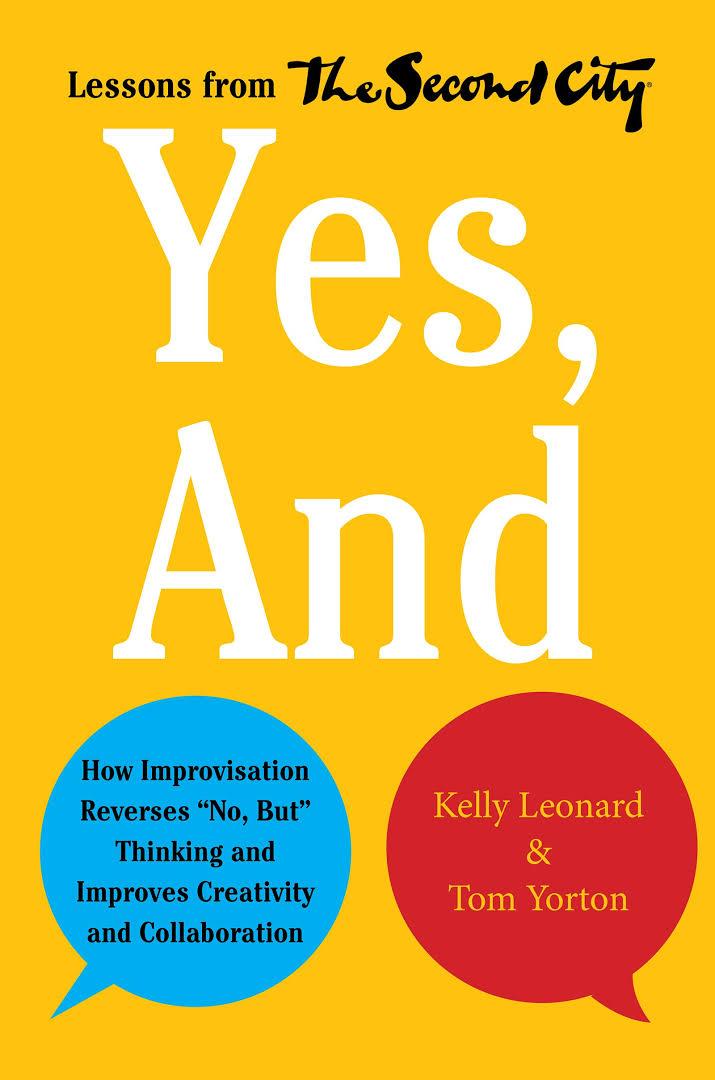
Yes, And
How Improvisation Reverses No, But Thinking and Improves Creativity and Collaboration
Kelly Leonard; Tom Yorton
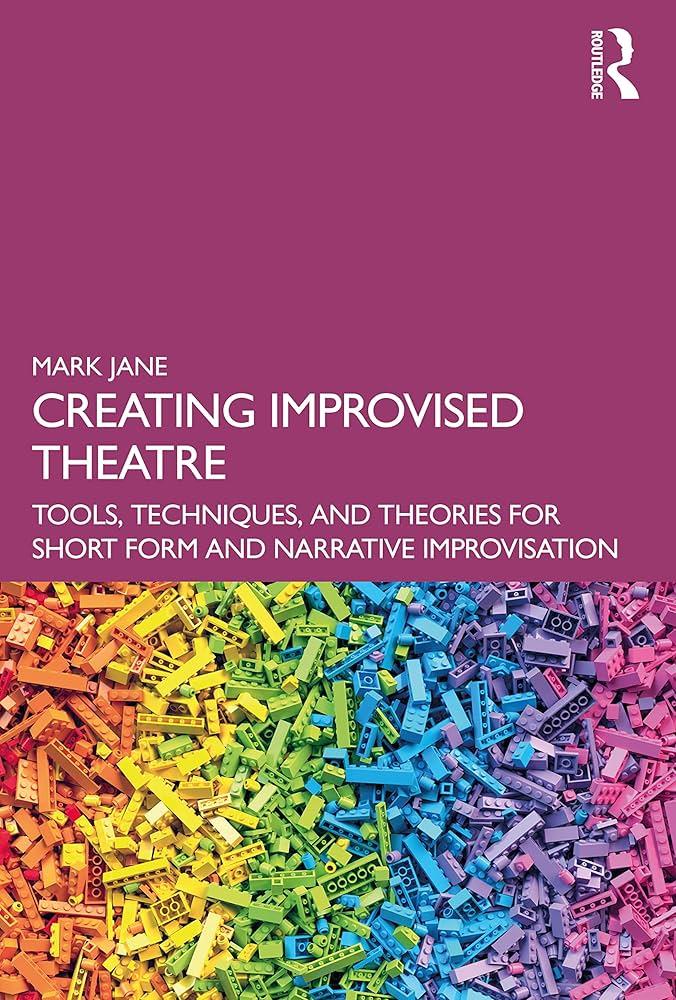
Creating Improvised Theatre
Tools, Techniques, and Theories
Mark Jane
References
In the Archive
How to Reference This Page
The Improv Archive. (2026). Bill Murray. Retrieved September 28, 2026, from https://improvarchive.org/people/bill-murray
The Improv Archive. "Bill Murray." The Improv Archive, 2026. https://improvarchive.org/people/bill-murray.
The Improv Archive. "Bill Murray." The Improv Archive, 2026, https://improvarchive.org/people/bill-murray. Accessed September 28, 2026.
The Improv Archive is a systemically maintained repository. The archive itself acts as the corporate author.