Cale Bain
Cale Bain is a Canadian-born improviser, director, educator, and academic based in Sydney, Australia, who has been performing and teaching improvisational comedy since 1988. He trained through the Second City Theatre Company in Toronto before relocating to Australia, where he became Director of Training at Impro Australia and co-founded Improv Theatre Sydney. He served as improv director for Foxtel's Australian adaptation of Whose Line Is It Anyway? and launched Sydney's first longform improv show, Full Body Contact No Love Tennis, which ran for nearly a decade. He holds a PhD in humour, journalism and discourse from the University of Technology Sydney, where he has conducted grant-funded applied improv research with refugee communities and university students.
Career
Cale Bain began performing improvisational comedy in 1988, trained through the Second City Theatre Company in Toronto, Canada, where he developed the performance and ensemble techniques that would define his subsequent career. Second City's Toronto operation, an offshoot of the Chicago institution founded by Andrew Alexander and Len Stuart in 1973, trained performers in the revue format and short-form traditions that Second City had developed across its Chicago and Toronto productions. Bain's training there gave him a foundation in the ensemble-focused performance practice that he would subsequently bring to the Australian improv community.
Following his time in Toronto, Bain relocated to Australia and became involved with Impro Australia, the Sydney-based organization that had been operating the Theatresports format in Australia since the 1980s under license from Keith Johnstone's international Theatresports organization. At Impro Australia, Bain directed and produced Theatresports productions at the Enmore Theatre, a 1700-seat venue in Sydney's inner west, introducing Theatresports to audiences at a scale that few improv productions in Australia had previously achieved. He also served as Director of Training for Impro Australia, overseeing the organization's curriculum and teaching faculty.
Bain co-founded Improv Theatre Sydney, which became Sydney's first dedicated longform improv venue. He launched Full Body Contact No Love Tennis, Sydney's first longform improv show, which ran for approximately ten years and established a consistent weekly presence for longform formats in the city's performance landscape. As a founding director and artistic director of Improv Theatre Sydney, he has contributed to the organization's curriculum development and its role as a training and production center for Sydney's improv community.
Bain served as improv director for the Australian adaptation of Whose Line Is It Anyway?, produced by Foxtel, the Australian subscription television company. The production extended his reach into broadcast television and gave the Theatresports and longform traditions he had developed in Sydney a national television platform.
Bain holds a PhD in humour, journalism and discourse from the University of Technology Sydney, where he is affiliated with the Cosmopolitan Civil Societies Research Centre. He lectures on sociology, representation, humour theory, and media powers. His academic research has produced grant-funded applied improv projects: one grant supported bringing improv workshops to the entire first-year communications student body at UTS to increase engagement, and a subsequent Social Impact Grant funded a project working with the refugee community in Cisarua, Indonesia, using improv to address the mental health stresses associated with uncertain statehood. He has also received funding to conduct improv workshops addressing leadership skills with at-risk youth and communication skills for first-generation tertiary students.
Bain has performed and taught at international improv festivals including the Auckland Improv Festival and the New Zealand Improv Festival, where he directed the late-night show Kiddie Time in 2016. He has taught and workshopped with companies, troupes, and festivals across multiple countries. He also teaches at Giant Dwarf, a Sydney comedy venue, as part of its faculty.
Historical Context
Bain's career trajectory represents one of the primary lines of transmission connecting the North American improv tradition to the Australian performance community during the period of longform's global expansion in the 1990s and 2000s. His training through Second City Toronto gave him direct access to the ensemble performance tradition developed in Chicago and exported to Toronto by Andrew Alexander's Second City Canada operation, and his subsequent work at Impro Australia and in the founding of Improv Theatre Sydney translated those North American methods into the Australian improv ecosystem.
Improv Theatre Sydney's establishment as the city's first dedicated longform venue made it a significant institutional development in Australia's improv history, filling a gap analogous to the role that dedicated longform venues played in American cities during the 1990s when they succeeded the Theatresports-format institutions as the primary venue type for improv in urban performance markets. Bain's decade-long Full Body Contact No Love Tennis show established longform as a sustainable weekly format in Sydney, providing the consistent platform necessary to develop an audience and a performing community for the form.
His integration of academic research with applied improv practice at UTS placed him within the growing international community of scholar-practitioners who have sought to document and formalize the mechanisms by which improv training produces social and psychological benefits. The refugee community project in Cisarua represented an application of improv in a humanitarian context well beyond the commercial or recreational performance contexts in which improv is most commonly practiced.
Teaching Philosophy
Bain describes his approach to improv teaching as relationship-focused, grounded in the belief that the core principles of improvisation can improve everyday life beyond performance contexts. His academic work on humour theory and his applied improv projects with refugee communities, at-risk youth, and first-generation tertiary students reflect a pedagogical commitment to improv's social and relational dimensions. He has stated that the highest moment in improv is when 'you don't even know what you just did or what you just saw, but you know it was amazing,' indicating a value for emergent ensemble experience over planned outcomes.
Legacy
Bain's co-founding of Improv Theatre Sydney established the institutional infrastructure through which the Australian longform improv community in Sydney has developed its training programs, ensemble culture, and public performance profile. The decade-long run of Full Body Contact No Love Tennis demonstrated the viability of a dedicated weekly longform show in Sydney and provided the continuity of performance opportunity that allowed a community of longform practitioners to develop around the venue.
His grant-funded applied improv research at UTS, particularly the refugee community work in Cisarua, has contributed to the documented body of applied improv practice in humanitarian contexts, connecting the Australian academic improv research community to international discussions of improv's social utility. His dual identity as a performing practitioner and academic researcher gives him a distinctive position in the Australian improv community, providing a bridge between the performance and scholarly dimensions of the field.
His work at the Auckland Improv Festival, New Zealand Improv Festival, and other international festivals has extended his influence across the Oceania improv community, contributing to the development of improv in New Zealand and Australia as a connected regional practice rather than isolated national scenes.
Early Life and Training
Cale Bain is from Toronto, Canada. He began performing improvisational comedy in 1988 and trained through the Second City Theatre Company in Toronto. He subsequently relocated to Australia, where he has based his performing, teaching, and academic career.
Companies and Organizations
Associated venues and institutional relationships currently documented in the archive.
Recommended Reading
Books are ordered from the strongest direct connection outward to broader relevance.
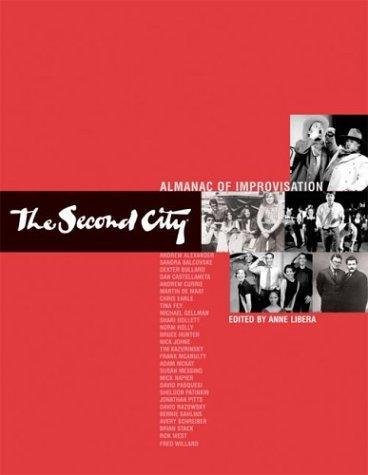
The Second City Almanac of Improvisation
Anne Libera
Teaching Improv
The Essential Handbook
Mel Paradis

Impro
Improvisation and the Theatre
Keith Johnstone

The Second City Unscripted
Revolution and Revelation at the World-Famous Comedy Theater
Mike Thomas

Acting Through Improv
Improv Through Theatresports
Lynda Belt; Rebecca Stockley
Improvise
Scene from the Inside Out
Mick Napier
References
How to Reference This Page
The Improv Archive. (2026). Cale Bain. Retrieved September 29, 2026, from https://improvarchive.org/people/cale-bain
The Improv Archive. "Cale Bain." The Improv Archive, 2026. https://improvarchive.org/people/cale-bain.
The Improv Archive. "Cale Bain." The Improv Archive, 2026, https://improvarchive.org/people/cale-bain. Accessed September 29, 2026.
The Improv Archive is a systemically maintained repository. The archive itself acts as the corporate author.