Dudley Riggs, born January 18, 1932, in Little Rock, Arkansas, and died September 22, 2020, at age 88, was a fifth-generation circus and vaudeville performer who founded the Instant Theater Company in New York City in approximately 1954 and subsequently established the Brave New Workshop in Minneapolis, Minnesota, in 1961, the theatre that is widely recognized as the longest-running sketch and improvisational comedy theater in the United States, predating The Second City by one year. Riggs brought the format he called audience-input instant theater from circus-derived vaudeville traditions to the upper Midwest, sustaining the Brave New Workshop for 39 years before selling it in 1997. He is the author of Flying Funny: My Life Without a Net (University of Minnesota Press, 2017).
Career
Dudley Riggs was born on January 18, 1932, in Little Rock, Arkansas, into a fifth-generation circus and vaudeville performing family. His parents were acclaimed aerial flyers who performed as Riggs and Riggs. He began performing in the family circus as a toddler and by age five had graduated to a risque vaudeville act during the circus off-season. By age eight he was performing high-flying trapeze work alongside his parents. As he grew too tall to execute the straight flying acts his parents required, he was told he would have to learn to fly funny rather than fly straight, a phrase that became the title of his 2017 memoir.
On a slow voyage home from an international circus tour in approximately 1954, Riggs developed the concept he called Word Jazz: creating the script of a performance on stage as it was being performed, incorporating audience input into the material as it unfolded. He deliberately avoided the term improvisation because jazz musicians used it and were protective of the word. Around the same year, he opened the Instant Theater Company in New York City, presenting off-Broadway performances that combined vaudeville-style sketches, burlesque blackouts, and genuine audience-input theater. The theater critic Walter Kerr was among early witnesses to the company's work. The Instant Theater Company subsequently toured nationally.
In 1958, Riggs and his Instant Theater Company settled permanently in Minneapolis, Minnesota. They initially operated from the Cafe Espresso on East Hennepin Avenue, which Riggs claimed housed the first espresso machine in the state. By 1961, the troupe had renamed itself the Brave New Workshop, establishing the institutional name under which it would operate for the next six decades. Riggs assembled writers and performers around the organizing principle of making people think by first making them laugh, with satirical political content a consistent hallmark of the company's revues. Del Close, who ran the Harold workshop tradition in Chicago, visited Minneapolis to teach workshops at Brave New Workshop. Riggs sustained the theater's operation for 39 years, overseeing more than 180 original revue productions.
The Brave New Institute, the Brave New Workshop's training division, developed what it described as the most broad-based improv curriculum in the country, serving more than 300 students annually and providing programming for performers, non-performers, youth, seniors, and corporate clients. Riggs's emphasis on using audience suggestions as the starting material for all performance, a technique inherited from his circus background, ran throughout both the performance and training operations.
In March 1997, Riggs sold the Brave New Workshop to John Sweeney, Jenni Lilledahl, and Mark Bergren. In December 2021, Hennepin Theatre Trust purchased the Brave New Workshop's assets. In November 2022, the building at 824 Hennepin Avenue was renamed the Dudley Riggs Theatre in his honor.
Riggs's memoir, Flying Funny: My Life Without a Net, was published by the University of Minnesota Press on April 11, 2017.
Historical Context
Dudley Riggs's Brave New Workshop holds a specific position in the history of American improvisational and satirical comedy as the oldest continuously operating institution of its kind in the country, predating The Second City by one year. The Second City opened in Chicago in December 1959; the Brave New Workshop's predecessor, Riggs's Minneapolis incarnation of the Instant Theater Company, had settled in the city in 1958 and taken the Brave New Workshop name in 1961.
The genealogy of Riggs's practice was deliberately distinct from the Compass Players and Second City lineage that defined the Chicago tradition. Riggs came to audience-input improvisation through circus and vaudeville rather than through the Stanislavski-influenced acting traditions or the Brechtian political theater that shaped Chicago's ensemble practices. His Word Jazz concept, developed from watching audiences respond to circus performance and from the demands of improvisatory vaudeville, was a parallel invention rather than a derivative one.
The Brave New Workshop's 39-year run under Riggs produced an alumni community that includes some of the most prominent names in American political comedy, including Al Franken and Tom Davis (who performed at BNW while still in high school), Lizz Winstead (co-creator of The Daily Show), Louie Anderson, Mo Collins, Penn Jillette, Carl Lumbly, Peter MacNicol, Melissa Peterman, Peter Tolan, Linda Wallem, Cedric Yarbrough, and Pat Proft. This alumni network demonstrates that the Minneapolis theater, operating in geographic isolation from Chicago and New York, sustained a training environment capable of producing nationally prominent comedy performers across multiple generations.
Key Events
Dudley Riggs, Founder of the Brave New Workshop, Dies in Minneapolis
Dudley Riggs died on October 14, 2020 in Minneapolis at the age of 88. The former circus aerialist founded the Brave New Workshop in 1958, making it the oldest continuously operating satirical comedy theatre in the United States. Riggs pioneered audience-interactive comedy in Minneapolis over six decades.
Teaching Philosophy
Dudley Riggs's approach to audience-input performance was rooted in his circus and vaudeville training rather than in the theoretical frameworks of acting pedagogy that characterized the Chicago traditions. His fundamental practice was the use of audience suggestions as the starting material for every performance, a technique derived from the responsive dynamics of circus audience engagement, in which performers must read and adapt to live crowd reaction in real time rather than executing a fixed script.
He articulated his method through the organizing principle of making people think by first making them laugh, framing satirical political comedy as a form of civic engagement that required humor as its gateway rather than as its end product. His Brave New Institute training program reflected this principle, providing instruction not only to comedy performers but to non-performers, youth, seniors, and corporate participants, extending the basic audience-responsive practice across institutional contexts beyond stage performance.
His deliberate avoidance of the term improvisation in favor of his own terms, including Word Jazz and instant theater, reflected a resistance to situating his practice within existing artistic categories, preferring instead to describe what performers were doing in terms of the audience relationship rather than the performer's internal method.
Legacy
Dudley Riggs's Brave New Workshop is the oldest continuously operating improvisational and satirical comedy theater in the United States, a distinction that places it ahead of The Second City in the institutional history of American improv. The theater's survival under Riggs's 39-year stewardship and its continuation under subsequent leadership demonstrates the institutional durability of the workshop model when sustained with consistent satirical and political purpose.
His alumni community includes Lizz Winstead, who co-created The Daily Show with Jon Stewart, one of the most influential political comedy programs in American television history; Al Franken and Tom Davis, who went on to SNL and subsequent careers in performance and politics; Louie Anderson, who sustained a major stand-up and television career over five decades; and numerous other performers who moved from the Minneapolis theater into national entertainment careers.
The naming of the Dudley Riggs Theatre at 824 Hennepin Avenue in 2022, following the Hennepin Theatre Trust's acquisition of the Brave New Workshop's assets, formalized his institutional legacy in Minneapolis's theater geography. His memoir, Flying Funny, provided the first sustained account of his own creative development and the Brave New Workshop's origins, establishing the documentary record of the institution's founding from the perspective of its creator.
Early Life and Training
Dudley Riggs was born on January 18, 1932, in Little Rock, Arkansas, into a fifth-generation circus and vaudeville performing family. His parents were accomplished aerial flyers. He began performing in the family circus as a toddler, progressed to vaudeville acts by age five, and was performing trapeze work alongside his parents by age eight.
Personal Life
Dudley Riggs died on September 22, 2020, in Minneapolis, Minnesota, at age 88.
Companies and Organizations
Associated venues and institutional relationships currently documented in the archive.
Recommended Reading
Books are ordered from the strongest direct connection outward to broader relevance.

The Funniest One in the Room
The Lives and Legends of Del Close
Kim Howard Johnson

Theatrical Improvisation
Short Form, Long Form, and Sketch-Based Improv
Jeanne Leep

The Second City Unscripted
Revolution and Revelation at the World-Famous Comedy Theater
Mike Thomas

The Art of Chicago Improv
Short Cuts to Long-Form Improvisation
Rob Kozlowski
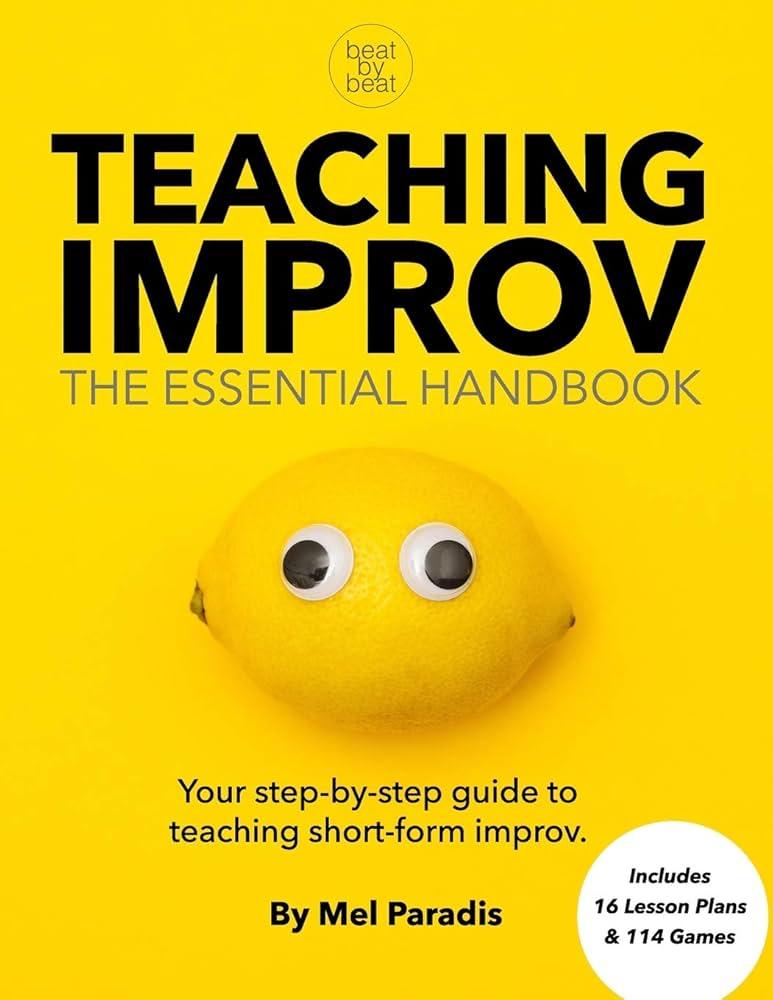
Teaching Improv
The Essential Handbook
Mel Paradis
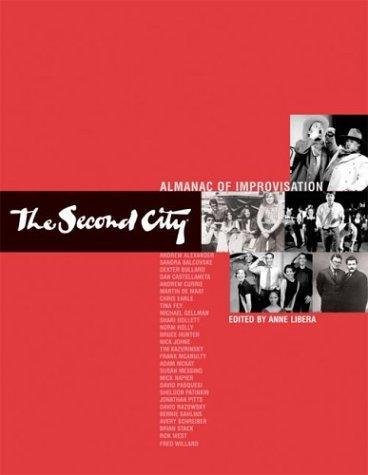
The Second City Almanac of Improvisation
Anne Libera
References
How to Reference This Page
The Improv Archive. (2026). Dudley Riggs. Retrieved September 28, 2026, from https://improvarchive.org/people/dudley-riggs
The Improv Archive. "Dudley Riggs." The Improv Archive, 2026. https://improvarchive.org/people/dudley-riggs.
The Improv Archive. "Dudley Riggs." The Improv Archive, 2026, https://improvarchive.org/people/dudley-riggs. Accessed September 28, 2026.
The Improv Archive is a systemically maintained repository. The archive itself acts as the corporate author.