Eran A. Zelnik is an Israeli-American cultural historian and lecturer in the Department of History at California State University, Chico. He is the author of American Laughter, American Fury: Humor and the Making of a White Man's Democracy, 1750-1850, published by Johns Hopkins University Press in 2025, a cultural history of American humor that examines how joke-telling, riot, revelry, and performance shaped democratic identity and exclusion in the early United States.
Zelnik completed his doctoral work in American history at the University of California, Davis, receiving his PhD in 2016. Before entering graduate study at age thirty, he spent two years teaching high school history, finding greater scholarly fulfillment in academic research than in secondary education. His graduate work positioned him within cultural history, with a focus on the intersecting categories of race, gender, and nationalism in early America.
He joined the faculty at California State University, Chico, as a Lecturer in the Department of History. His research has been supported by the American Antiquarian Society, where his earlier dissertation project was titled Republic of Mirth: Humor, Settler Colonialism, and the Making of a White Man's Democracy.
In January 2025 Johns Hopkins University Press published his first book, American Laughter, American Fury: Humor and the Making of a White Man's Democracy, 1750-1850. The work traces multiple modes of American humor across the period: tall tales, Black dialect performance, Indian play, blackface minstrelsy, riot, and revolutionary protest. Zelnik's central argument is that these humor forms collectively shaped the anti-elitist, democratic sensibility that defined American political culture while simultaneously defining the racial and gendered limits of that democracy, confining full political participation to white men. The book places humor and play, rather than explicit political argument, as primary mechanisms through which whiteness, masculinity, and democratic belonging were constructed in the early American republic.
Zelnik is conducting ongoing comparative research in Hebrew and English examining nineteen-century American settler expansion alongside early Zionist notions of settlement, drawing on his Israeli background to bring a comparative settler colonialism framework to American history. His academic career at California State University, Chico, has been sustained alongside his research into the history of American humor and its relationship to racial and national identity formation. His book American Laughter, American Fury: Humor and the Making of a White Man's Democracy, 1750-1850, published by the University of Pennsylvania Press, advances a scholarly argument about the function of humor in constructing and policing the racial boundaries of early American democracy, examining how comic performance and satirical expression worked alongside more explicitly political discourse to establish and maintain white supremacy as a foundational American institution.
The book positions Zelnik within the growing scholarly conversation about the political dimensions of humor as a cultural practice, bringing the tools of cultural history to bear on performance and comedy as historical evidence. His research in this area bridges comedy history, cultural history, and critical race studies in ways that make his work relevant to the improv archive's interest in the historical and cultural contexts that shaped improvisational performance as an American and international practice.
His teaching at CSU Chico combines American history survey instruction with upper-division and graduate seminars in American cultural and humor history. His work has been supported by archival research grants and has contributed to the institutional recognition of comedy and humor as legitimate objects of serious historical inquiry within the American historical profession.
Historical Context
American Laughter, American Fury joins a body of scholarship that has sought to recover the political and social functions of humor as a primary rather than peripheral historical force. Zelnik's treatment of humor as a constitutive mechanism of racial and democratic formation in the early republic situates his work at the intersection of cultural history, performance studies, and critical race scholarship. His central methodological move is to treat humor not as commentary on politics but as a direct mechanism through which political and social identities are constituted: white masculine democracy was not simply described by American humor, it was partially built through it.
The book's coverage of specific humor forms, including tall tales, Black dialect performance, Indian play, and blackface minstrelsy, connects humor history directly to the traditions of theatrical performance and staged mimicry that constitute the genealogical background of American popular comedy. Zelnik's American Antiquarian Society fellowship and his dissertation-stage work under the title Republic of Mirth established the scholarly foundation that the 2025 book extended and formalized.
Legacy
American Laughter, American Fury contributes a documented scholarly account of humor as a social and political technology in early American life, one that is relevant to serious historical study of American comedy's cultural roots. The book's integration of performance modes including mimicry, dialect, and staged play into a broader argument about democratic formation and racial exclusion provides historical grounding for understanding the comedy traditions that preceded and informed the development of modern American comic performance. By establishing humor and play as central rather than incidental to the construction of American racial and democratic identity, the work situates the performance of comedy within a larger cultural history of who is permitted to be funny, for whom, and at whose expense, questions that have continued to shape American comedy institutions and improv culture through the twentieth and twenty-first centuries.
Recommended Reading
Books are ordered from the strongest direct connection outward to broader relevance.

American Laughter, American Fury
Humor and the Making of a White Man's Democracy, 1750-1850
Eran A. Zelnik

A Cultural History of Comedy in the Early Modern Age
Eric Weitz; Andrew McConnell Stott
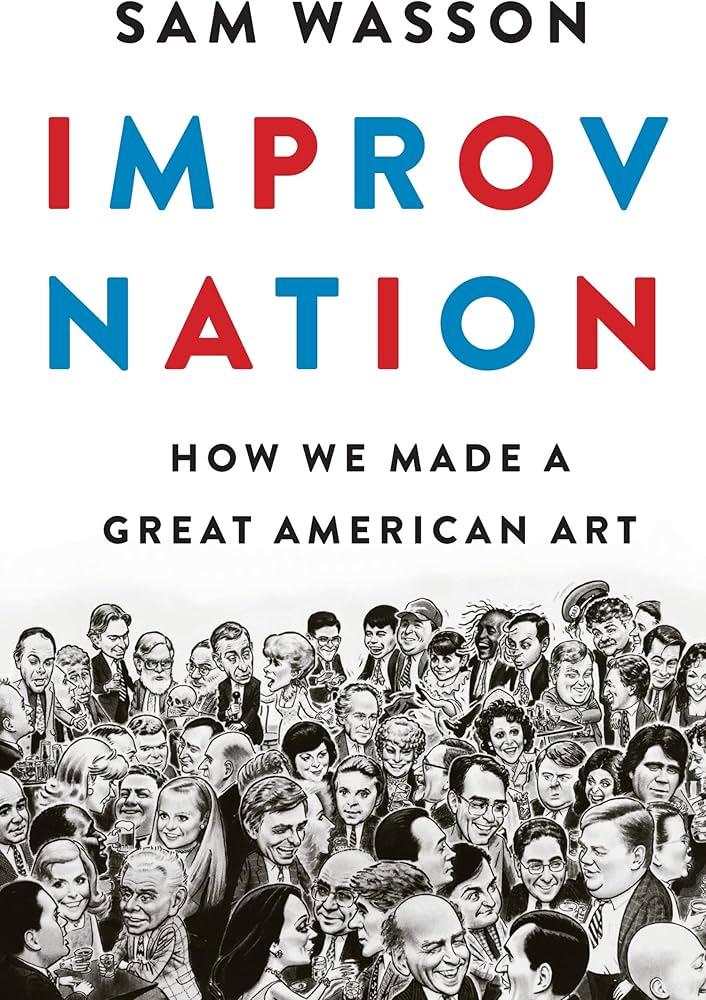
Improv Nation
How We Made a Great American Art
Sam Wasson

Comedy and Distinction
The Cultural Currency of a 'Good' Sense of Humour
Sam Friedman

Chicago Comedy
A Fairly Serious History
Margaret Hicks; Mick Napier

The Art of Chicago Improv
Short Cuts to Long-Form Improvisation
Rob Kozlowski
References
In the Archive
How to Reference This Page
The Improv Archive. (2026). Eran A. Zelnik. Retrieved September 28, 2026, from https://improvarchive.org/people/eran-a-zelnik
The Improv Archive. "Eran A. Zelnik." The Improv Archive, 2026. https://improvarchive.org/people/eran-a-zelnik.
The Improv Archive. "Eran A. Zelnik." The Improv Archive, 2026, https://improvarchive.org/people/eran-a-zelnik. Accessed September 28, 2026.
The Improv Archive is a systemically maintained repository. The archive itself acts as the corporate author.