Gary Austin
Gary Austin, born October 18, 1941, in Duncan, Oklahoma, and died April 1, 2017, in Los Angeles, California, at age 75, was the founder of The Groundlings, the Los Angeles improvisational theater company whose alumni constitute one of the most extensive rosters of working comedic actors in American entertainment history. Austin founded The Groundlings in January 1974 from informal workshops he had been running in Los Angeles since 1972, trained at San Francisco State University under directors Jules Irving and Herbert Blau, and developed his approach to improv as actor training through years of performing with The Committee in San Francisco. He stepped down as artistic director of The Groundlings in November 1979 due to creative differences but continued teaching through Gary Austin Workshops in Los Angeles, New York, Seattle, and Washington, D.C., until his death.
Career
Gary Austin was born Gary Moore on October 18, 1941, in Duncan, Oklahoma, into a Nazarene Christian family. His father worked for Halliburton oil company, causing the family to relocate frequently across Oklahoma, Texas, and California. Evangelical preaching and church services significantly shaped his early artistic sensibilities; he later described improvisation as a secular spiritual practice analogous to his religious upbringing.
Austin attended San Francisco State University, earning a Bachelor of Arts in Theater Arts in 1964. There he studied under directors Jules Irving and Herbert Blau, both associated with the experimental theater tradition, and developed interests in improvisation that would define his subsequent career.
From 1964 through approximately 1969, Austin worked with The Committee, a politically engaged improvisational company in San Francisco that operated in the tradition of Viola Spolin's theater games and Del Close's influence on ensemble performance. He began as a stage manager and transitioned to performer, developing through the company his foundational understanding of character-based improv.
In 1972, Austin moved to Los Angeles and began hosting informal gatherings of performers wanting to practice improvisation and character work, calling these sessions Gary Austin Workshops. The workshops attracted performers who had no major institutional home for improv work in Los Angeles at the time. Among the early participants who attended his first audition was Phil Hartman, then working as a graphic designer, who would go on to a major career at Saturday Night Live.
In January 1974, Austin formally incorporated The Groundlings as a nonprofit improvisational theater company in Los Angeles. The founding membership numbered approximately fifty, drawn from his workshop participants. The company took its name from a term for the audience members who stood in the pit at Shakespeare's Globe Theatre. In 1975, The Groundlings relocated to a permanent theater space on Melrose Avenue, establishing the physical home that would sustain the organization through its decades of operation.
In 1979, The Groundlings Theater opened officially on Melrose Avenue. In the same year, the Groundlings School was established as a formal training program with seventeen initial students, taught by Austin, Tom Maxwell, Phyllis Katz, and Tracy Newman. The school's curriculum developed Austin's workshop approach into a structured training sequence that has been expanded and refined by subsequent artistic directors across more than four decades.
In November 1979, Austin stepped down as artistic director of The Groundlings due to creative differences with the company. Tom Maxwell was elected as his successor. Austin occasionally returned in advisory and directing capacities thereafter, including a brief advisory return in 1990.
From 1979 through the remainder of his life, Austin continued to teach independently through Gary Austin Workshops, conducting sessions in Los Angeles, New York, Seattle, and Washington, D.C. He guest-taught at The PIT (People's Improv Theater) in New York, at Second City, and at other actor-training programs. He wrote and performed autobiographical one-man shows, including Church, exploring his Nazarene Christian upbringing, and Oil, reflecting on his experiences in the oil camp communities of his childhood in Oklahoma and Texas. In 2014 he released an album titled The Traveler. In 2016 he performed his final public show, Gary Austin in Word and Song, at The Groundlings Theater. He had battled cancer for more than twenty years before his death at Cedars-Sinai Medical Center on April 1, 2017, at age 75.
Historical Context
Gary Austin's founding of The Groundlings in 1974 established the primary Los Angeles institutional node of the American improv tradition at a moment when the form's institutional geography was still concentrated in Chicago and New York. The Second City had been operating in Chicago since 1959 and the Compass Players tradition had been active in Chicago and New York since the mid-1950s, but Los Angeles had no comparable ongoing institutional home for ensemble improv before Austin began his workshops.
The character of The Groundlings that Austin established differed from both the Chicago and New York traditions in its emphasis on character specificity and behavioral realism as the primary goals of improv training, rather than comic facility or political satire. His insistence that improvisation was actor training rather than comedy training, articulated in his documented statement 'Most people who do improv do it for laughs. I do theater,' established a pedagogical orientation that distinguished the Groundlings approach from the game-based emphasis of Viola Spolin's method and from the Harold-centered longform approach of the Chicago school.
The Melrose Avenue location that The Groundlings established in 1975 placed the company in the geographical heart of the Los Angeles entertainment industry, providing performing and training access to actors who were seeking television and film work rather than theatrical careers. This proximity to the production industry shaped the Groundlings' institutional identity as a training ground whose primary outputs were actors prepared for the specific character-based improvisational demands of American television comedy.
Key Events
Gary Austin, Founder of The Groundlings, Dies in Los Angeles
Gary Austin died on April 13, 2017 in Los Angeles at the age of 75. Austin studied with Viola Spolin and founded The Groundlings in 1974, building it into one of the most influential improv comedy companies in the United States and a major pipeline for television comedy performers.
Teaching Philosophy
Gary Austin's documented teaching philosophy centered on the distinction between comedy performance and theater performance as the fundamental orientation of the improviser. His often-cited statement 'Most people who do improv do it for laughs, and it comes off in a very shallow way. I do theater' articulates his core pedagogical position: that comedic outcomes are byproducts of authentic character behavior rather than the primary goal of improvisational work.
Austin emphasized being totally present in the moment as the foundational requirement of effective improvisation, viewing presence and authentic emotional engagement as preconditions for both character development and genuine connection with scene partners and audience. He demanded that performers discover idiosyncratic character behaviors, vocal specificity, and strong personal choices rather than relying on generic comic personas or recognizable types.
His method drew on Viola Spolin's theater games but merged them with character-based sketch performance to create a distinctly Los Angeles form that was oriented toward the professional demands of television acting rather than toward theatrical or political satire. His background in Nazarene Christianity, which he later left, shaped his view of performance as a spiritual practice requiring total commitment and self-revelation, a quality he subsequently described as secular spirituality. His improv training demanded the same quality of presence and authenticity that, in his understanding, effective religious performance had required.
Legacy
The alumni roster of The Groundlings, which Austin founded and led through its formative years, constitutes one of the most consequential performer lineages in American television comedy. Performers who trained at The Groundlings include Phil Hartman, who developed his performance practice at the company and went on to Saturday Night Live and subsequent film and television work; Paul Reubens, who developed the Pee-wee Herman character with Hartman as his scene partner at The Groundlings before Pee-wee's Playhouse became a major television franchise; and Laraine Newman, who became one of the original Not Ready for Prime Time Players on Saturday Night Live.
Subsequent generations of Groundlings alumni include Jon Lovitz, Julia Sweeney, Cheryl Hines, Kathy Griffin, Chris Kattan, Cheri Oteri, Ana Gasteyer, Phil LaMarr, and Mindy Sterling from the 1980s and 1990s, followed by Will Ferrell, Lisa Kudrow, Melissa McCarthy, Maya Rudolph, Kristen Wiig, Jennifer Coolidge, and Wil Forte in subsequent decades. The scope of this alumni community, spanning four decades of American television comedy production, represents the most direct lineage from Austin's founding vision in a single institutional form.
His teaching methodology, with its insistence on emotional authenticity and behavioral specificity over comic performance, established the pedagogical foundation of The Groundlings' training program that has been sustained and developed by successive artistic directors. The school he co-established in 1979, with seventeen initial students, has grown into one of the most enrolled improv training programs in the United States.
Early Life and Training
Gary Austin was born Gary Moore on October 18, 1941, in Duncan, Oklahoma, into a fifth-generation Nazarene Christian family. His father worked for Halliburton oil company, and the family relocated frequently across Oklahoma, Texas, and California. Evangelical church services deeply influenced his early sense of performance and public presence. He attended San Francisco State University, graduating with a Bachelor of Arts in Theater Arts in 1964, studying under directors Jules Irving and Herbert Blau.
Personal Life
Gary Austin battled cancer for more than twenty years before his death on April 1, 2017, at Cedars-Sinai Medical Center in Los Angeles. He was 75. He had described improvisation as a secular spiritual practice, a formulation reflecting his departure from the Nazarene Christian faith of his upbringing and his view of performance as a form of self-revelation and authentic presence analogous to religious experience.
Companies and Organizations
Associated venues and institutional relationships currently documented in the archive.
Recommended Reading
Books are ordered from the strongest direct connection outward to broader relevance.

When I Say This, Do You Mean That?
Enhancing Communication
Cherie Kerr; Julia Sweeney

The Funniest One in the Room
The Lives and Legends of Del Close
Kim Howard Johnson

The Improv Handbook
The Ultimate Guide to Improvising in Comedy, Theatre, and Beyond
Tom Salinsky; Deborah Frances-White

Long Form Improvisation and American Comedy
The Harold
Matt Fotis
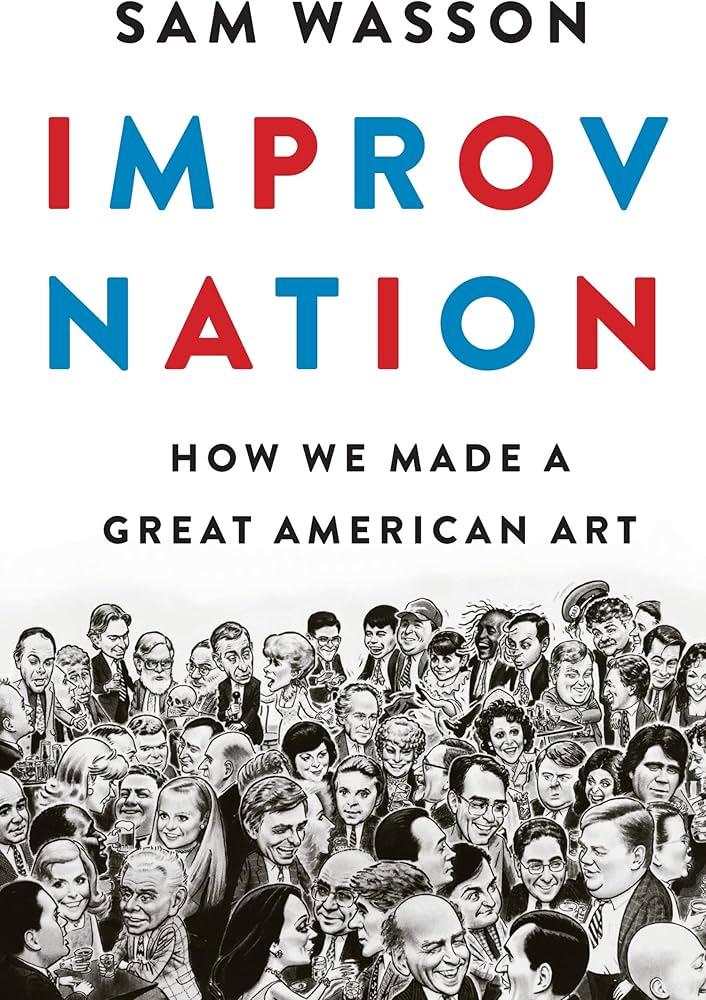
Improv Nation
How We Made a Great American Art
Sam Wasson

Embodied Playwriting
Improv and Acting Exercises for Writing
Hillary Haft Bucs; Charissa Menefee
References
In the Archive
- When I Say This, Do You Mean That?— Cherie Kerr; Julia Sweeney
- The Funniest One in the Room— Kim Howard Johnson
- The Improv Handbook— Tom Salinsky; Deborah Frances-White
- Long Form Improvisation and American Comedy— Matt Fotis
- Improv Nation— Sam Wasson
- Embodied Playwriting— Hillary Haft Bucs; Charissa Menefee
How to Reference This Page
The Improv Archive. (2026). Gary Austin. Retrieved September 21, 2026, from https://improvarchive.org/people/gary-austin
The Improv Archive. "Gary Austin." The Improv Archive, 2026. https://improvarchive.org/people/gary-austin.
The Improv Archive. "Gary Austin." The Improv Archive, 2026, https://improvarchive.org/people/gary-austin. Accessed September 21, 2026.
The Improv Archive is a systemically maintained repository. The archive itself acts as the corporate author.