John Belushi
John Belushi (January 24, 1949 - March 5, 1982) was an Albanian-American comedian, actor, and musician who trained at The Second City in Chicago beginning in February 1971, at twenty-two reportedly its youngest-ever member, and went on to join the original cast of Saturday Night Live in 1975. His performances on SNL, particularly the recurring Samurai Futaba character and his Joe Cocker impression, established him as the show's most popular original cast member. He co-created The Blues Brothers with Dan Aykroyd, starred in National Lampoon's Animal House (1978) and The Blues Brothers (1980), and died of a drug overdose at the Chateau Marmont in Los Angeles on March 5, 1982, at age thirty-three.
Career
While at College of DuPage, Belushi founded the West Compass Players, an improvisational troupe modeled on The Second City. In February 1971, he auditioned for and joined The Second City Chicago mainstage at twenty-two years old, reportedly becoming the youngest member in the company's history at that point. He became an immediate sensation at the theater, particularly for his Joe Cocker impression, which he performed six nights a week in the late-night slot that Second City's revue format provided for improvised material.
Belushi performed in three Second City revues during his fourteen months with the company: No, No, Wilmette (1971) with Joe Flaherty and Brian Doyle-Murray; Cum Grano Salis (1971-1972) with Joe Flaherty; and 43rd Parallel or McCabre and Ms. Miller (1972) with Joe Flaherty and Harold Ramis. In spring 1972, after fourteen months, he left Second City and moved to New York.
In New York, Tony Hendra of National Lampoon Magazine, who had seen Belushi at Second City, offered him a role in National Lampoon productions. National Lampoon's Lemmings opened in January 1973 with a cast that included Chevy Chase, Christopher Guest, and others. Belushi worked as a writer, director, and performer for The National Lampoon Radio Hour, developing the anarchic political satire sensibility that would characterize his SNL work.
On October 11, 1975, Belushi joined the original cast of Saturday Night Live on NBC under producer Lorne Michaels. The original Not Ready for Prime Time Players included Dan Aykroyd, Chevy Chase, Jane Curtin, Garrett Morris, Laraine Newman, and Gilda Radner. Belushi quickly emerged as the cast's dominant physical performer, his commitment to characters including the Samurai Futaba, which he reprised across dozens of episodes in different contexts, and his Pete Dionisopoulos Greek diner owner who bellowed Cheeseburger Cheeseburger, establishing comedic types that entered the culture permanently.
In 1976, he and Dan Aykroyd created The Blues Brothers character act, originally performed to warm up the SNL studio audience before broadcasts. The characters, Jake and Elwood Blues, were presented as R&B musicians performing in fictional Chicago venues, and their musical credibility was genuine: Belushi had genuine vocal ability in the soul and R&B traditions. The Blues Brothers released their debut album Briefcase Full of Blues on Atlantic Records in 1978, which reached number one on the Billboard 200 album chart and went double platinum.
National Lampoon's Animal House, directed by John Landis and released in 1978, starred Belushi as Bluto Blutarsky, a role that became one of American comedy film's defining performances. The film was a major box office hit. He remained in the SNL cast through 1979, then focused on film. The Blues Brothers film, directed by Landis, was released in 1980, earning over one hundred fifteen million dollars worldwide.
Belushi died on March 5, 1982, at Bungalow 3 of the Chateau Marmont in Los Angeles, from a combined drug injection administered by Cathy Smith. He was thirty-three years old. His final completed film, Neighbors, had been released in 1981. Smith later confessed and was convicted of involuntary manslaughter.
Historical Context
Belushi's fourteen months at The Second City from February 1971 to spring 1972 gave him the improvisational foundation that powered everything that followed. The specific training Second City provided, in character building, ensemble listening, physical commitment, and the rapid scene transitions of the revue format, produced in Belushi a performer whose physical expressiveness and transformative commitment to characters was grounded in systematic ensemble practice rather than in purely instinctive talent. His performances at the theater alongside Harold Ramis, Joe Flaherty, and Brian Doyle-Murray placed him within a generation of performers whose collective work at Second City's Chicago mainstage in the early 1970s would define American comedy for the following decade.
The Blues Brothers represented one of the most commercially successful translations of improv-derived character creation into popular music performance. The characters that Belushi and Aykroyd developed in the SNL green room and on stage, and then in the film, were constructed with the same improvisational character specificity that Second City training produced, applied to a musical performance context. The act's success, including the double-platinum album and the blockbuster film, demonstrated that character-based comedy performance could sustain full-length musical and cinematic treatment at the highest commercial levels.
Belushi's death at thirty-three in 1982 arrived at the moment when his generation's work had established SNL as the central institution for the pipeline from improvisational training to popular culture, and when performers who had passed through Second City and the National Lampoon were beginning to define American comedy across film, television, and music simultaneously. His absence from the subsequent decades of that development is the defining counter-factual of American comedy history.
Key Events
John Belushi, Second City Alumnus and Saturday Night Live Original Cast Member, Dies
John Belushi died on March 5, 1982 in Los Angeles at the age of 33. Belushi trained and performed at The Second City in Chicago before joining the original cast of Saturday Night Live in 1975, becoming one of the most recognized comedy performers of his generation.
Legacy
Belushi's Samurai character, which recurred across his SNL tenure in different settings and contexts, became one of the show's most durable performance types and a model for the recurring character format that SNL would continue using for decades. His Joe Cocker impression, performed weekly in Second City's late-night improv set during his 1971-1972 tenure, and then reprised on SNL in a celebrated sketch with Cocker himself, demonstrated the character transformation capacity that Second City training had produced.
National Lampoon's Animal House established the college comedy film as a genre, directly influencing the John Hughes films of the 1980s and the American Pie series of the 1990s that followed in its wake. Its Bluto character, entirely created by Belushi from the improvisational character building of his Second City training, has been identified by critics and historians as one of the defining comedy film performances of the twentieth century.
The Blues Brothers film and its musical catalog have remained in continuous commercial circulation since 1980, with tribute acts, theatrical adaptations, and a 2000 sequel maintaining the characters in cultural circulation more than forty years after the original performers created them. Belushi's brother Jim Belushi, who also performed at Second City and developed a career in comedy and acting, maintains the family's connection to the traditions John established.
Early Life and Training
John Adam Belushi was born on January 24, 1949, in Chicago, Illinois, to Albanian immigrant parents. His father Adam Anastos Belushi had immigrated from the village of Qytezë in Albania; his mother Agnes was also of Albanian descent. The family was Eastern Orthodox and attended the Albanian Orthodox Church. The family relocated to Wheaton, Illinois, where Belushi attended Wheaton Central High School, where he was co-captain of the football team and elected Homecoming King in his senior year. His drama teacher at Wheaton Central encouraged him to pursue acting over football coaching, redirecting his ambitions toward performance. He attended College of DuPage in Glen Ellyn, Illinois, graduating with an associate degree in 1970.
Personal Life
John Belushi was born on January 24, 1949, in Chicago, Illinois. He grew up in Wheaton, Illinois. He married Judith Jacklin, his high school sweetheart from Wheaton Central, on January 26, 1976. He died on March 5, 1982, at the Chateau Marmont in Los Angeles at age thirty-three. He was buried at Abel's Hill Cemetery in Chilmark on Martha's Vineyard, Massachusetts.
Recommended Reading
Books are ordered from the strongest direct connection outward to broader relevance.

Improv Yourself
Business Spontaneity at the Speed of Thought
Joseph A. Keefe

The Art of Chicago Improv
Short Cuts to Long-Form Improvisation
Rob Kozlowski
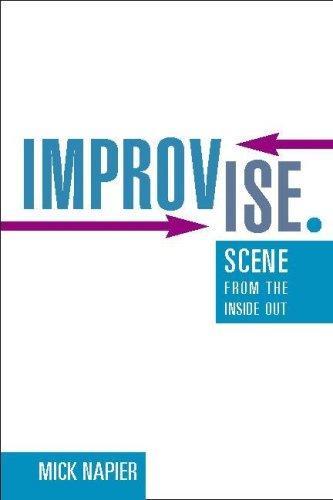
Improvise
Scene from the Inside Out
Mick Napier

Theatrical Improvisation
Short Form, Long Form, and Sketch-Based Improv
Jeanne Leep

The Second City Unscripted
Revolution and Revelation at the World-Famous Comedy Theater
Mike Thomas
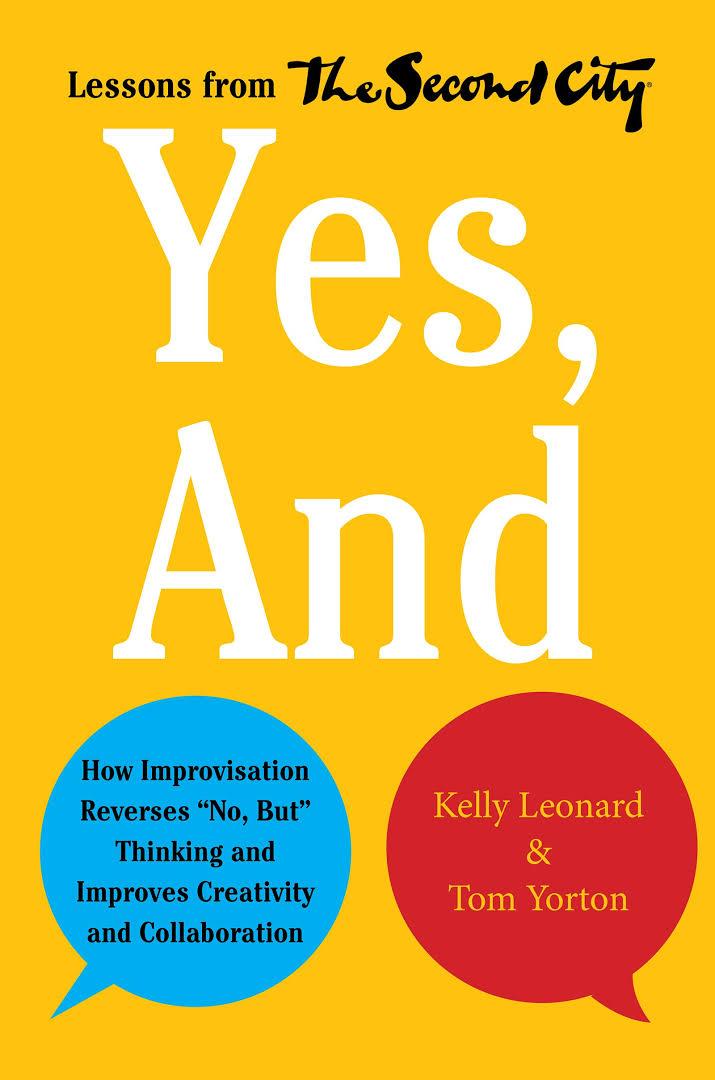
Yes, And
How Improvisation Reverses No, But Thinking and Improves Creativity and Collaboration
Kelly Leonard; Tom Yorton
References
In the Archive
How to Reference This Page
The Improv Archive. (2026). John Belushi. Retrieved September 28, 2026, from https://improvarchive.org/people/john-belushi
The Improv Archive. "John Belushi." The Improv Archive, 2026. https://improvarchive.org/people/john-belushi.
The Improv Archive. "John Belushi." The Improv Archive, 2026, https://improvarchive.org/people/john-belushi. Accessed September 28, 2026.
The Improv Archive is a systemically maintained repository. The archive itself acts as the corporate author.