John Candy
John Candy (October 31, 1950 - March 4, 1994) was a Canadian comedian and actor who trained and performed at The Second City Toronto beginning in 1973, alongside Eugene Levy, Catherine O'Hara, Dan Aykroyd, and Gilda Radner, and became an original cast member of SCTV (Second City Television) when the show premiered in 1976. His major film roles included Stripes (1981), Splash (1984), Planes, Trains and Automobiles (1987), Uncle Buck (1989), and Cool Runnings (1993). He died of a heart attack on March 4, 1994, at age forty-three, in Durango, Mexico, while filming Wagons East, the same cause that had killed his father at age thirty-five.
Career
John Candy began early acting work in Canadian television with small roles in Police Surgeon and Dr. Zonk and the Zunkins. In the spring of 1973, he auditioned alongside Eugene Levy, Dan Aykroyd, Gilda Radner, and others for the newly forming Second City Toronto company in a Yorkville church in Toronto. He joined the resident ensemble of Second City Toronto at age twenty-two or twenty-three, when the company opened its first Canadian location on Adelaide Street East. The following year the company moved to a converted old fire hall downtown.
In 1974, Andrew Alexander purchased the Canadian rights to The Second City for one dollar and became producer of the Toronto stage show, beginning the partnership that would sustain Canadian Second City through multiple decades. Candy performed in the Toronto resident company for three years, developing alongside O'Hara, Levy, Andrea Martin, Joe Flaherty, Harold Ramis, and Dave Thomas in what became one of the most celebrated ensembles in the theater's Canadian history.
In 1976, Candy left the stage company to join the cast of SCTV, Second City Television, the television sketch comedy series produced by Andrew Alexander. The original SCTV cast included Candy, Joe Flaherty, Eugene Levy, Andrea Martin, Catherine O'Hara, Harold Ramis, and Dave Thomas. The show presented itself as a satirical portrayal of a fictional television network called SCTV, allowing the cast to create recurring characters as television personalities and parody both specific programs and the conventions of broadcast television itself.
Candy's SCTV characters included Johnny LaRue, a corrupt street-beat television personality; Doctor Tongue, a 3-D horror film auteur; William B. Williams, a sycophantic talk show sidekick; Tommy Shanks, the corrupt Mayor of Melonville; and Yosh Shmenge, clarinetist in the Happy Wanderers polka band alongside Joe Flaherty as Stan Shmenge. The range and specificity of these characters demonstrated the depth of character work that three years of Second City ensemble training had produced.
In 1979, Candy took a hiatus from SCTV to develop his film career, appearing in small roles in Steven Spielberg's 1941 and John Landis's The Blues Brothers (1980). His breakthrough Hollywood role came in Stripes (1981), directed by Ivan Reitman, in which he played Dewey Oxberger. NBC picked up SCTV as SCTV Network in 1981, and Candy returned to the cast for the NBC run.
His subsequent film career included Splash (1984) with Tom Hanks, Volunteers (1985), Little Shop of Horrors (1986), Planes, Trains and Automobiles (1987) with Steve Martin directed by John Hughes, Spaceballs (1987), The Great Outdoors (1988), Uncle Buck (1989), and Cool Runnings (1993). Planes, Trains and Automobiles is widely considered his finest performance, combining broad comedy with genuine emotional depth in the role of Del Griffith, a lonely traveling salesman. He took a pay cut to secure the Cool Runnings role, which was being contested by Kurt Russell and Scott Glenn.
Candy died on March 4, 1994, of a heart attack in his sleep in Durango, Mexico, while filming Wagons East. He was forty-three years old, the same age at which his father had died of the same cause. He was buried in Los Angeles.
Historical Context
John Candy's Second City Toronto training in 1973 and 1974 placed him within the founding generation of Canadian Second City, which Andrew Alexander was simultaneously transforming from a touring franchise into a permanent Toronto institution. The cohort of performers who trained and performed together at Second City Toronto in those years, including Candy, O'Hara, Levy, Aykroyd, Radner, Martin, Flaherty, Ramis, and Thomas, produced an extraordinary concentration of talent that subsequent comedy history confirmed was generationally exceptional. The ensemble they formed became the cast of SCTV, which ran from 1976 to 1984 and is consistently cited alongside Saturday Night Live as the defining television comedy of its era.
SCTV's format, which placed the cast in the roles of fictional television station employees producing fictional television programs, allowed the performers to apply their Second City ensemble skills to character satire at a scale and consistency that the live revue format could not sustain. The show's multiple Emmy Award nominations and eventual win confirmed its quality within the American television industry, and its Canadian production and distribution context gave it a distinct national identity that SNL, operating from New York, did not represent.
Candy's film partnership with director John Hughes in Planes, Trains and Automobiles and Uncle Buck produced two of the most emotionally resonant comedies of the 1980s, films that combined Hughes's suburban American setting with Candy's capacity for warmth and vulnerability that his Second City character training had developed. The Hughes-Candy collaboration represents one of the clearest examples of how the ensemble sensitivity that improv training builds, particularly the ability to listen and respond to a scene partner's emotional state rather than simply to play for external laughs, translated into film performances of unusual emotional depth.
Key Events
John Candy, Second City Toronto Alumnus and SCTV Star, Dies in Mexico
John Candy died on March 4, 1994 in Durango, Mexico at the age of 43. Candy trained and performed at The Second City Toronto before becoming a cast member of SCTV from 1976 to 1984, where he created beloved characters including Johnny LaRue and Yosh Shmenge. He became one of the most popular comedy film actors of the 1980s.
Legacy
John Candy is the defining figure of Second City Toronto's golden era, the performer whose film career most fully translated the ensemble training of the Toronto company into mainstream commercial and critical success across American and international audiences. His SCTV characters, particularly the Shmenge Brothers with Joe Flaherty, remain among the most celebrated character creations in Canadian television history. His film performances, particularly Del Griffith in Planes, Trains and Automobiles, have been cited by subsequent generations of comedic performers as models of how to bring genuine emotional depth to comedy performance without sacrificing the humor that makes the character lovable.
Second City Toronto established the Candy-era ensemble as the canonical example of what the Toronto company could produce at its best, a benchmark that Andrew Alexander's continued stewardship of the company has sustained as an institutional aspiration. The subsequent careers of the 1973-1976 cohort, spread across SNL, SCTV, film, and television writing and directing, demonstrated the extraordinary productivity of that particular confluence of talent and institutional training.
Candy's death at forty-three from the same cause that killed his father at thirty-five gave his biography an elegiac dimension that has informed how subsequent generations have encountered his work, adding to the sense that a career already defined by warmth and emotional generosity was cut off before its later creative possibilities could be realized.
Early Life and Training
John Franklin Candy was born on October 31, 1950, in Newmarket, Ontario, Canada. His father Sidney James Candy died of a heart attack at age thirty-five, on Candy's fifth birthday. The family was of mixed English and Polish-Ukrainian heritage and raised Catholic. Candy grew up in East York, a suburb of Toronto. He initially aspired to be a football player, but a knee injury ended that ambition. He attended Centennial College in Scarborough, Ontario, studying journalism from 1969 to 1971, before leaving to pursue an acting career.
Personal Life
John Franklin Candy was born on October 31, 1950, in Newmarket, Ontario, and grew up in East York, Toronto. He married Rosemary Margaret Hobor in 1979; they had two children: Jennifer Candy (born February 1980) and Christopher Candy (born September 1984), both of whom became actors and producers. He died on March 4, 1994, in Durango, Mexico, at age forty-three.
Media Appearances
Recommended Reading
Books are ordered from the strongest direct connection outward to broader relevance.

Something Wonderful Right Away
An Oral History of The Second City and The Compass Players
Jeffrey Sweet

Acting Through Improv
Improv Through Theatresports
Lynda Belt; Rebecca Stockley

The Art of Chicago Improv
Short Cuts to Long-Form Improvisation
Rob Kozlowski

Theatrical Improvisation
Short Form, Long Form, and Sketch-Based Improv
Jeanne Leep

The Second City Unscripted
Revolution and Revelation at the World-Famous Comedy Theater
Mike Thomas
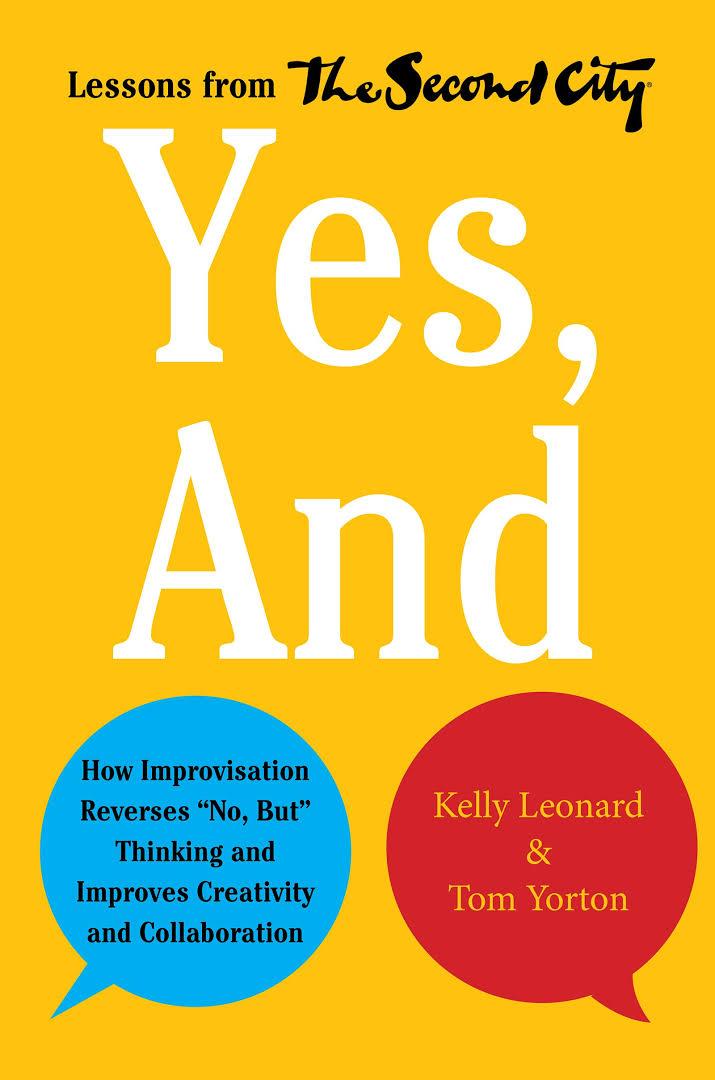
Yes, And
How Improvisation Reverses No, But Thinking and Improves Creativity and Collaboration
Kelly Leonard; Tom Yorton
References
In the Archive
How to Reference This Page
The Improv Archive. (2026). John Candy. Retrieved September 28, 2026, from https://improvarchive.org/people/john-candy
The Improv Archive. "John Candy." The Improv Archive, 2026. https://improvarchive.org/people/john-candy.
The Improv Archive. "John Candy." The Improv Archive, 2026, https://improvarchive.org/people/john-candy. Accessed September 28, 2026.
The Improv Archive is a systemically maintained repository. The archive itself acts as the corporate author.